The U.S. FDA said June 25 it has required updates to the prescribing labels of COVID-19 mRNA vaccines Comirnaty and Spikevax to include new safety information on the risks of myocarditis and pericarditis.
Taking an unconventional path to market for its targeted therapies for RAS-addicted cancers, Revolution Medicines Inc. secured access to $2 billion in capital to build its own global commercial infrastructure, instead of partnering outside the U.S. as it had originally intended. “We’ve concluded that the best way for us to achieve our goals with our rich pipeline is to direct our own global development and commercial strategies and to operationalize these both inside and outside the U.S. through our own organization,” Mark Goldsmith, president and CEO of Revolution Medicines (Revmed), told investors June 24.
On the same day that FDA Commissioner Martin Makary spoke in a fireside chat during the 2025 Biotechnology Innovation Organization’s International Convention, the agency unveiled a pilot commissioner’s national priority voucher program that will enable companies to receive a shortened FDA review time of one to two months.
On the same day that FDA Commissioner Martin Makary spoke in a fireside chat during the 2025 Biotechnology Innovation Organization’s International Convention, the agency unveiled a pilot commissioner’s national priority voucher program that will enable companies to receive a shortened FDA review time of one to two months.
For years, the biopharma industry has spent increasing amounts of money on R&D without improving success rates, leaving many executives searching for new, more predictable drug development paths.
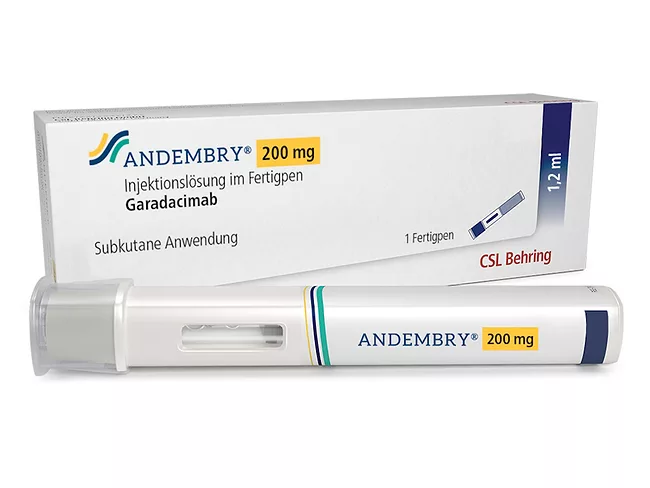
Following a complete response letter issued last October over CMC issues, CSL Behring LLC gained U.S. FDA approval June 16 of its humanized anti-factor XIIa monoclonal antibody, garadacimab (CSL-312), to prevent hereditary angioedema attacks.
The COVID-19 pandemic sent the world into a tailspin, raising ongoing concerns about biosecurity, a subject that encompassed the better part of the morning June 16, the first day of the Biotechnology Innovation Organization’s annual conference in Boston.
Three years after litigation started over technology used in an mRNA vaccine for COVID-19, Biontech SE is acquiring its adversary, Curevac NV, through an all-stock transaction valued at about $1.25 billion. The amount is lower than the $3 billion in backpay Curevac could win through the lawsuit if a low mid-single-digit royalty were awarded, Evercore ISI analysts Jon Miller and Umer Raffat said. But the legal uncertainty has weighed heavily on the company, which shed 30% of its workforce last July and sold off rights to two of its infectious disease vaccines.
As it advances its nonopioid analgesic ATX-101 breakthrough therapy through a phase IIb registration trial, Allay Therapeutics secured $57.5 million in a series D round, which included an investment from the company’s Japanese partner.
Insmed Inc.’s chair and CEO, Will Lewis, called the phase IIb trial of TPIP in pulmonary arterial hypertension a “clear and unequivocal success,” with analysts and investors wholeheartedly agreeing, as the company’s shares surged 28.7% June 10.