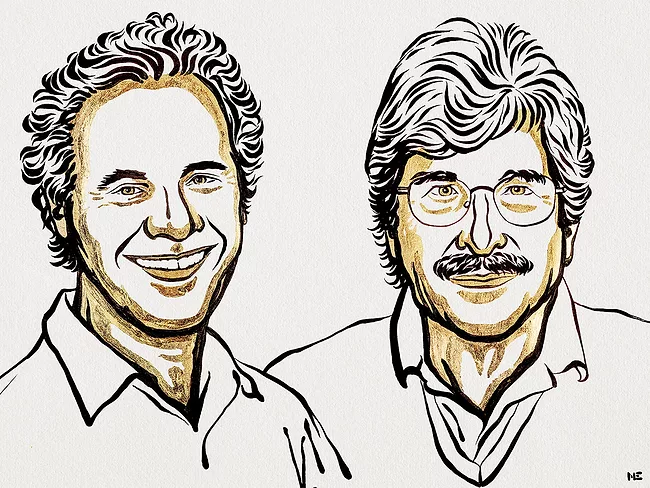
Research into the regulation of gene expression experienced a significant breakthrough with the discovery of microRNA, small RNA molecules that do not code for proteins but control their translation. This finding has earned its discoverers – Victor Ambros and Gary Ruvkun – the 2024 Nobel Prize in Physiology or Medicine “for the discovery of microRNA and its role in post-transcriptional gene regulation.”
David Baker, director of the Institute for Protein Design at the University of Washington School of Medicine, is a pioneer in protein design. His contributions have been recognized with countless awards, and now, a place among the 2024 Clarivate Citation Laureates. Baker’s lab has developed several open-source software applications for nanotechnology and biomedicine. With these methods, scientists build new proteins that bind to drug targets and block them or activate cellular signals.
Research into the regulation of gene expression experienced a significant breakthrough with the discovery of microRNA, small RNA molecules that do not code for proteins but control their translation. This finding has earned its authors Victor Ambros and Gary Ruvkun the 2024 Nobel Prize in Physiology or Medicine.
Research into the regulation of gene expression experienced a significant breakthrough with the discovery of microRNA, small RNA molecules that do not code for proteins but control their translation. This finding has earned its discoverers – Victor Ambros and Gary Ruvkun – the 2024 Nobel Prize in Physiology or Medicine “for the discovery of microRNA and its role in post-transcriptional gene regulation.”
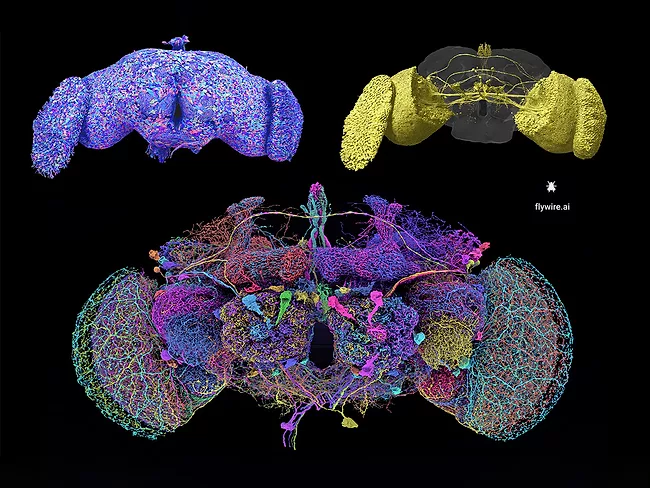
A collaboration led by the Flywire Consortium and comprising hundreds of scientists has completed a whole map of the adult fruit fly brain after several decades of collaborative work.
A collaboration led by the Flywire Consortium and comprising hundreds of scientists has completed a whole map of the adult fruit fly brain after several decades of collaborative work. By using electron microscopy and three-dimensional reconstruction supported by AI tools, the researchers have revealed the neural wiring of the Drosophila melanogaster brain, a connectome of 140,000 neurons with 50 million synaptic connections. In the future, researchers could possibly use this map as an artificial in silico model to study the brain as a simulator through its connections, though a lot of work remains to be done for this.
How do exercise and insulin collaborate in metabolism? The European Association for the Study of Diabetes (EASD) and the Novo Nordisk Foundation recognized the work of Juleen Zierath in this topic with the Diabetes Prize for Excellence at their recent annual meeting.
How do exercise and insulin collaborate in metabolism? The European Association for the Study of Diabetes (EASD) and the Novo Nordisk Foundation recognized the work of Juleen Zierath in this topic with the Diabetes Prize for Excellence at their recent annual meeting.
The map of the human brain is not a static image of the cellular architecture of the central nervous system (CNS). Throughout life, all living beings are born, develop and age. The brain of pregnant mothers reflects a dynamic that modifies this general picture. A collaboration of scientists from the University of California has studied the changes in the adult brain during pregnancy and observed that a large part of it adapts during the development of the fetus.
Immortality and eternal youth have been the stuff of myths and legends from ancient times on. Now, in the 21st century, real studies of current medicine could be applied to repair tissues and organs damaged by age. During the 11th Aging Research & Drug Discovery (ARDD) Meeting held at the University of Copenhagen at the end of August, scientists explained the molecular keys of rejuvenation, as many artists imagined in the past.