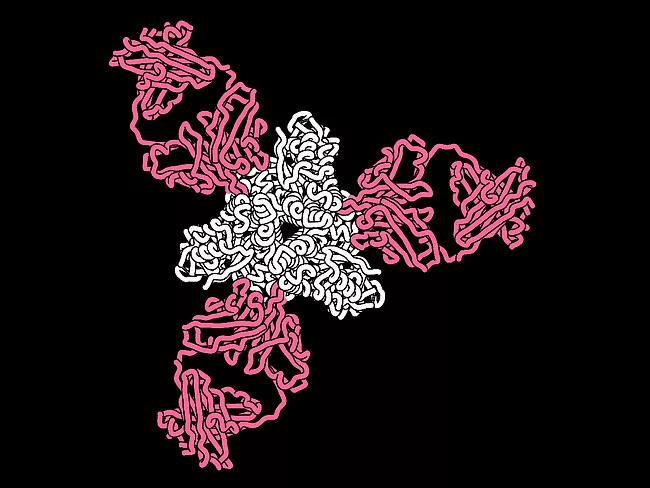
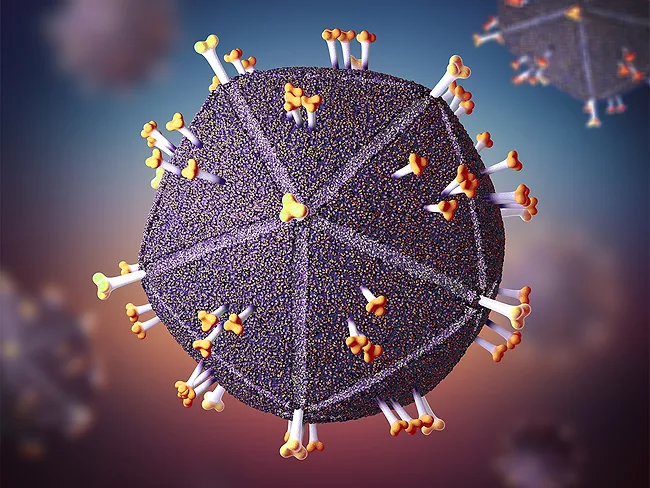
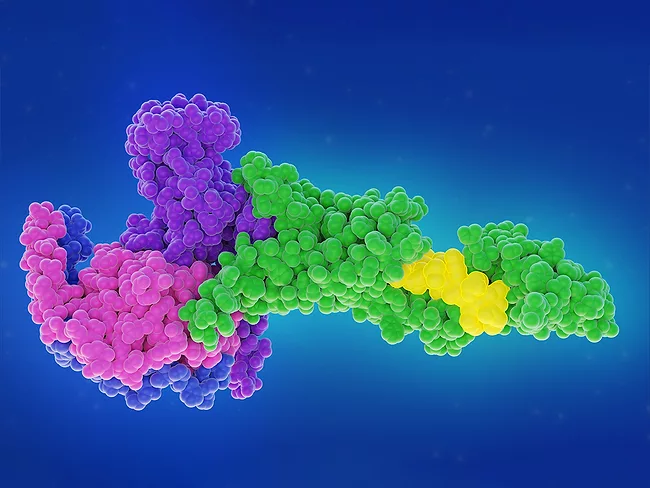
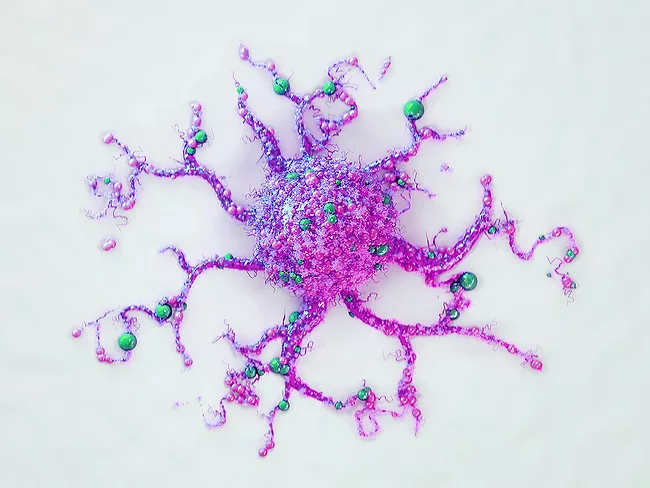
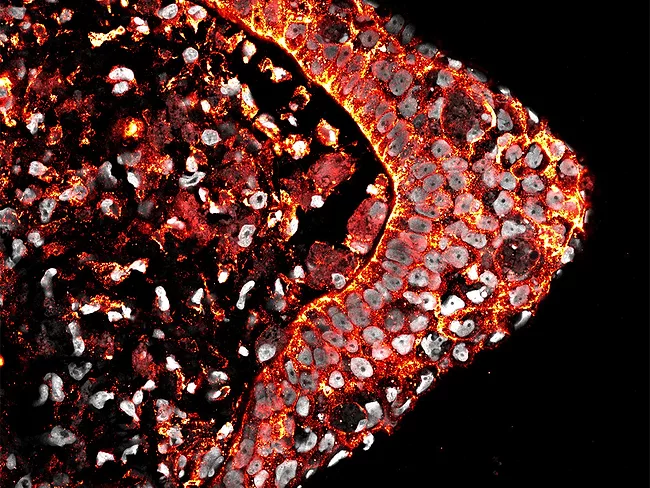
Scientists at the La Jolla Institute for Immunology have identified and characterized human antibodies that neutralize the measles virus by blocking its entry into the cell. This is the first time that antibodies have been shown to bind effectively to two essential viral proteins, creating a dual blockade that prevents infection. Unlike the current vaccine, which is based on an attenuated virus and is not recommended for immunocompromised individuals, these monoclonal antibodies could be used both as a new vaccine approach and as a treatment for the entire population.
A new vaccination strategy designed to induce antibodies that recognize the apex of the HIV Env protein uses Env trimers displayed on liposomes to increase their density and orient them correctly. This presentation enhanced apex-focused antibody responses in macaques, and the monoclonal antibodies isolated after immunization showed binding modes and structural features resembling human broadly neutralizing antibodies (bNAbs), indicating that the vaccine can steer the antibody response toward this vulnerable site.
A new molecule combines the action of two incretins, GLP-1 and GIP, hormones that regulate glucose and appetite, with lanifibranor, a triple agonist of peroxisome proliferator activated receptors (PPAR α/γ/δ). GLP-1-GIP-Lani enables targeted delivery of the PPAR agonist to cells that express incretin receptors, enhancing weight loss, improving glucose control and reducing inflammation in obese mice. In these models, it surpassed the effects of GLP-1 receptor agonists such as semaglutide and GLP-1-GIP co-agonists such as tirzepatide in reducing body weight, improving glycemic control and enhancing metabolic outcomes during active treatment.
Minimal residual disease (MRD) has become a central concept in modern oncology, reshaping how clinicians evaluate response, relapse risk and treatment precision. As increasingly sensitive technologies reveal traces of cancer that persist after therapy, MRD is emerging as both a biological challenge and a clinical opportunity, especially as new data illuminate its complexity across hematologic and solid tumors. This topic was addressed at the 2026 American Association for Cancer Research (AACR) annual meeting.
New Approach Methodologies (NAMs) for drug development are transforming biomedical research by replacing or complementing animal models. More than 90% of experimental compounds fail in clinical trials, underscoring the need for strategies that better capture human biology. Many of these techniques were showcased at the 2026 American Association for Cancer Research (AACR) annual meeting.
When a tumor migrates and colonizes another tissue or organ, it can be identified as a metastasis, but its origin is not always clear. Now, a study based on machine learning has identified DNA-methylation patterns that reveal the type of tissue a cancer comes from when the primary tumor cannot be found. This technique could help guide more specific treatments for patients with cancers of unknown primary, who today often receive broad, nontargeted chemotherapy.
A modified version of CRISPR-Cas9 has enabled, for the first time, the efficient integration of a large transgene capable of inactivating entire chromosomes into one of the three copies of chromosome 21 in Down syndrome-derived cells. The goal is to silence the extra copy to limit the gene-dosage imbalance that drives many features of trisomy 21. Researchers at Beth Israel Deaconess Medical Center turned to XIST, the long noncoding RNA responsible for the natural silencing of the X chromosome in females. Using this strategy, they achieved integration efficiencies of 20% to 40% and a partial reduction in the overexpression of chromosome 21 genes.
Genes that are switched on or off in the human brain differ between men and women. Moreover, these differences are not uniform. They vary across cortical regions and cell types. Scientists at the National Institute of Mental Health (NIMH) and the National Institute on Aging (NIA) used single-cell sequencing and unveiled distinct gene expression patterns regulated by hormones and sex chromosomes. This detailed map of the brain’s molecular biology shows how women and men switch on and off more than 3,000 brain genes differently and expands the catalogue of X chromosome genes that escape inactivation.
The loss of regenerative capacity in mammals over the course of evolution may be linked to certain environmental conditions rather than to a genetic limitation. Tissue stiffness around an amputated area, oxygen availability, or epigenetic regulation could determine this ability, according to two simultaneously published but independent studies published in Science, as reported by BioWorld yesterday.
The loss of regenerative capacity in mammals over the course of evolution may be linked to certain environmental conditions rather than to a genetic limitation. Tissue stiffness around an amputated area, oxygen availability, or epigenetic regulation could determine this ability, according to two simultaneously published but independent studies published in Science today.