BioWorld. Link to homepage.

Clarivate
  • BioWorld
  • BioWorld Science
  • BioWorld Asia
  • Data Snapshots
    • Biopharma
    • Medical technology
    • Infographics: Dynamic digital data analysis
    • Index insights
    • NME Digest
  • Special reports
    • Infographics: Dynamic digital data analysis
    • Ebola outbreak
    • Hantavirus
    • Trump administration impacts
    • Med-tech outlook 2026
    • Under threat: mRNA vaccine research
    • BioWorld at 35
    • Biopharma M&A scorecard
    • Bioworld 2025 review
    • BioWorld MedTech 2025 review
    • BioWorld Science 2025 review
    • Women's health
    • China's GLP-1 landscape
    • PFA re-energizes afib market
    • China CAR T
    • Alzheimer's disease
    • Coronavirus
    • More reports can be found here

BioWorld. Link to homepage.

  • Sign In
  • Sign Out
  • My Account
Subscribe
BioWorld - Friday, June 19, 2026
Home » Authors » Mar de Miguel

Articles by Mar de Miguel

Illustration demonstrating parts of the ear
Drug design, drug delivery & technologies

A gene therapy could restore hearing in adults

July 11, 2024
By Mar de Miguel
Patients with congenital hearing loss could benefit from a gene therapy currently in development. Although there are approaches that could reverse the process in children and young people before it becomes severe, so far, adults do not have any treatment that prevents the progressive deterioration of auditory sensory cells caused by this disease.
Read More
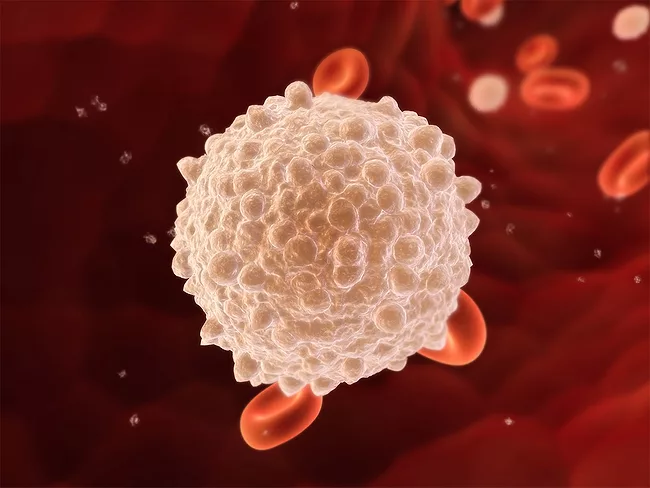
Illustration of a helper t cell in the bloodstream
Immune

Finely slicing T cells yields rare, disease-associated subtypes

July 9, 2024
By Mar de Miguel
A new methodology based on the regulation of genetic enhancers has made it possible to develop a cellular map that reveals new types of helper T cells related to immunological disorders that could be explored for the development of new therapies. “I am very interested in the function of rare T cells, and I am trying to analyze their function by eliminating certain rare T cells with antibodies with ADCC [antibody-dependent cell-mediated cytotoxicity] activity or by disrupting genes that characterize rare T cells in animal models,” senior author Yasuhiro Murakawa told BioWorld.
Read More
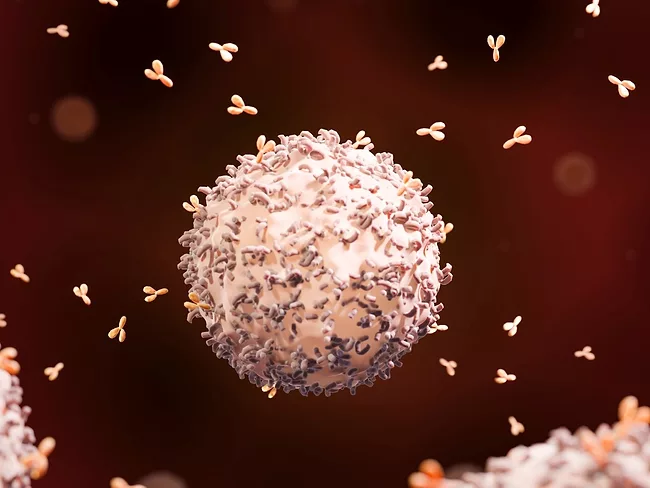
B-cell releasing antibodies

Engineered plasma cells produce effective bispecific antibodies against leukemia

July 5, 2024
By Mar de Miguel
Scientists at the University of Washington have engineered human plasma B cells modified to express long-lasting bispecific antibodies that could be used to treat leukemia without requiring continuous dosing.
Read More
B-cell releasing antibodies
Cancer

Engineered plasma cells produce effective bispecific antibodies against leukemia

July 4, 2024
By Mar de Miguel

Scientists at the University of Washington have engineered human plasma B cells modified to express long-lasting bispecific antibodies that could be used to treat leukemia without requiring continuous dosing.

“We are trying to engineer plasma cells to make as a stable source for biologic drugs. One thing that is really unique about plasma cells is that they can live for a really long time … up to 10 years or even 100 years depending on the type of plasma cell that that you make,” Richard James, senior author of the study, principal investigator at Seattle Children’s Research Institute, and associate professor at the University of Washington, told BioWorld.


Read More
Concept art for damaged DNA structure
Neurology/psychiatric

DNA damage and open chromatin are epigenetic twins in Alzheimer’s disease

July 3, 2024
By Mar de Miguel
Alzheimer’s disease (AD) is a neurodegenerative condition in which amyloid plaques and neurofibrillary tangles accumulate in the brain. In addition to genetic factors, DNA damage and epigenetic alterations also play a key role in the pathogenesis and progression of this disease, altering gene expression, the functioning and maintenance of brain cells. DNA double-strand breaks (DSBs) and chromatin accessibility are two hallmarks of AD whose study could reveal new ways of approaching this disease.
Read More
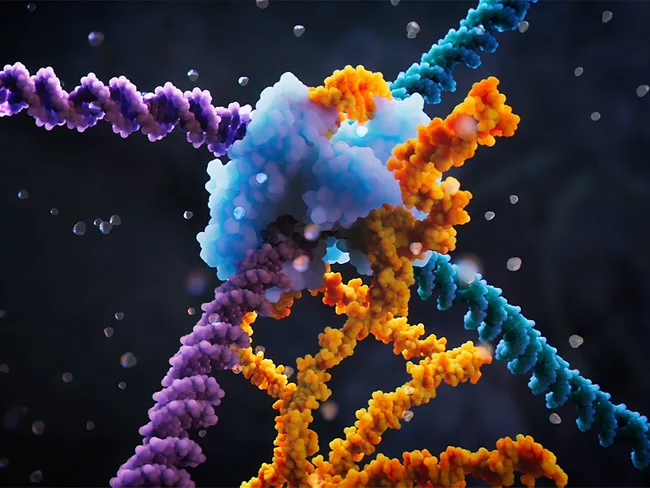
Bridge recombinase mechanism 3D illustration

New techniques open the way for large-scale programmable genome editing

July 2, 2024
By Mar de Miguel
New single-step genome editing techniques that enable the insertion, inversion or deletion of long DNA sequences at specified genome positions have been demonstrated in bacteria.
Read More
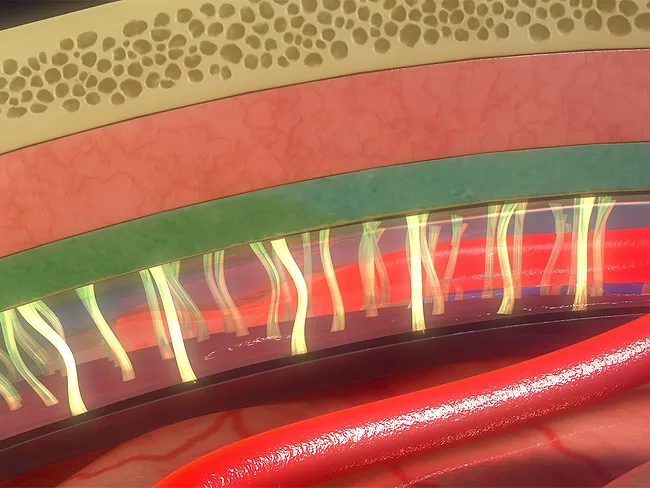
Illustration showing layers of the meninges between the skull and brain
Cancer

Breast cancer metastases track vessels and neural signals to reach the brain

June 28, 2024
By Mar de Miguel
Breast cancer is a common cause of brain metastases and new research has shown that metastatic cells can invade the meninges not by entering the circulation and crossing the blood-brain barrier, but by traveling along the outer surface of the blood vessels that connect the vertebral bone marrow and the skull.
Read More
Bridge recombinase mechanism 3D illustration

New techniques open the way for large-scale programmable genome editing

June 27, 2024
By Mar de Miguel
New single-step genome editing techniques that enable the insertion, inversion or deletion of long DNA sequences at specified genome positions have been demonstrated in bacteria.
Read More
Illustration of a senescent cell
Aging

Senescent cells are essential beyond aging

June 27, 2024
By Mar de Miguel
Senescence is a hallmark of aging, and senescent cells have a reputation to match. They are ‘zombie cells,’ sort of dead themselves but alive enough to poison their surroundings through senescence-associated secretory phenotype (SASP). The reality, though, is more complex.
Read More
Bridge recombinase mechanism 3D illustration
Drug design, drug delivery & technologies

New techniques open the way for large-scale programmable genome editing

June 26, 2024
By Mar de Miguel
New single-step genome editing techniques that enable the insertion, inversion or deletion of long DNA sequences at specified genome positions have been demonstrated in bacteria. The advance opens the door to the development of programmable methods for rearranging DNA, using recombinase enzymes guided by RNA. The two different approaches to using insertion sequences (IS) – some of the simplest and most compact mobile genetic elements – are described in two papers published in Nature and Nature Communications.
Read More
Previous 1 2 … 25 26 27 28 29 30 31 32 33 … 55 56 Next

Popular Stories

  • Today's news in brief

    BioWorld
    BioWorld briefs for June 18, 2026.
  • News in brief

    BioWorld Asia
    BioWorld Asia briefs for June 16, 2026
  • Brain with puzzle piece removed

    Gene replacement rescues autism-related phenotypes in mice

    BioWorld Science
    Autism spectrum disorder (ASD), developmental epileptic encephalopathies and other neurodevelopmental disorders are driven by the disruption of genes regulating...
  • Red blood cells, DNA

    For clonal hematopoiesis, epigenetics can be in driver’s seat

    BioWorld Science
    Clonal hematopoiesis (CH), where few blood stem cells produce a significant fraction of mature blood cells that are genetically identical, is partly an inevitable...
  • Illustration of amyloid plaques in Alzheimer's disease

    Elixiron’s enrupatinib shows upbeat interim phase II AD results

    BioWorld
    Elixiron Immunotherapeutics Inc. announced positive interim open-label phase II Alzheimer’s disease (AD) study findings of enrupatinib, an oral brain-penetrant...
  • BioWorld
    • Today's news
    • Analysis and data insight
    • Clinical
    • Data Snapshots
    • Deals and M&A
    • Financings
    • Medical technology
    • Newco news
    • Opinion
    • Regulatory
  • BioWorld Science
    • Today's news
    • Biomarkers
    • Cancer
    • Conferences
    • Endocrine/metabolic
    • Immune
    • Infection
    • Neurology/psychiatric
    • NME Digest
    • Patents
  • BioWorld Asia
    • Today's news
    • Analysis and data insight
    • Australia
    • China
    • Clinical
    • Deals and M&A
    • Financings
    • Newco news
    • Regulatory
    • Science
  • More
    • About
    • Advertise with BioWorld
    • Archives
    • Article reprints and permissions
    • Contact us
    • Cookie policy
    • Copyright notice
    • Data methodology
    • Infographics: Dynamic digital data analysis
    • Index insights
    • Podcasts
    • Privacy policy
    • Share your news with BioWorld
    • Staff
    • Terms of use
    • Topic alerts
Follow Us

Copyright ©2026. All Rights Reserved. Design, CMS, Hosting & Web Development :: ePublishing