Understanding psychiatric disorders at a cellular and molecular level could provide a different perspective to design diagnostic and therapeutic tools searching for the origin of these disorders and the alterations they cause. Fourteen simultaneous studies from the PsychENCODE Consortium have delved into the cellular atlases of human neurodevelopment, reporting the broadest view of neuropsychiatry to date.
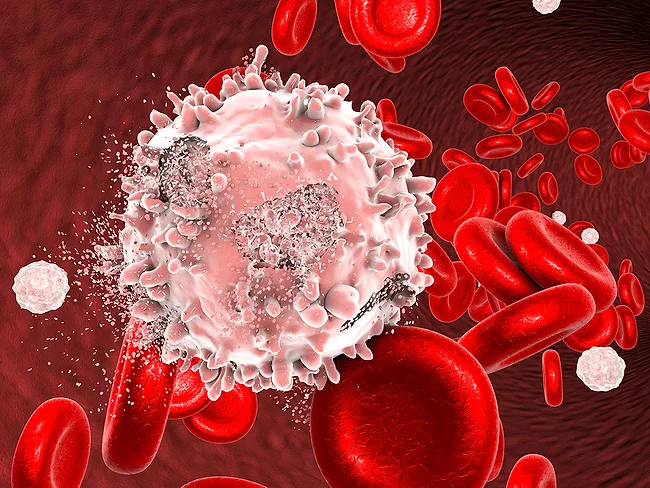
A group of scientists from Basel University Hospital have designed an antibody-drug conjugate (ADC) that eliminated blood cancer cells without attacking healthy hematopoietic stem cells (HSCs), which they modified by base editing and transplanted to renew an altered blood system. They achieved this by focusing on the panhematopoietic marker CD45.
Scientists from the PsychENCODE Consortium have analyzed the brain transcriptome in a coordinated series of studies to map all the cell types, genes, epigenetic factors, and molecular pathways involved in different psychiatric disorders. After a first set of projects based on bulk analysis, the second phase of this project included 14 simultaneous publications that revealed the cellular atlas of post-traumatic stress disorder (PTSD) and major depressive disorder (MDD), among others.
Understanding psychiatric disorders at a cellular and molecular level could provide a different perspective to design diagnostic and therapeutic tools searching for the origin of these disorders and the alterations they cause. Fourteen simultaneous studies from the PsychENCODE Consortium have delved into the cellular atlases of human neurodevelopment, reporting the broadest view of neuropsychiatry to date.
A group of scientists from Harvard University have observed and reconstructed the human brain at the resolution of the electron microscope, with all its cells, following all the connections between its neurons around a cubic millimeter of a tissue sample. They took 10 years and the data occupies 1.4 petabytes (1,400 terabytes). However, they are already planning a bigger project.
The success of a vaccine, a gene editing design for an untreated disease, or achieving cell engraftment after several attempts, comes from years of accumulated basic science studies, thousands of experiments, and clinical trials. Innumerable steps precede hits in gene and cell therapies before a first-time revelation, and most of them are failures at the time. At the 27th Annual Meeting of the American Society of Gene & Cell Therapy (ASGCT) in Baltimore last week, several groups of scientists presented achievements that years ago looked impossible.
Immunotherapy-based cancer vaccines could permanently kill tumors by stimulating immune cells in multiple ways. At the 27th Annual Meeting of the American Society of Gene & Cell Therapy (ASGCT), researchers presented their advances in this field with different techniques in the scientific symposium “Novel nucleic acid and cell-based vaccines for cancer,” organized by the infectious diseases and vaccines committee.
From glaucoma to Stargardt disease, age-related macular degeneration (AMD) to retinitis pigmentosa, or a corneal transplant to Bietti’s crystalline dystrophy, the 27th Annual Meeting of the American Society of Gene & Cell Therapy (ASGCT) is working to bring some light to patients with age and congenital diseases that affect vision. From May 7-11, 2024, thousands of scientists are gathering in Baltimore to show their advances against the challenges of delivering genes and cells to the correct place, avoiding immunogenicity and improving diseases.
From glaucoma to Stargardt disease, age-related macular degeneration (AMD) to retinitis pigmentosa, or a corneal transplant to Bietti’s crystalline dystrophy, the 27th Annual Meeting of the American Society of Gene & Cell Therapy (ASGCT) is working to bring some light to patients with age and congenital diseases that affect vision. From May 7-11, 2024, thousands of scientists are gathering in Baltimore to show their advances against the challenges of delivering genes and cells to the correct place, avoiding immunogenicity and improving diseases.
“Prenatal therapies are the next disruptive technologies in health care, which will advance and shape the future of patient care in the 21st century,” said Graça Almeida-Porada, a professor at the Fetal Research and Therapy Center of the Wake Forest Institute for Regenerative Medicine in Winston-Salem, North Carolina. At the American Society of Gene & Cell Therapy (ASGCT) annual meeting in Baltimore on May 5, 2024, Almeida-Porada introduced the first presentation of the scientific symposium “Prospects for Prenatal Gene and Cell Therapy.”


-neurons-colored-by-size.webp?height=488&t=1715956099&width=650 "Excitatory (pyramidal) neurons colored by size.")