BioWorld. Link to homepage.

Clarivate
  • BioWorld
  • BioWorld Science
  • BioWorld Asia
  • Data Snapshots
    • Biopharma
    • Medical technology
    • Infographics: Dynamic digital data analysis
    • Index insights
    • NME Digest
  • Special reports
    • Infographics: Dynamic digital data analysis
    • Trump administration impacts
    • Med-tech outlook 2026
    • Under threat: mRNA vaccine research
    • BioWorld at 35
    • Biopharma M&A scorecard
    • Bioworld 2025 review
    • BioWorld MedTech 2025 review
    • BioWorld Science 2025 review
    • Women's health
    • China's GLP-1 landscape
    • PFA re-energizes afib market
    • China CAR T
    • Alzheimer's disease
    • Coronavirus
    • More reports can be found here

BioWorld. Link to homepage.

  • Sign In
  • Sign Out
  • My Account
Subscribe
BioWorld - Tuesday, March 17, 2026
Home » Authors » Mar de Miguel

Mar de Miguel

Articles

ARTICLES

CRISPR-edited kidney under microscope
Immune

Most-edited-ever donor genomes lead to 2-year survival in porcine-to-primate kidney transplants

Oct. 11, 2023
By Anette Breindl and Mar de Miguel
Scientists at Egenesis Inc. have transplanted kidneys from genome-edited pigs into cynomolgus monkeys that remained functional for long periods after transplantation. The monkeys, whose own kidneys were removed during the surgery, survived for a median of 176 days after receiving one pig kidney. Maximal survival was just over 2 years. The data were published today in Nature. Egenesis CEO Mike Curtis told reporters that the study has achieved the longest survival to date “using clinically translatable immunosuppression … longer survival has been achieved using really aggressive immunosuppression that really isn’t clinically translatable.”
Read More
CRISPR-edited kidney under microscope
Immune

Most-edited-ever donor genomes lead to 2-year survival in porcine-to-primate kidney transplants

Oct. 11, 2023
By Anette Breindl and Mar de Miguel
Scientists at Egenesis Inc. have transplanted kidneys from genome-edited pigs into cynomolgus monkeys that remained functional for long periods after transplantation. The monkeys, whose own kidneys were removed during the surgery, survived for a median of 176 days after receiving one pig kidney. Maximal survival was just over 2 years. The data were published today in Nature. Egenesis CEO Mike Curtis told reporters that the study has achieved the longest survival to date “using clinically translatable immunosuppression … longer survival has been achieved using really aggressive immunosuppression that really isn’t clinically translatable.”
Read More
Cardiovascular

Switching back the metabolism of cardiomyocytes stimulates heart regeneration

Oct. 6, 2023
By Mar de Miguel
Just one week after birth, the heart experiences a change in metabolism that helps it meet the high energy demand necessary to fulfill its function. This evolutionary developmental process could have medical advantages.
Read More
Elderly hands holding broken brain structure
Neurology/Psychiatric

Omics studies reveal 'Google map' of Alzheimer’s disease

Oct. 5, 2023
By Mar de Miguel
The broadest view of post-mortem brains in Alzheimer’s disease (AD) has unveiled the genome, transcriptome and epigenome alterations of this neurodegenerative condition. The coordinated research, directed by scientists at the Massachusetts Institute of Technology (MIT), also described new cellular pathways that could help the scientific community design new therapies. Four simultaneous studies published on Sept. 28, 2023, in Cell, presented a brain single-cell atlas of AD, exposed the damage that affects DNA, and described the processes that alter the microglia and dysregulate the epigenome.
Read More
Elderly hands holding broken brain structure
Neurology/Psychiatric

Omics studies reveal 'Google map' of Alzheimer’s disease

Oct. 5, 2023
By Mar de Miguel
The broadest view of post-mortem brains in Alzheimer’s disease (AD) has unveiled the genome, transcriptome and epigenome alterations of this neurodegenerative condition. The coordinated research, directed by scientists at the Massachusetts Institute of Technology (MIT), also described new cellular pathways that could help the scientific community design new therapies. Four simultaneous studies published on Sept. 28, 2023, in Cell, presented a brain single-cell atlas of AD, exposed the damage that affects DNA, and described the processes that alter the microglia and dysregulate the epigenome.
Read More
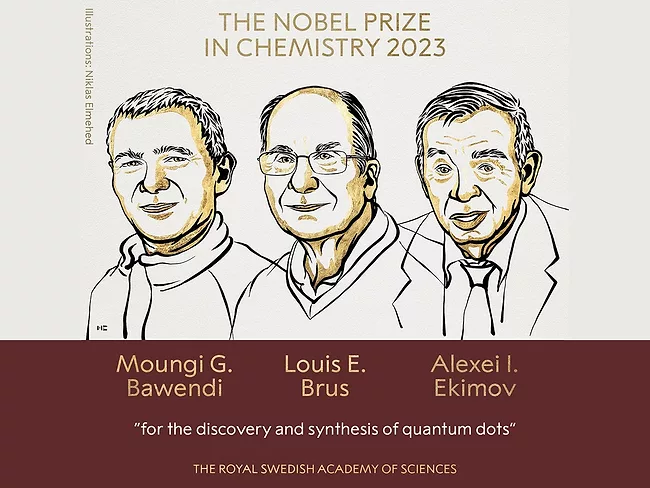
Nobel Prize graphic with illustrations of Moungi Bawendi, Louis Brus and Alexei Ekimov
Drug Design, Drug Delivery & Technologies

Nobel Prize in Chemistry 2023 goes to quantum dots, which illuminated the path to nanotechnology

Oct. 4, 2023
By Mar de Miguel
Quantum dots, a phenomenon in quantum physics that alters the energy of electrons and changes the properties of particles, caught the attention of the Royal Swedish Academy of Sciences (KVA) for the 2023 Nobel Prize in Chemistry.
Read More
Nobel Prize graphic with illustrations of Moungi Bawendi, Louis Brus and Alexei Ekimov
Drug Design, Drug Delivery & Technologies

Nobel Prize in Chemistry 2023 goes to quantum dots, which illuminated the path to nanotechnology

Oct. 4, 2023
By Mar de Miguel
Quantum dots, a phenomenon in quantum physics that alters the energy of electrons and changes the properties of particles, caught the attention of the Royal Swedish Academy of Sciences (KVA) for the 2023 Nobel Prize in Chemistry. Alexei Ekimov and Louis Brus received the award for their discovery; Moungi Bawendi, for developing its applications. With their work, “in equal shares,” said the Secretary General of KVA Hans Ellegren, the three scientists have laid the foundations of nanotechnology, a tool that we see today in our homes, on televisions and LED lamps, or in laboratories and hospitals for designing new drugs or new strategies against cancer.
Read More
Nobel Prize graphic with illustrations of Katalin Karikó and Drew Weissman
Infection

Perseverance on mRNA therapy research wins the 2023 Nobel Prize in Medicine after saving millions of lives

Oct. 2, 2023
By Mar de Miguel
Researchers who follow their instincts and achieve slow results while trying to break barriers have little support. They replace it with persistence. This is the story of Katalin Karikó and Drew Weissman. What was once a dream in their minds was later a success.
Read More
Nobel Prize graphic with illustrations of Katalin Karikó and Drew Weissman
Infection

Perseverance on mRNA therapy research wins the 2023 Nobel Prize in Medicine after saving millions of lives

Oct. 2, 2023
By Mar de Miguel
Researchers who follow their instincts and achieve slow results while trying to break barriers have little support. They replace it with persistence. This is the story of Katalin Karikó and Drew Weissman. What was once a dream in their minds was later a success. Their work together for decades was essential to achieving mRNA vaccines, and their perseverance was rewarded today with the 2023 Nobel Prize in Medicine.
Read More
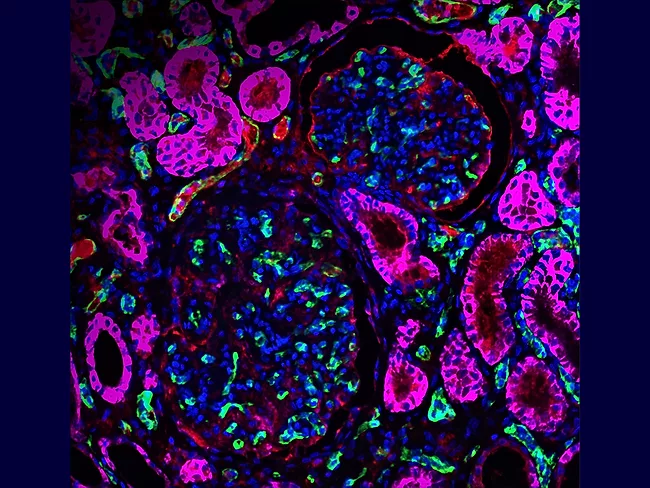
Mosaic illustration of a mouse
Neurology/Psychiatric

Genetic editing of individual cells points to late targets for developmental disorders

Sep. 28, 2023
By Mar de Miguel
A new gene editing method uses the CRISPR technique to modify the cells of an organ in vivo, creating a mosaic used to identify the effects of each altered gene. Scientists from the Swiss Federal Institute of Technology (ETH) in Zürich developed this technology called AAV-Perturb-seq, based on adeno-associated virus (AAV) to target, edit and analyze single-cell genetic perturbations.
Read More
View All Articles by Mar de Miguel

Popular Stories

  • Today's news in brief

    BioWorld
  • Art concept for targeting the brain

    Precision psychiatry beyond, or before, biomarkers

    BioWorld
    There is broad agreement that psychiatric diagnoses in their current form are not reflective of any underlying biology, and that this is one of the things...
  • Illustration of a motor neuron

    Keros reports beneficial effects of RKER-065 in ALS model

    BioWorld Science
    Keros Therapeutics Inc. has presented data regarding their activin receptor ligand trap, RKER-065, for the inhibition of the activin/myostatin signaling axis.
  • News in brief

    BioWorld Asia
    BioWorld Asia briefs for March 17, 2026
  • First-in-class POLG activator restores mtDNA across mutations

    BioWorld Science
    Researchers from Pretzel Therapeutics Inc. presented preclinical data of PX-578, a first-in-class POLG activator aimed at restoring mtDNA replication and...
  • BioWorld
    • Today's news
    • Analysis and data insight
    • Clinical
    • Data Snapshots
    • Deals and M&A
    • Financings
    • Medical technology
    • Newco news
    • Opinion
    • Regulatory
  • BioWorld Science
    • Today's news
    • Biomarkers
    • Cancer
    • Conferences
    • Endocrine/metabolic
    • Immune
    • Infection
    • Neurology/psychiatric
    • NME Digest
    • Patents
  • BioWorld Asia
    • Today's news
    • Analysis and data insight
    • Australia
    • China
    • Clinical
    • Deals and M&A
    • Financings
    • Newco news
    • Regulatory
    • Science
  • More
    • About
    • Advertise with BioWorld
    • Archives
    • Article reprints and permissions
    • Contact us
    • Cookie policy
    • Copyright notice
    • Data methodology
    • Infographics: Dynamic digital data analysis
    • Index insights
    • Podcasts
    • Privacy policy
    • Share your news with BioWorld
    • Staff
    • Terms of use
    • Topic alerts
Follow Us

Copyright ©2026. All Rights Reserved. Design, CMS, Hosting & Web Development :: ePublishing