BioWorld. Link to homepage.

Clarivate
  • BioWorld
  • BioWorld Science
  • BioWorld Asia
  • Data Snapshots
    • Biopharma
    • Medical technology
    • Infographics: Dynamic digital data analysis
    • Index insights
    • NME Digest
  • Special reports
    • Infographics: Dynamic digital data analysis
    • BCI
    • Ebola outbreak
    • Hantavirus
    • Trump administration impacts
    • Med-tech outlook 2026
    • Under threat: mRNA vaccine research
    • BioWorld at 35
    • Biopharma M&A scorecard
    • Bioworld 2025 review
    • BioWorld MedTech 2025 review
    • BioWorld Science 2025 review
    • Women's health
    • China's GLP-1 landscape
    • PFA re-energizes afib market
    • China CAR T
    • Alzheimer's disease
    • Coronavirus
    • More reports can be found here

BioWorld. Link to homepage.

  • Sign In
  • Sign Out
  • My Account
Subscribe
BioWorld - Sunday, August 2, 2026
Home » Authors » Mar de Miguel

Mar de Miguel

Articles

ARTICLES

Illustration of amyloid plaques on neurons
Neurology/psychiatric

Synthetic peptide and CAR-A each clear amyloid-β in Alzheimer’s

March 9, 2026
By Mar de Miguel
No Comments
If one could sweep the brain clean and send the toxic substances that drive neurodegeneration to the recycling bin, perhaps one could treat Alzheimer’s disease (AD). Researchers at the Chinese Academy of Sciences propose a new therapeutic strategy that uses synthetic peptides that bind to amyloid-β (Aβ) and direct it toward lysosomes. In addition, researchers at the Washington University School of Medicine in St. Louis have genetically modified astrocytes in vivo to express chimeric antigen receptors (CARs) that recognize and phagocytose Aβ plaques.
Read More
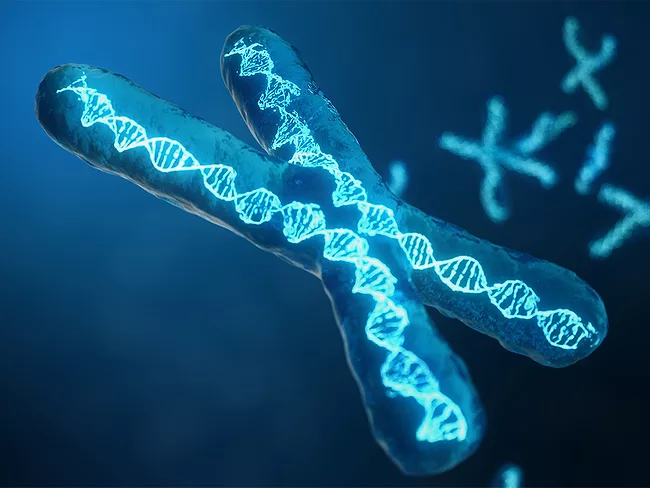
Illustration of X chromosomes with DNA
Genetic/congenital

Alternative splicing strategy shows promise for Rett syndrome

March 4, 2026
By Mar de Miguel
No Comments
A therapeutic strategy based on alternative splicing of the MECP2 gene could restore protein levels in Rett syndrome, a neurological disorder caused by mutations in that gene. Scientists at Baylor College of Medicine have successfully tested this approach both in vitro in neurons from Rett patients that produce some functional protein, correcting the altered gene expression and improving neuronal functions, and in vivo in mice.
Read More
HIV with graphs, numbers and map
HIV/AIDS

CROI 2026: Science and funding cuts reverse decades of progress against HIV

Feb. 27, 2026
By Mar de Miguel
No Comments
The massive cuts to science, global health, and HIV programs that unfolded in 2025 triggered a crisis with worldwide repercussions. The dissolution of USAID, the shutdown of PEPFAR, and the suspension of thousands of NIH research projects led to an immediate collapse of essential services, from HIV prevention to access to treatment. At the 33rd Conference on Retroviruses and Opportunistic Infections (CROI) held Feb. 22-25, 2026, in Denver, scientists, activists, and health professionals presented data illustrating the scale of the damage and warned of a historic setback in the global HIV response.
Read More
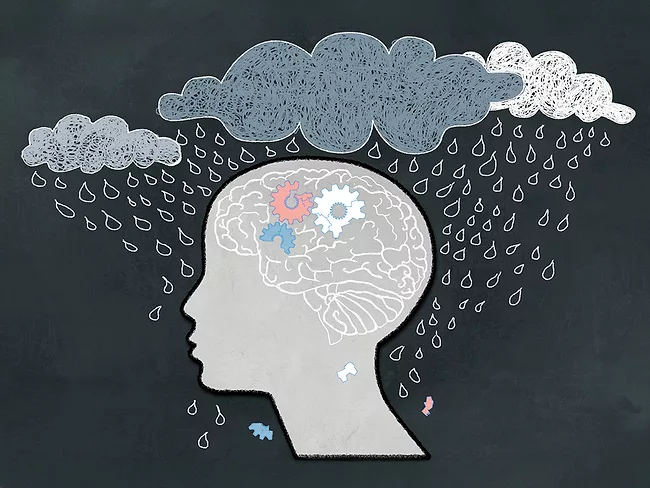
Depression concept with human, broken brain and heavy rain
HIV/AIDS

CROI 2026 highlights depression and cognitive vulnerability in HIV

Feb. 26, 2026
By Mar de Miguel
No Comments
The effects of aging pose an additional challenge for people with HIV due to the neurological and psychological consequences that persist despite antiretroviral therapy. At the Conference on Retroviruses and Opportunistic Infections (CROI) held Feb. 22-25, 2026, in Denver, the scientific community examined how the virus affects the brain, how the reservoir is established in the CNS, and which genetic, immunological or treatment-related factors influence cognitive health.
Read More
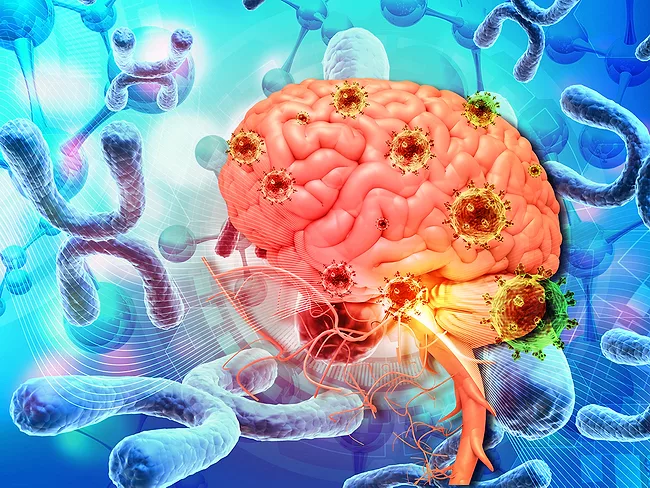
Brain and virus with chromosome
HIV/AIDS

CROI 2026: Neurodegeneration, the challenge of aging with HIV

Feb. 25, 2026
By Mar de Miguel
No Comments
Antiretroviral therapies against HIV have been in use for more than 30 years and have enabled people living with HIV to maintain undetectable viral levels. Many of them are aging in good health. However, others present symptoms of cognitive decline. HIV can reach the brain and establish a reservoir there. Yet, it is still unknown what this reservoir is like, which cells are affected, and which comorbidities are typical of aging or are associated with the virus.
Read More
Colorized scanning electron micrograph of a T lymphocyte.

SLAMF6 is suppressor of T-cell cancer immunity

Feb. 19, 2026
By Mar de Miguel
No Comments
SLAMF6 is an immune cell receptor whose function was not clear. Does it activate or inhibit cells? The results so far have been contradictory. Now, scientists at the Institut de Recherches Cliniques de Montréal have unveiled evidence that SLAMF6, a protein of the SLAM family that binds to copies of itself, is regulated by interactions between molecules of the same receptor within the same cell.
Read More
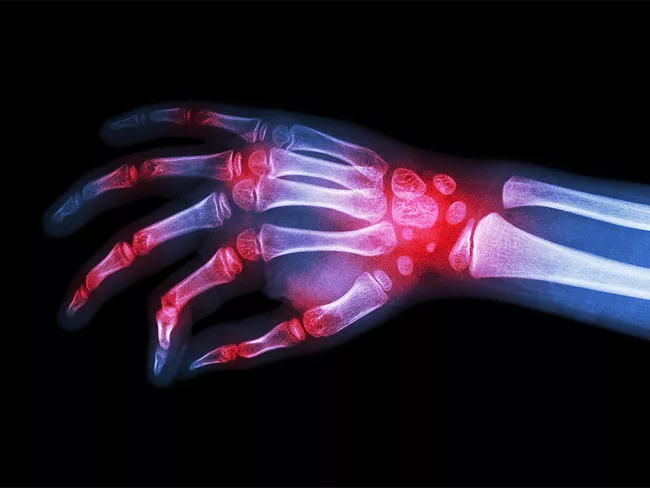
X-ray image of hand and wrist
Immune

T cells store lipids and die in rheumatoid arthritis joints

Feb. 18, 2026
By Mar de Miguel
No Comments
In the inflamed joints of rheumatoid arthritis, CD4+ T lymphocytes accumulate lipid droplets that make them vulnerable and promote their death, thereby amplifying joint inflammation. A study led by scientists at Mayo Clinic and Stanford University suggests that blocking the formation of these lipid droplets or their contents could offer a therapeutic strategy for this condition.
Read More
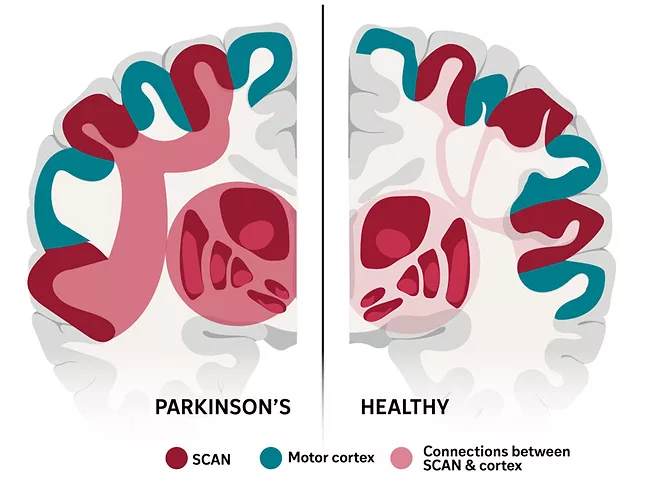
Illustration of SCAN in Parkinson’s vs healthy subcortex

SCAN is core circuit affected in Parkinson’s disease

Feb. 18, 2026
By Mar de Miguel
No Comments
Parkinson’s disease is a neurodegenerative disorder that affects movement, and tremor is one of its signatures. But it is a much more wide-ranging disorder, and patients experience problems with cognitive and emotional processes as well. SCAN, the somato-cognitive action network identified in 2023, could reshape the definition of PD. Treating this circuit can improve outcomes.
Read More
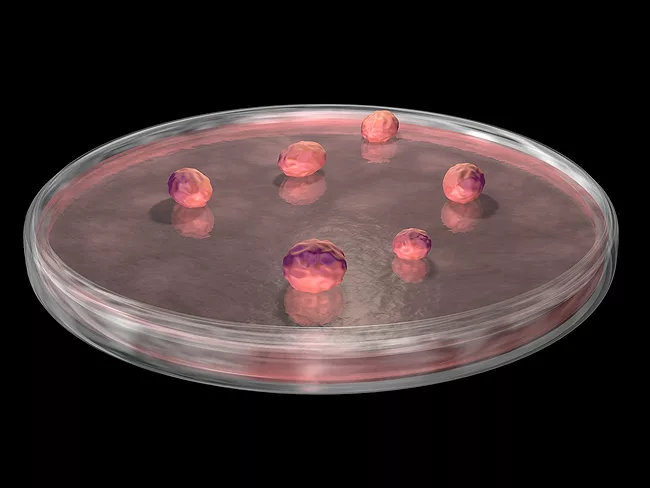
3D illustration of organoid models in a petri dish
Drug design, drug delivery & technologies

Human organoid mimics cancer-induced cachexia

Feb. 17, 2026
By Mar de Miguel
No Comments
The variety of organoids that can be developed in vitro is enabling major advances. Depending on the type of tissues and the research goals, these small 3D cell-based structures that mimic real tissue offer certain advantages over animal models. Scientists at the University of Padova in Italy have created human neuromuscular organoids to reproduce cancer-induced muscle cachexia, a condition that murine models do not accurately replicate.
Read More
Colorized scanning electron micrograph of a T lymphocyte.
Immuno-oncology

SLAMF6 is suppressor of T-cell cancer immunity

Feb. 16, 2026
By Mar de Miguel
No Comments
SLAMF6 is an immune cell receptor whose function was not clear. Does it activate or inhibit cells? The results so far have been contradictory. Now, scientists at the Institut de Recherches Cliniques de Montréal (IRCM) have unveiled evidence that SLAMF6, a protein of the SLAM family that binds to copies of itself, is regulated by interactions between molecules of the same receptor within the same cell.

Read More
View All Articles by Mar de Miguel

Popular Stories

  • Today's news in brief

    BioWorld
    BioWorld briefs for July 31, 2026.
  • HIV virus

    AIDS 2026: New targets for metabolic dysfunction despite ART

    BioWorld
    Although antiretroviral therapy (ART) can suppress HIV to undetectable levels, a growing body of evidence suggests that the virus leaves a lasting biological...
  • Jingxin discloses new muscarinic and sigma receptor agonists

    BioWorld Science
    Shanghai Jingxin Biopharmaceutical Co. Ltd. and Zhejiang Jingxin Pharmaceutical Co. Ltd. have synthesized new muscarinic acetylcholine receptor and sigma receptor...
  • Silhouette illustration of DNA gene editing

    Death in Chinese gene-editing trial exposes ethical fault lines

    BioWorld
    The death of a 6-year-old girl after receiving an experimental brain-directed gene-editing therapy at the Xinhua Hospital in Shanghai has reopened debate over how...
  • Anthony Fauci at Senate hearing 7-29

    Fauci’s silence may put him in contempt of Congress

    BioWorld
    After repeatedly invoking the Fifth Amendment to every question asked during the July 29 hearing of the U.S. Senate Homeland Security Committee, Anthony Fauci,...
  • BioWorld
    • Today's news
    • Analysis and data insight
    • Clinical
    • Data Snapshots
    • Deals and M&A
    • Financings
    • Medical technology
    • Newco news
    • Opinion
    • Regulatory
  • BioWorld Science
    • Today's news
    • Biomarkers
    • Cancer
    • Conferences
    • Endocrine/metabolic
    • Immune
    • Infection
    • Neurology/psychiatric
    • NME Digest
    • Patents
  • BioWorld Asia
    • Today's news
    • Analysis and data insight
    • Australia
    • China
    • Clinical
    • Deals and M&A
    • Financings
    • Newco news
    • Regulatory
    • Science
  • More
    • About
    • Advertise with BioWorld
    • Archives
    • Article reprints and permissions
    • Contact us
    • Cookie policy
    • Copyright notice
    • Data methodology
    • Infographics: Dynamic digital data analysis
    • Index insights
    • Podcasts
    • Privacy policy
    • Share your news with BioWorld
    • Staff
    • Terms of use
    • Topic alerts
    • Videos
Follow Us

Copyright ©2026. All Rights Reserved. Design, CMS, Hosting & Web Development :: ePublishing