2025 has been the most challenging year in the efforts to fight HIV since at least the advent of antiretroviral therapy. In a report on “Overcoming disruption, transforming the AIDS response,” released last week ahead of World AIDS Day on Dec. 1, the Joint United Nations Program on HIV/AIDS (UNAIDS) described “a global system in shock” by sharply reduced funding from the U.S. and other wealthy nations. Scientifically, for now, progress is ongoing. To mark World AIDS Day, Nature published three independent studies on HIV.
The number of deaths caused by prion diseases reaches about 30,000 annually. Only 5 months pass from the diagnosis of seemingly healthy patients to the fatal outcome of this neurodegenerative condition, and just 1 month until quality of life is completely lost. Removing the brain protein that causes this genetic or infectious disorder could be achieved thanks to new gene-silencing techniques. At a special meeting of the American Society of Gene & Cell Therapy, in “AAV-mediated epigenetic editing for prion disease,” Sonia Vallabh presented not just the data of her research, but the impact of this disease on her family and on herself.
The field of gene therapy is experiencing major advances driven by precise editing technologies, such as base and prime editing, and by the design of increasingly sophisticated vectors to deliver payloads that could reverse the effects of diseases. However, in the transition to in vivo applications many approaches still fail in their attempt to effectively reach target tissues or cells.
A 24‑week pregnant woman fears for her unborn baby, who is developing with a sacrococcygeal teratoma so large and vascularized that it nearly surpasses the size of the fetus itself. Faced with this threat, surgeons operate inside the uterus in an open procedure that partially exposes the baby to remove the tumor and give the baby a chance to survive until birth. According to scientists presenting at the American Society of Gene & Cell Therapy's special meeting on Breakthroughs in Targeted In Vivo Gene Editing, this could be avoided.
The field of gene therapy is experiencing major advances driven by precise editing technologies, such as base and prime editing, and by the design of increasingly sophisticated vectors to deliver payloads that could reverse the effects of diseases. However, in the transition to in vivo applications many approaches still fail in their attempt to effectively reach target tissues or cells.
A significant share of the risk and heritability of attention-deficit hyperactivity disorder (ADHD) is explained by rare genetic variants. A study led by scientists from Aarhus University in Denmark has uncovered their weight in this condition and identified three variants that will help to better understand their role, the risk of developing it, or its comorbidities, in contrast with the common and more frequent variants associated with ADHD.
Could GLP-1 receptor agonists (GLP-1RAs), already used in obesity and diabetes, be repurposed as drugs to slow aging? Hong Kong, one of the places in the world with the highest human longevity, is also home to a scientific study on the effects of GLP-1RAs. For the first time, scientists at the Chinese University of Hong Kong (CUHK) have assessed their pharmacological potential in later life using a multiomics preclinical approach.
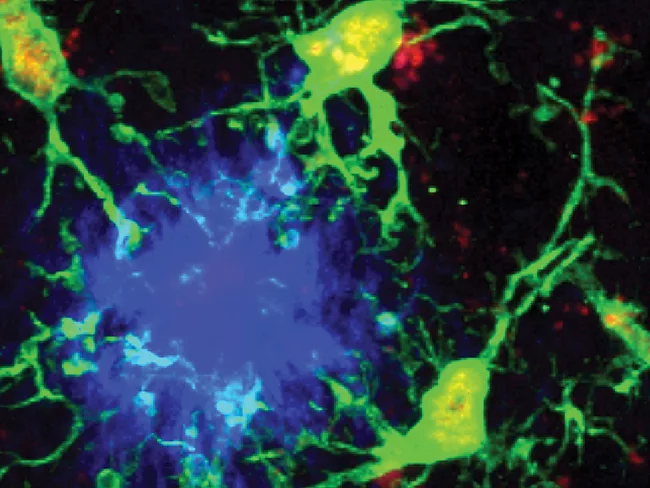
In Alzheimer’s disease, microglia act as a double-edged sword. They can either protect the brain or worsen the damage, depending on their activation state. Inflammatory activation harms healthy neurons. However, a study reveals that a special type of microglia expressing specific receptors and behaving like T cells may help mitigate this neurodegenerative condition.
A collaborative effort is trying to construct the cell atlas of the developing brains of humans and animal models. Using advanced single-cell and spatial technologies, they mapped how brain cell types emerge, diversify and organize over time, offering new insights into the origins of neurodevelopmental and psychiatric conditions. These breakthroughs in genomics and imaging will allow scientists to study complex developmental processes with high resolution.
Two in five preclinical studies on subarachnoid hemorrhage (SAH) published in peer-reviewed scientific journals contain problematic images. A team of researchers from Radboud University Medical Center, who had previously identified several such cases, analyzed the literature in this field to assess the scope of the issue. They found that 40% of the studies included suspicious images.