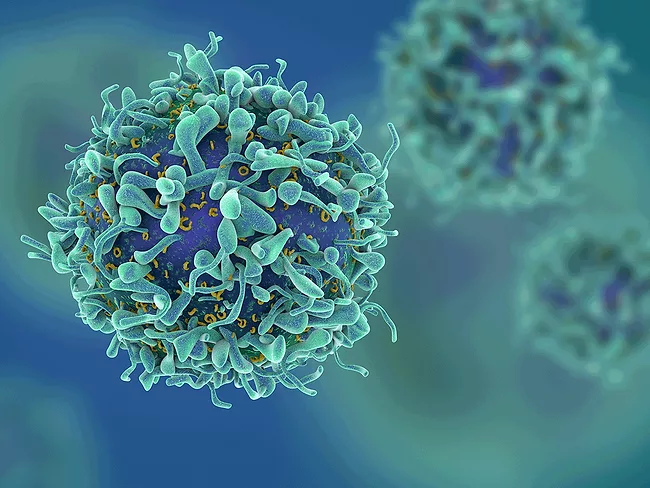
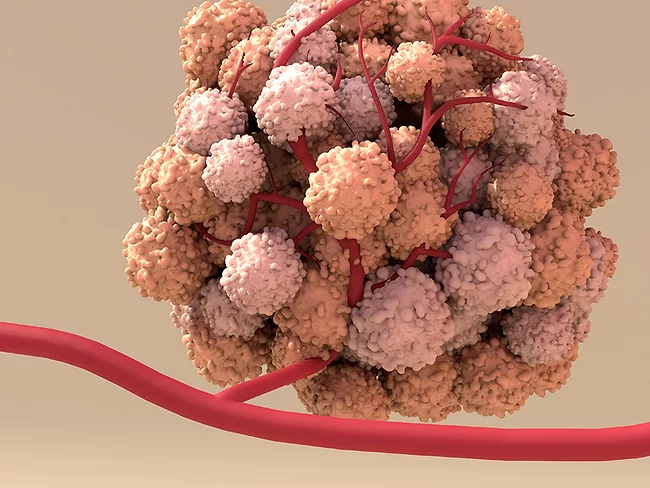
Breast cancer cells, when disseminated to other secondary organs such as the lungs, may stay in a dormant state for years, even decades. But the mechanisms that limit their expansion are not well understood. This is what researchers call a dormant mesenchymal-like phenotype before metastasis to the lungs. Now, scientists have shown in a study published Oct. 7, 2024, in Cell, that the limiting of disseminated breast cancer cells (DCCs) to metastasize in the lungs is due to alveolar macrophages, which activate signals that make DCCs stay dormant.
Breast cancer cells, when disseminated to other secondary organs such as the lungs, may stay in a dormant state for years, even decades. But the mechanisms that limit their expansion are not well understood. This is what researchers call a dormant mesenchymal-like phenotype (M-like) before metastasis to the lungs. Now, scientists have shown in a study published Oct. 7, 2024, in Cell, that the limiting of disseminated breast cancer cells (DCCs) to metastasize in the lungs is due to alveolar macrophages (AMs), which activate signals that make DCCs stay dormant.
The spread of drug-resistant bacteria is a global health concern and could once again become a leading cause of mortality. The World Health Organization has flagged carbapenem-resistant Acinetobacter baumannii as a top priority pathogen requiring innovative therapies for its management, which has a mortality rate of 25%-60% and caused more than 100,000 deaths worldwide in 2019. Therapy based on the use of bacteriophages (phages) to fight antibiotic-resistant bacteria is one such innovative strategy.
The spread of drug-resistant bacteria is a global health concern and could once again become a leading cause of mortality. The World Health Organization has flagged carbapenem-resistant Acinetobacter baumannii (CRAB), which has a mortality rate of 25%-60%, as a top priority pathogen requiring innovative therapies for its management. Researchers from the HUN-REN Biological Research Centre in Hungary have published a paper in Cell in which they describe designing and developing phage cocktails that target the most prevalent CRAB strains within specific geographic regions by using phylogeographic analysis and mapping the pathogen’s genetic diversity.
Immunotherapy based on T cells is the vanguard of cancer treatments. Researchers from Washington University in St. Louis have shown that similar approaches using T cells could be applied for treating injuries of the central nervous system (CNS). They reported their findings in Nature on Sept. 4, 2024.
Immunotherapy based on T cells is the vanguard of cancer treatments. Researchers from Washington University in St. Louis have shown that similar approaches using T cells could be applied for treating injuries of the central nervous system (CNS). They reported their findings in Nature on Sept. 4, 2024.
Mutations in the metabolic enzyme isocitrate dehydrogenase 1 (IDH1) induce tumorigenesis due to generation of the oncometabolite (R)-2-hydroxyglutarate (R-2HG). A hallmark of solid tumors carrying mutations in IDH1 is immune evasion by T-cell exclusion and altered epigenetic state. Researchers from the Center for Cancer Research, Massachusetts General Hospital have published a study in Science on July 12, 2024, in which they demonstrate that inhibiting mutant IDH1 restored antitumoral immunity.
Fibrodysplasia ossificans progressiva (FOP) is a rare and life-threatening genetic disease caused by gain-of-function mutations in the ALK2 gene, which encodes activin receptor-like kinase 2. Blueprint Medicines Corp. has elucidated the discovery of their ALK2 inhibitor BLU-782, which is now in phase II studies at Ipsen SA for the treatment of FOP.
Fibrodysplasia ossificans progressiva is a rare and life-threatening genetic disease caused by gain-of-function mutations in the ALK2 gene, which encodes activin receptor-like kinase 2. Blueprint Medicines Corp. has elucidated the discovery of their ALK2 inhibitor BLU-782, which is now in phase II studies at Ipsen for the treatment of FOP.
Sepsis occurs when there is a dysregulated host response to infection, resulting in organ dysfunction. According to the Global Burden of Disease study, about 50 million people annually worldwide develop severe sepsis or septic shock, and 11 million of them die. Growing evidence suggests that changes to the vascular endothelium, which becomes more permeable to fluid, protein and inflammatory cells, are behind the pathogenesis of sepsis and septic shock.