BioWorld. Link to homepage.

Clarivate
  • BioWorld
  • BioWorld Science
  • BioWorld Asia
  • Data Snapshots
    • Biopharma
    • Medical technology
    • Infographics: Dynamic digital data analysis
    • Index insights
    • NME Digest
  • Special reports
    • Infographics: Dynamic digital data analysis
    • Trump administration impacts
    • Under threat: mRNA vaccine research
    • BioWorld at 35
    • Biopharma M&A scorecard
    • Bioworld 2025 review
    • BioWorld MedTech 2025 review
    • BioWorld Science 2025 review
    • Women's health
    • China's GLP-1 landscape
    • PFA re-energizes afib market
    • China CAR T
    • Alzheimer's disease
    • Coronavirus
    • More reports can be found here

BioWorld. Link to homepage.

  • Sign In
  • Sign Out
  • My Account
Subscribe
BioWorld - Wednesday, February 25, 2026
Home » Authors » Xavier Bofill Bruna

Articles by Xavier Bofill Bruna

Ribosome as part of an biological cell constructing mRNA molecules
Infection

Ribosome-binding antibiotic cresomycin strikes against multidrug-resistant pathogens

Feb. 22, 2024
By Xavier Bofill Bruna
Researchers from the University of Illinois at Chicago and Harvard University have published details on the chemical synthesis and microbiological evaluation of a ribosome-binding antibiotic – cresomycin (CRM) – that was able to overcome antimicrobial resistance of major pathogenic bacteria including Escherichia coli, Staphylococcus aureus, Pseudomonas aeruginosa and others.
Read More
Artwork depicts KIBRA-dependent recovery of functional plasticity at synapses despite tau-induced toxicity in the brain.
Neurology/Psychiatric

KIBRA restores tau-driven damage in Alzheimer’s disease

Feb. 6, 2024
By Xavier Bofill Bruna
It is well known that protein tau forms aggregates in the brain in neurodegenerative diseases such as Alzheimer’s disease (AD) that are also known as tauopathies. Accumulation of protein tau in the brain leads to the cell toxicity and promotes the loss of synaptic plasticity, which in turn causes memory loss. As reported on Feb. 1, 2024, in The Journal of Clinical Investigation, assistant professor Tara Tracy and her research team from the Buck Institute for Research on Aging have discovered a protein in the brain that could restore this damage induced by protein tau.
Read More
Villi in intestinal tract.
Immuno-oncology

Targeting CTLA-4 without colitis induction is gut microbiota dependent

Jan. 16, 2024
By Xavier Bofill Bruna
Immune checkpoint inhibitors (ICIs), such as anti-CTLA-4 antibodies, are widely used in cancer immunotherapy. CTLA-4 blockers such as Yervoy (ipilimumab, Bristol Myers Squibb Co.) stimulate antitumoral immune responses, but may also induce toxicity, such as colitis, a common immune-related adverse event that can lead to treatment discontinuation.
Read More
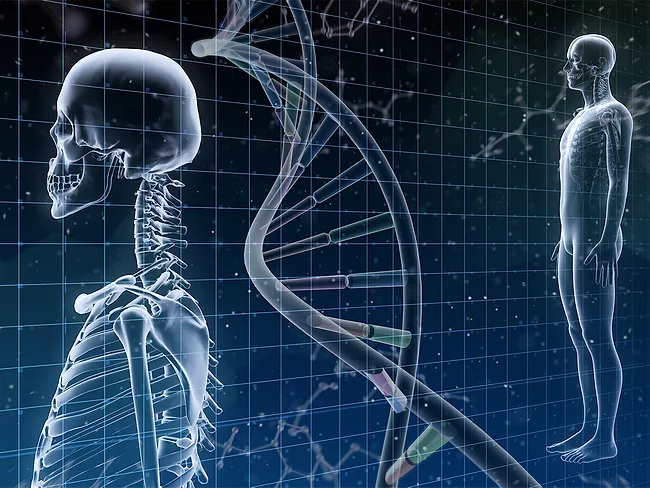
3D image showing the human protein KRAS interacting with RAF1
Cancer

KRAS allosteric mapping may open new therapeutic opportunities

Dec. 22, 2023
By Xavier Bofill Bruna
In an article published on Dec. 18, 2023, in Nature, researchers from the Centre for Genomic Regulation in Barcelona (Spain) and Wellcome Sanger Institute in Hinxton (U.K.) reported achieving a milestone regarding KRAS targeting in cancer. The team quantified the impact of >26,000 KRAS variants and how these mutations affected protein folding and its interaction with the six main effectors – RAF1, PIK3CG, RALGDS, SOS1, K27 and K55.
Read More
Lung cancer illustration
Cancer

RNA-binding plus ribosomal proteins block c-Myc in lung cancer

Dec. 4, 2023
By Xavier Bofill Bruna
Lung adenocarcinoma may be cornered by a recent finding coming from a study published on Nov. 30, 2023, in the Proceedings of the National Academy of Sciences. This investigation has unveiled that a tumor suppressor molecule called RNA-binding motif protein 10 (RBM10) partners with two ribosomal proteins, which in turn inactivate the well-known oncogene Myc proto-oncogene protein (c-Myc).
Read More
Antibiotic resistant bacteria inside a biofilm
Infection

Studying bacterial ‘trash’ can rapidly detect response to antibiotics

May 29, 2023
By Xavier Bofill Bruna
By sequencing the bacterial mRNA that bacteria break down (the degradome) during protein synthesis, a novel approach called 5PSeq was able to analyze how environmental exposure stress, including that of antibiotics, affected bacterial translational dynamics. This is what researchers from the Karolinska Institutet led by Vicent Pelechano have discovered in their study published on May 22, 2023, in Nature Microbiology.
Read More
Neon brain
Neurology/Psychiatric

Giving organoids in vivo environment improves brain modeling

May 16, 2023
By Xavier Bofill Bruna
Implanting brain organoids into the brains of mice may allow the more realistic study of microglial cells during both healthy and disease states. This is what researchers from the Salk Institute and their collaborators found in a study published on May 11, 2023, in Cell.
Read More
Ocular

OSK-driven epigenetic reprogramming restores visual function in nonhuman primates

April 28, 2023
By Xavier Bofill Bruna
In research presented this week at the Association for Research in Vision and Ophthalmology (ARVO) 2023 Annual Meeting, investigators from Life Biosciences Inc. reported using epigenetic reprogramming in a nonarteritic anterior ischemic optic neuropathy (NAION) model in nonhuman primates (NHPs).
Read More
Illustration of intestines overlayed on human torso
Gastrointestinal

Rare cell type drives both gut discomfort and anxiety symptoms

March 28, 2023
By Xavier Bofill Bruna
A rare cell type in the gut, the enterochromaffin (EC) cell, drove both gut discomfort and anxiety symptoms in animal models of gastrointestinal pain. Furthermore, the cells reacted differently in male and female mice, opening up new ways to understand and investigate the higher prevalence of gut disorders in women.
Read More
Gene editing of human embryos
Genetic/Congenital

Standard method for evaluating germline edits has large blind spots

March 10, 2023
By Xavier Bofill Bruna
The intended use of gene editing tools on pre-implantation human embryos would be to avoid the development of congenital diseases in the upcoming baby. But it may have its own risks. Those risks were illustrated in a publication in the March 7, 2023, issue of Nature Communications, where researchers from the Center for Embryonic Cell and Gene Therapy, Oregon Health & Science University (OHSU) showed that the method that is most frequently used for evaluating the effects of gene editing zygotes did not always result in an accurate picture of those edits.
Read More
Previous 1 2 3 4 5 6 Next

Popular Stories

  • Today's news in brief

    BioWorld
  • IL-22 and TL1A, a robust couple for diagnosing hidradenitis suppurativa

    BioWorld Science
    Hidradenitis suppurativa (HS) is a chronic inflammatory skin disease with strong association with psoriasis and inflammatory bowel disease (IBD). While some...
  • Illustration of head with maze that is missing parts

    Inhibiting the NLRP3 inflammasome for cognitive impairment, stroke

    BioWorld Science
    Vascular cognitive impairment and dementia (VCID) and cerebral small vessel disease are among the leading causes of dementia, where inflammation is known to play...
  • Pill in immersive interface

    New mechanism of action identified for QC-6352

    BioWorld Science
    QC-6352 is a small molecule developed to inhibit the histone demethylase 4 (KDM4) that has shown potent antitumoral activity and which has a derivative named...
  • Illustration of brain and antibodies

    VST Bio’s VB-001 is neuroprotector after stroke

    BioWorld Science
    At the recent International Stroke Conference, researchers from VST Bio Corp. and Yale University presented preclinical data regarding VB-001, a monoclonal...
  • BioWorld
    • Today's news
    • Analysis and data insight
    • Clinical
    • Data Snapshots
    • Deals and M&A
    • Financings
    • Medical technology
    • Newco news
    • Opinion
    • Regulatory
  • BioWorld Science
    • Today's news
    • Biomarkers
    • Cancer
    • Conferences
    • Endocrine/metabolic
    • Immune
    • Infection
    • Neurology/psychiatric
    • NME Digest
    • Patents
  • BioWorld Asia
    • Today's news
    • Analysis and data insight
    • Australia
    • China
    • Clinical
    • Deals and M&A
    • Financings
    • Newco news
    • Regulatory
    • Science
  • More
    • About
    • Advertise with BioWorld
    • Archives
    • Article reprints and permissions
    • Contact us
    • Cookie policy
    • Copyright notice
    • Data methodology
    • Infographics: Dynamic digital data analysis
    • Index insights
    • Podcasts
    • Privacy policy
    • Share your news with BioWorld
    • Staff
    • Terms of use
    • Topic alerts
Follow Us

Copyright ©2026. All Rights Reserved. Design, CMS, Hosting & Web Development :: ePublishing