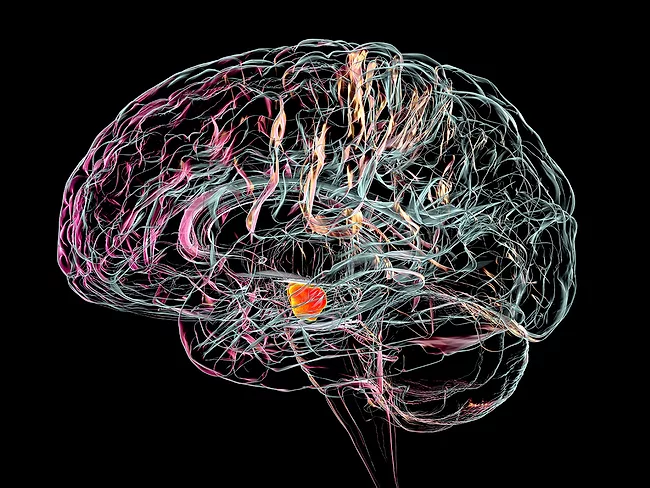
Advances in understanding the processes underlying brain neurodegeneration have allowed lots of new treatment and prevention strategies to begin to flourish. Several presentations at the 2024 Alzheimer’s & Parkinson’s Diseases Conference recently held in Lisbon reflect that eyes are now on some individuals who, despite showing pathological signs in their brains, stay cognitively healthy across several endogenous mechanisms of resilience.
The third day of the AD/PD 2024 conference in Lisbon started with a plenary lecture given by Professor Howard Fillit entitled, “Translating the biology of aging into new therapeutics for Alzheimer’s disease.” Fillit, a recognized neuroscientist and geriatrician, and co-founder of the Alzheimer’s Drug Discovery Foundation (ADDF), pointed to the geroscience hypothesis which postulates that targeting aging processes may result in preventive and therapeutic options for diseases of old age, including Alzheimer’s disease (AD).
At the 2024 Alzheimer’s & Parkinson’s Diseases Conference this week, Michel Goedert from the MRC Laboratory of Molecular Biology in Cambridge gave the Donald L. Price Memorial Plenary Lecture entitled, “Cryo-EM structures of disease filaments from human brains.” Donald Price was particularly well-known for his work on plaques and tangles in nonhuman aged primate brains and for the development of several animal models of neurodegenerative diseases.
Researchers from the La Jolla Institute for Immunology (LJI) and collaborators have presented a new platform to identify and validate neoantigens that would otherwise escape traditional routine sampling methods. The project, which they describe in an article published on Feb. 28, 2024, in Science Translational Medicine, started after discussions at the beginning of a cancer vaccine program between teams at UCSD Moores Cancer Center (MCC) and LJI.
In a paper published on Feb. 21, 2024, in Science Translational Medicine, researchers from the Versiti Blood Research Institute described how they successfully controlled bleeding for months in hemophilia A models using a siRNA therapy that targeted plasminogen.
Biopsies from up to 14% of patients with non-small-cell lung cancer (NSCLC) showing resistance to epidermal growth factor receptor (EGFR) tyrosine kinase therapy ascertain histologic transformation (HT) to SCLC, which is estimated to kill around 250,000 patients globally, every year. In a study published in Science on Feb. 9, 2024, researchers from Weill Cornell Medicine have dissected that complex process using a genetically engineered mouse model of pulmonary HT.
Researchers at Mount Sinai have identified a unique neuron type that could explain vulnerability in Parkinson’s disease and thus help unravel the neuronal complexity of this disorder – hopefully leading to more precise and effective therapies. The findings, published in Science Advances on Jan. 10, 2024, provide new insights into the genetic causes and changes occurring in substantia nigra during PD pathogenesis.
Researchers at the Spanish National Center for Cardiovascular Research (CNIC) have identified a new target that may open new avenues into pulmonary hypertension (PH) treatment. Their findings were published in Science Advances on Jan. 19, 2024.
Researchers from the Institute for Bioengineering of Catalonia (IBEC) and collaborators have successfully treated bladder tumors in mice using urease-powered nanobots. The testing consisted of the administration of 18F-nanorobots to tumor-bearing mice divided into four groups depending on tumor volumes using a group of non-tumor-bearing mice as control. Importantly, the therapy remained in the bladder with only a very small proportion of radioactivity seen in other organs. The results were published in Nature Nanotechnology on Jan. 15, 2024.
Researchers at Mount Sinai have identified a unique neuron type that could explain vulnerability in Parkinson’s disease and thus help unravel the neuronal complexity of this disorder – hopefully leading to more precise and effective therapies. The findings, published in Science Advances on Jan. 10, 2024, provide new insights into the genetic causes and changes occurring in substantia nigra during PD pathogenesis.