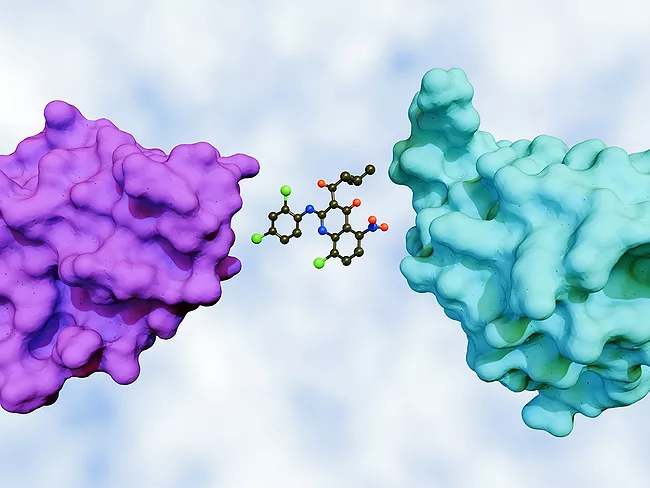
In its second deal with Novartis AG of the past 11 months, Monte Rosa Therapeutics Inc. is getting $120 million up front to collaborate on developing molecular glue degraders to treat immune-mediated diseases. The agreement could swell to $5.7 billion for Monte Rosa.
In its second deal with Novartis AG of the past 11 months, Monte Rosa Therapeutics Inc. is getting $120 million up front to collaborate on developing molecular glue degraders to treat immune-mediated diseases. The agreement could swell to $5.7 billion for Monte Rosa.
As Avidity Biosciences Inc. brought the second-largest follow-on offering of the year to the market, the company also released positive early and midstage stage results of del-zota, an antibody-oligonucleotide conjugate, in treating Duchenne muscular dystrophy. Phase I/II results showed a reversal of disease progression in patients who have been continuously treated for a year, plus improvements in several functional measures.
Positive results for Revolution Medicines Inc.’s phase I studies of its lead candidate, the RAS-blocker daraxonrasib for treating pancreatic ductal adenocarcinoma, prompted the company to say it’s time for a phase III study in the aggressive cancer. Revolution said it plans to begin a global, randomized and registrational trial in first-line metastatic disease sometime in the fourth quarter of 2025.
Less than two months after receiving priority review status for an NDA, Johnson & Johnson won U.S. FDA approval of Inlexzo, its intravesical gemcitabine-releasing system previously known as TAR-200, to treat adults with Bacillus Calmette-Guérin-unresponsive, non-muscle invasive bladder cancer (NMIBC) with carcinoma in situ, with or without papillary tumors.
Daiichi Sankyo Co. Ltd. and Merck & Co. Inc.’s antibody-drug conjugate (ADC) ifinatamab deruxtecan produced a confirmed 48.2% objective response rate in a phase II study of previously treated patients with extensive-stage small-cell lung cancer.
The U.S. FDA issued a complete response letter (CRL) for the NDA to privately held Saol Therapeutics Inc.’s rare disease treatment, sodium dichloroacetate (SL-1009), for pyruvate dehydrogenase complex deficiency. The inhibitor of pyruvate dehydrogenase kinases is the only drug in development for treating the rare genetic disorder, according to Cortellis. There are no FDA-approved treatments for the disease.
Daiichi Sankyo Co. Ltd. and Merck & Co. Inc.’s antibody-drug conjugate (ADC) ifinatamab deruxtecan produced a confirmed 48.2% objective response rate in a phase II study of previously treated patients with extensive-stage small-cell lung cancer.
After July’s first-ever release of more than 200 complete response letters (CRLs) by the U.S. FDA, the agency now says it will release letters shortly after sponsors receive them. In addition, the FDA released a new batch of 89 CRLs from 2024 to now that are tied to pending or withdrawn applications.
Phase III results from Sanofi SA’s study of amlitelimab in treating atopic dermatitis met the primary and key secondary endpoints, but investors took a step back.