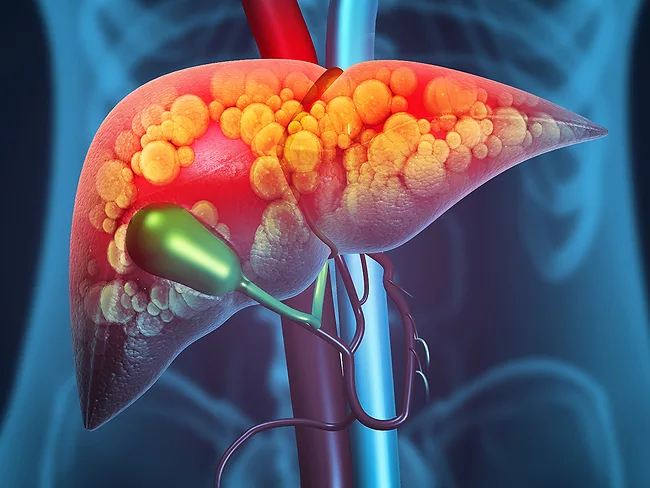
D&D Pharmatech Inc. announced May 27 positive top-line tissue biopsy results of zabopegdutide (DD-01) from a 48-week phase II study of metabolic dysfunction-associated steatohepatitis (MASH), pushing company shares up 30% on the day.
At the recently concluded European Association for the Study of the Liver meeting, presentations underscored how increasingly granular insights into liver pathobiology are driving the rapid identification of new druggable targets across diverse indications.
With a historic WHO resolution adopted this week giving countries, for the first time, a mandate to address liver disease affecting 1.5 billion people worldwide, this momentum is strongly reflected at the ongoing European Association for the Study of the Liver 2026 congress in Barcelona. The mandate positions liver disease alongside cancer, cardiovascular disease and diabetes as a core global health priority.
D&D Pharmatech Inc. announced May 27 positive top-line tissue biopsy results of zabopegdutide (DD-01) from a 48-week phase II study of metabolic dysfunction-associated steatohepatitis (MASH), pushing company shares up 30% on the day.
Hypertrophic cardiomyopathy (HCM) is a condition that limits tolerance to exercise and predisposes people to sudden cardiac death due to mutations in sarcomeric genes. Researchers from Cedars-Sinai Medical Center have tested TY-1, a chemically modified oligonucleotide-based drug inspired by the previously tested EV-YF1, in mice with HCM.
Baseimmune Ltd. has announced its strategic expansion into fibrosis, with a new fibrosis-focused pipeline led by a program for idiopathic pulmonary fibrosis (IPF).
Chugai Pharmaceutical has reported a new humanized antibody (Ab, SOF-10) that targets latent TGF-β1 and selectively blocks protease- and integrin αVβ8-mediated latent TGF-β1 activation.
Despite the availability of advanced therapeutic options, about 40%-50% of patients with hidradenitis suppurativa do not achieve significant improvement in disease activity, thus there is a need for novel medications.
Liver fibrosis in the course of metabolic dysfunction-associated steatohepatitis could be significantly reduced using CAR T-cells generated in vivo. Scientists at the Icahn School of Medicine at Mount Sinai have developed an experimental cell therapy that eliminates only one type of liver cell, the stellate cells that express fibroblast activation protein alpha. This strategy not only reduced fibrosis but also reversed liver damage.
Liver fibrosis in the course of metabolic dysfunction-associated steatohepatitis (MASH) could be significantly reduced using CAR T-cells generated in vivo. Scientists at the Icahn School of Medicine at Mount Sinai have developed an experimental cell therapy that eliminates only one type of liver cell, the stellate cells that express fibroblast activation protein alpha (FAP). This strategy not only reduced fibrosis but also reversed liver damage.