Ocular Therapeutix Inc.’s wet age-macular degeneration candidate, Axpaxli, beat anti-VEGF therapy Eylea (aflibercept) from Regeneron Pharmaceuticals Inc. in the phase III head-to-head trial called Sol-1, but not by enough of a margin for Wall Street. Shares of the firm (NASDAQ:OCUL) closed Feb. 17 at $6.99, down $1.89, or 21%, as investors mulled the top-line findings.
Another complete response letter from the U.S. FDA for Regeneron Pharmaceuticals Inc.’s age-related macular degeneration (AMD) therapy Eylea (aflibercept) – along with disappointing sales of the VEGF inhibitor – dented shares (NASDAQ:REGN) by $41.95. They closed April 29 at $568.91, having traded as low as $542.44 during the day.
4D Molecular Therapeutics Inc.’s gene therapy, 4D-150, in wet age-related macular degeneration (wet AMD) produced positive phase IIb data as the company preps two phase III studies set to begin this year.
It’s taken nearly a decade for the U.S. FDA to go from zero to 60 in approving biosimilars. Currently, 63 biosimilars have been approved in the U.S., thanks to 18 new approvals in 2024 that stretched the number of biologics referenced by biosimilars from 14 to 17. That’s an all-time record, CDER Director Patrizia Cavazzoni said, as she released the drug center’s annual approval report for 2024.
The nearer-looming threat of a biosimilar from Amgen Inc. to heavyweight Regeneron Pharmaceuticals Inc.’s age-related macular degeneration (AMD) VEGF therapy, Eylea (aflibercept), along with other issues, pressured shares of the latter (NASDAQ:REGN) since reporting third-quarter earnings Oct 31. But Wall Street pundits are not altogether aligned on how serious the scenario might be. After the earnings update, Regeneron’s stock fell 12%, from $925 to $819.96, and closed Nov. 1 at $843.60, up $5.40.
A bipartisan bill aimed at limiting patent thickets on biologics moved a step closer to law July 11 when the Senate passed it with unanimous consent in an unexpected vote that came more than one-and-a-half years after the Judiciary Committee reported it favorably to the Senate floor. The Affordable Prescriptions for Patients Act, S. 150, which would limit the type and number of patents that can be litigated under the Biologics Price Competition and Innovation Act (BPCIA), now awaits House action.
Altos Biologics Inc., founded as an eye disease-focused subsidiary of Alteogen Inc. in 2020, raised ₩24.5 billion (US$17.7 million) in a series B financing round to advance its pipeline of therapeutics for eye-related conditions, including age-related macular degeneration (AMD). Daejeon, South Korea-based Alteogen said July 9 that the funds raised will be funneled to develop OP-01, Altos’ candidate therapy for AMD.
The U.S. FDA approved three biosimilar products from Samsung Bioepis Co. Ltd., Tanvex Biopharma Inc. and Formycon AG as follow-on biologics to Stelara (ustekinumab), Neupogen (filgrastim) and Eylea (aflibercept), respectively, on June 28.
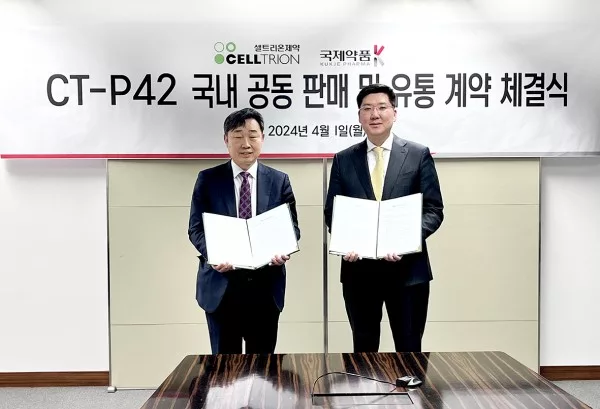
Celltrion Inc., of Incheon, South Korea, gained MFDS clearance of Eydenzelt (CT-P42) as a biosimilar referencing Regeneron Pharmaceuticals Inc./Bayer AG’s Eylea (aflibercept) on May 30. The news comes on the heels of the U.S. FDA approving the first Eylea interchangeable biosimilars on May 20.
Celltrion Inc., of Incheon, South Korea, gained MFDS clearance of Eydenzelt (CT-P42) as a biosimilar referencing Regeneron Pharmaceuticals Inc./Bayer AG’s Eylea (aflibercept) on May 30. The news comes on the heels of the U.S. FDA approving the first Eylea interchangeable biosimilars on May 20.