Industry watchers will be tracking closely Replimune Group Inc.’s latest attempt to secure U.S. FDA approval of its advanced melanoma candidate, RP-1 (vusolimogene oderparepvec). The company announced Friday it had reached alignment for resubmitting the twice-rejected BLA with the agency, which it said has pledged to prioritize the review.
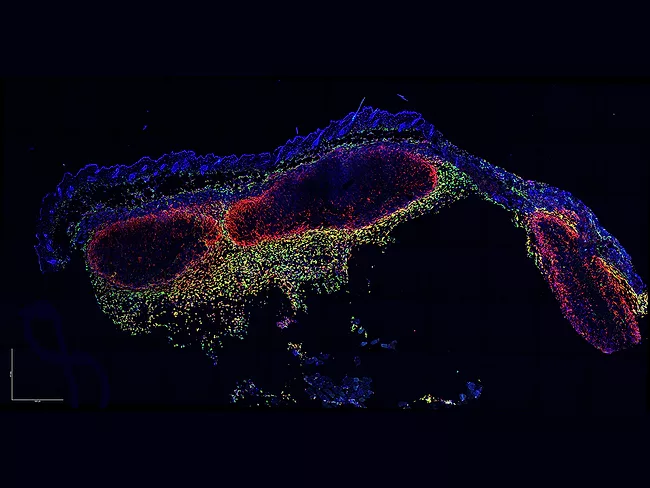
Australian researchers have identified a previously overlooked population of immune cells in the skin that physically restrain melanoma growth by engulfing live melanoma cells, and the discovery could reshape thinking around macrophage-targeted cancer therapies and innate immunity in oncology.
Regeneron Pharmaceuticals Inc. stuck with the tradition of releasing bad news on Friday afternoon and good news on Monday morning with a pair of announcements bracketing the weekend. On May 15, 2026, the Tarrytown, N.Y.-based company announced disappointing data for its LAG-3 inhibitor fianlimab. And then on May 18, 2026, Regeneron announced better news in the form of a deal with Parabilis Medicines Inc.
Biosion Inc. recently presented preclinical data describing their B7H3/PD-L1 bispecific antibody-drug conjugate (ADC) BSI-737 for the treatment of cancer.
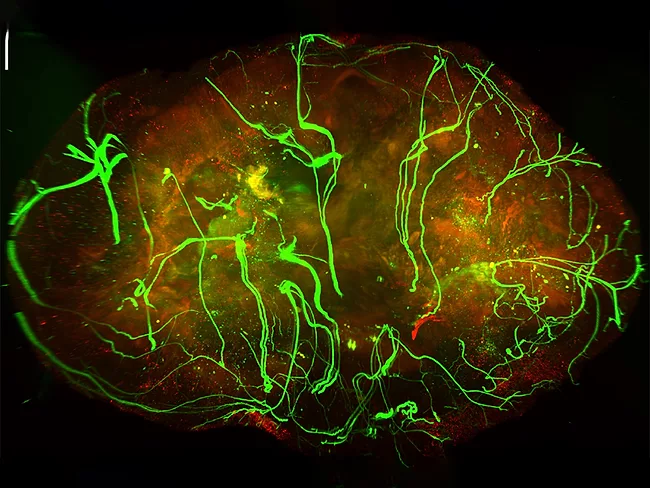
Innervation by the sympathetic nervous system is typically a boon to tumors. But researchers from Weill Cornell Medicine and colleagues have shown that in some cases, the relationship between tumors and the nervous system is more complex. Depending on context, innervation can either assist or obstruct tumor growth. “The nervous system typically has been considered as a driver of cancer growth, but here we’ve found that it can be a brake on cancer growth in some contexts,” said David Simon, an assistant professor of biochemistry and biophysics at Weill Cornell Medicine.
Replimune Group Inc. received another complete response letter (CRL) from the U.S. FDA for immunotherapy vusolimogene oderparepvec to treat advanced melanoma, sending shares plunging by more than 19% on the April 10 PDUFA date.
Mitogen-activated protein kinase kinase kinase kinase 1 (HPK1) is a serine/threonine protein kinase that is expressed in the hematopoietic compartment, exerting regulatory functions in myeloid and innate immune cells. It has been associated with decreased T-cell activation and proliferation.
Although physiological immune responses require increased tissue vasculature, many solid tumors simultaneously activate angiogenesis to meet the increasing demand for oxygen and nutrients while excluding immune cells. The exact molecular mechanisms by which cancer cells control this immune-refractory angiogenic process remain widely unclear.
Pricing the third and largest biopharma IPO of 2026, Eikon Therapeutics Inc. raised $381 million in an upsized offering of 21.18 million shares of common stock at $18 each, the high point of its price range.
Onchilles Pharma Inc. has obtained IND approval from the FDA for N-17350, enabling initiation of first-in-human studies in patients with advanced solid tumors. The study will enroll patients in the U.S. and Australia with advanced solid tumors.