Amphista Therapeutics Ltd. has obtained IND clearance from the FDA for AMX-883, an orally bioavailable degrader of BRD9, for the treatment of acute myeloid leukemia (AML). A phase I trial in patients with relapsed or refractory AML and high-risk myelodysplastic syndrome is expected to begin in the second half of this year.
DNA methylation, catalyzed by DNMT enzymes, is a central epigenetic mechanism frequently disrupted in cancer, where aberrant hypermethylation contributes to tumor suppressor gene silencing. Researchers from Nankai University reported the discovery and preclinical characterization of [I], a selective DNMT1 degrader in models of acute myeloid leukemia (AML).
The MTHFD enzyme family is central to one-carbon metabolism, with MTHFD2 showing cancer-selective overexpression linked to poor prognosis. Emerging data also identify MTHFD1 as a therapeutic vulnerability in select tumors, supporting MTHFD-targeted drug development.
KMT2A-rearranged acute myeloid leukemia (AML) is a highly aggressive leukemia subtype characterized by poor prognosis and high relapse rates. Because the menin-MLL interaction is essential for the stability and transcriptional activity of MLL fusion complexes, targeting this protein-protein interaction represents a promising therapeutic strategy for this aggressive form of AML. Researchers from Zhejiang University reported the discovery and preclinical characterization of [I], a novel menin inhibitor, designed for the treatment of AML.
Hematopoietic stem cell research over the past century has shown that leukemia may be driven by an invisible hand of inflammation. The bone marrow and inflammation, then, may hold the keys to preventing blood cancers, according to John E. Dick’s plenary session at the 2026 Korean Society of Hematology International Conference, held March 26, 2026.
Hematopoietic stem cell research over the past century has shown that leukemia may be driven by an invisible hand of inflammation. The bone marrow and inflammation, then, may hold the keys to preventing blood cancers, according to John E. Dick’s plenary session at the 2026 Korean Society of Hematology International Conference, held March 26, 2026.
Hematopoietic stem cell (HSC) research over the past century has shown that leukemia may be driven by an invisible hand of inflammation. The bone marrow and inflammation, then, may hold the keys to preventing blood cancers, according to John E. Dick’s plenary session at the 2026 Korean Society of Hematology International Conference (ICKSH 2026), held March 26, 2026. Work in Dick’s lab has found acute myeloid leukemia (AML) HSCs that harbor preleukemic mutations long before any disease diagnosis. These insights have enabled predictive models that could identify individuals at elevated AML risk years before the onset of outright disease, opening the door to new prevention strategies.
Omeros Corp. has successfully completed its initial study in nonhuman primates evaluating the efficacy and safety of its Oncotox-AML cancer therapeutic platform for acute myeloid leukemia (AML). Oncotox-AML is an engineered biologic designed to selectively kill both AML blasts and relapse-related leukemia stem cells.


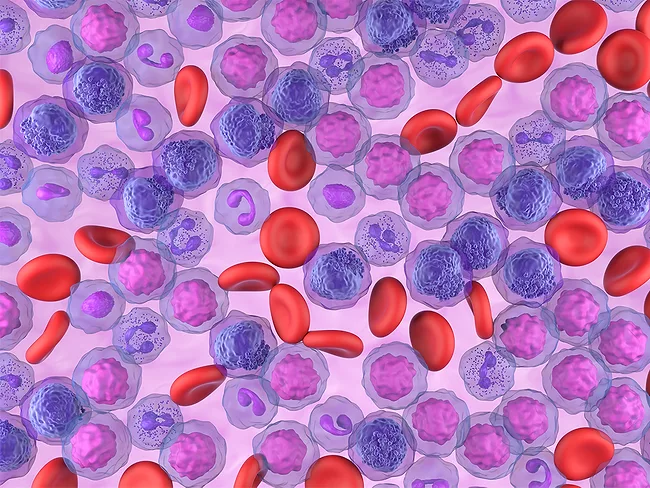
.webp?height=488&t=1670008838&width=650 "Acute myeloid leukemia")