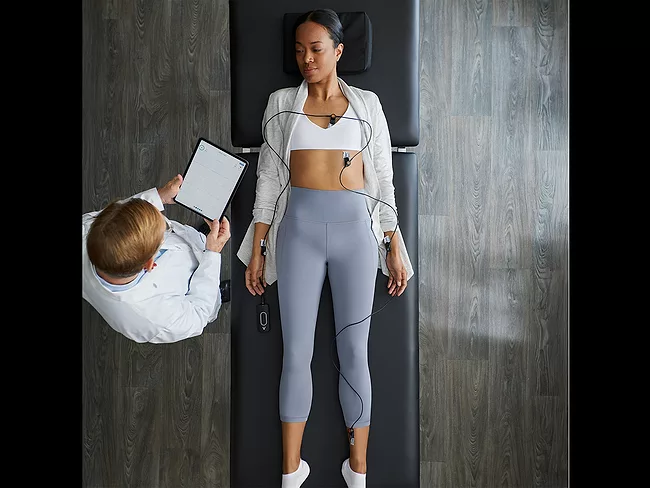
Alivecor Inc. has secured CE marking for its Kardia 12L electrocardiogram (ECG) system, which is powered by its KAI 12L AI technology and can detect life-threatening cardiac conditions. Kardia 12L is a portable, AI-guided, 12-lead ECG solution that delivers measurements and interpretations similar to standard 12-lead ECG solutions, right at the point of care. The company said the simplified design will enable faster acquisition of complete ECG data while leading to better patient outcomes.
Management is beaming with delight at Heartbeam Inc. as the company's appeal strategy paid off with U.S. FDA clearance for its synthetic 12-lead electrocardiogram software for the assessment of arrhythmias. In November, the Santa Clara, Calif.-based company received a Not Substantially Equivalent determination from the agency on its 510(k) application, which could have substantially delayed commercialization. Following a plan disclosed Nov. 28, the company resolved the agency's issues through an appeal process and active engagement and obtained clearance much more quickly than expected.
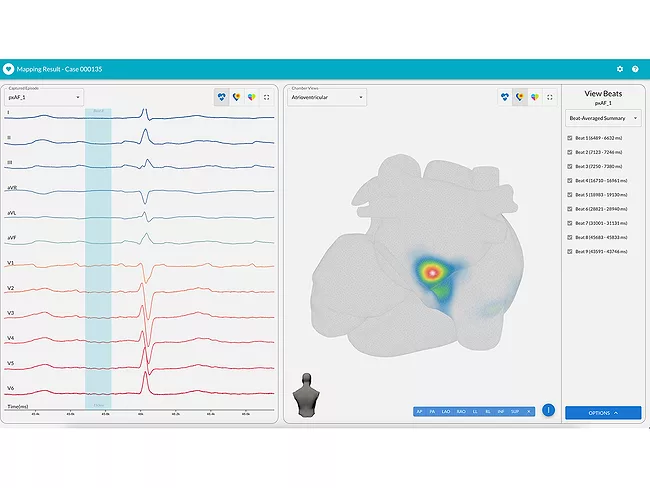
Vektor Medical Inc. recently secured CE mark for Vmap, its AI-powered electrocardiogram mapping system, marking a “major milestone” for the company, said CEO Rob Krummen. The regulatory approval from the EU authorities confirms that Vmap meets the stringent safety and performance requirements of the EU Medical Device Regulation, opening the door for clinical use in Europe, he told BioWorld.
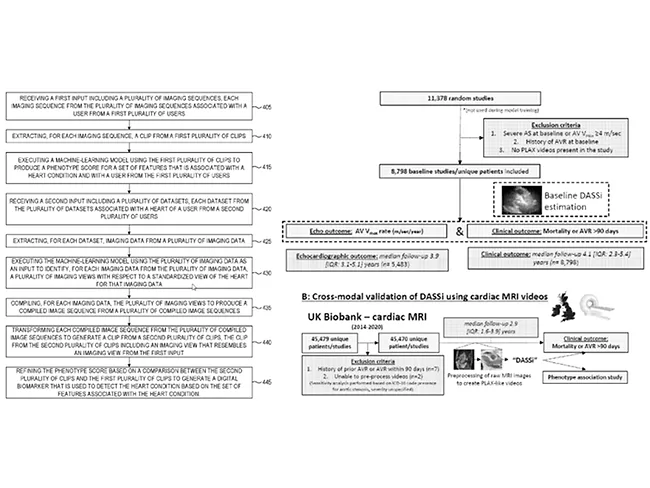
Researchers from the Yale University filed for protection of a multi-modal approach to predict the progression risk of a heart condition using artificial intelligence algorithms applied to cardiovascular videos.
South Korea’s Ministry of Food and Drug Safety on June 9 approved Vuno Inc’s AI-based Med-DeepECG Kidney software as a non-invasive method to screen for kidney dysfunction.
When every minute matters, quickly determining which patients in the emergency department need urgent care for myocardial infarction can save lives. Researchers at the University Hospital Münster in Münster, Germany, developed a deep learning model that can detect features on electrocardiograms that more accurately identifies which patients require urgent revascularization than clinicians and provides results faster than high-sensitivity troponin lab tests.
At the four-day KIMES 2025 exhibition, more than 35,000 products and prototypes were on display. In the clamor, BioWorld engaged with three promising neurological disease-focused companies – Readycure Inc., Neurive Co. Ltd. and Vuno Inc. – that showcased innovative technology for conditions like Alzheimer’s disease and tinnitus at the Seoul-based event.
Researchers from Cornell University are seeking protection for their invention of a low-cost artificial intelligence (AI)-based platform that analyses low resolution electrocardiogram data and/or photoplethysmography data to accurately and objectively assess pain.
Heartbeam Inc. received U.S. FDA 510(K) clearance for its portable, non-invasive electrocardiogram system that enables on-the-go recording of heart signals. The cable-free, credit card-sized device uses five electrodes to capture signals from three directions and can be used whenever a patient feels symptoms, overcoming the challenge of identifying intermittent arrhythmias, which are often not experienced during scheduled appointments, without requiring patients to wear a device continuously.
The first filing to emerge from Identifyher Ltd. seeks to gain protection for a wearable sensor that women can wear daily to track potential symptoms of perimenopause, providing them with data that can be used to find the right management plan for their needs.