BioWorld. Link to homepage.

Clarivate
  • BioWorld
  • BioWorld Science
  • BioWorld Asia
  • Data Snapshots
    • Biopharma
    • Medical technology
    • Infographics: Dynamic digital data analysis
    • Index insights
    • NME Digest
  • Special reports
    • Infographics: Dynamic digital data analysis
    • Ebola outbreak
    • Hantavirus
    • Trump administration impacts
    • Med-tech outlook 2026
    • Under threat: mRNA vaccine research
    • BioWorld at 35
    • Biopharma M&A scorecard
    • Bioworld 2025 review
    • BioWorld MedTech 2025 review
    • BioWorld Science 2025 review
    • Women's health
    • China's GLP-1 landscape
    • PFA re-energizes afib market
    • China CAR T
    • Alzheimer's disease
    • Coronavirus
    • More reports can be found here

BioWorld. Link to homepage.

  • Sign In
  • Sign Out
  • My Account
Subscribe
BioWorld - Monday, May 25, 2026
Home » Keywords » iPSCs

Items Tagged with 'iPSCs'

ARTICLES

Stem cells

Japan endorses two iPSC drugs for approval under CEA pathway

Feb. 24, 2026
By Marian (YoonJee) Chu
No Comments
Japan is backing conditional approvals of Amchepry (raguneprocel, Sumitomo Pharma Co. Ltd./Racthera Co. Ltd.) and Reheart (Cuorips Inc.), positioning them to become the world’s first induced pluripotent stem cell-derived (iPSC) therapies to receive regulatory clearance.
Read More
Stem cells

Japan endorses two iPSC drugs for approval under CEA pathway

Feb. 20, 2026
By Marian (YoonJee) Chu
No Comments
Japan is backing conditional approvals of Amchepry (raguneprocel, Sumitomo Pharma Co. Ltd./Racthera Co. Ltd.) and Reheart (Cuorips Inc.), positioning them to become the world’s first induced pluripotent stem cell-derived (iPSC) therapies to receive regulatory clearance.
Read More
Koreabio Humanase KOH Sungho
Bio Korea 2025

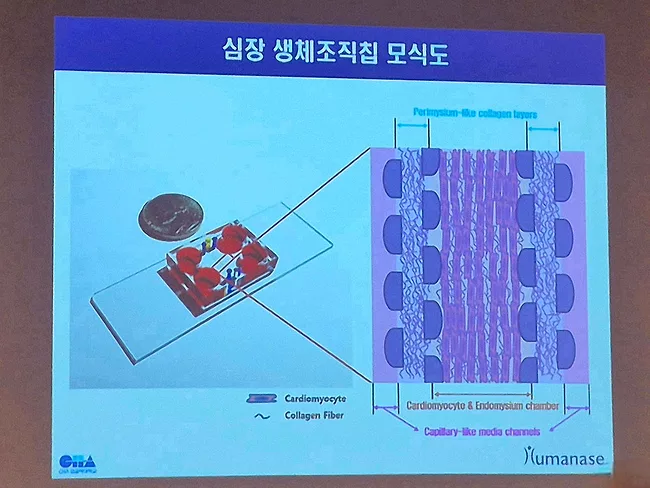
FDA shift from animal testing fuels organoid, organ-on-chip demand

May 19, 2025
By Marian (YoonJee) Chu
The U.S. FDA’s decision to phase out animal testing for INDs is driving a new market of alternative, nonanimal testing technologies like organoids and organs-on-a-chip, speakers at Bio Korea 2025 said.
Read More
Koreabio Humanase KOH Sungho
Drug design, drug delivery and technologies

FDA shift from animal testing fuels organoid, organ-on-chip demand

May 14, 2025
By Marian (YoonJee) Chu
The U.S. FDA’s decision to phase out animal testing for INDs is driving a new market of alternative, nonanimal testing technologies like organoids and organs-on-a-chip, speakers at Bio Korea 2025 said.
Read More
Koreabio Humanase KOH Sungho
Bio Korea 2025

FDA shift from animal testing fuels organoid, organ-on-chip demand

May 13, 2025
By Marian (YoonJee) Chu
The U.S. FDA’s decision to phase out animal testing for INDs is driving a new market of alternative, nonanimal testing technologies like organoids and organs-on-a-chip, speakers at Bio Korea 2025 said.
Read More
Koreabio Humanase KOH Sungho
Bio Korea 2025

FDA shift from animal testing fuels organoid, organ-on-chip demand

May 13, 2025
By Marian (YoonJee) Chu
The U.S. FDA’s decision to phase out animal testing for INDs is driving a new market of alternative, nonanimal testing technologies like organoids and organs-on-a-chip, speakers at Bio Korea 2025 said.
Read More
Koreabio Humanase KOH Sungho
Bio Korea 2025

FDA shift from animal testing fuels organoid, organ-on-chip demand

May 9, 2025
By Marian (YoonJee) Chu
The U.S. FDA’s decision to phase out animal testing for INDs is driving a new market of alternative, nonanimal testing technologies like organoids and organs-on-a-chip, speakers at Bio Korea 2025 said.
Read More
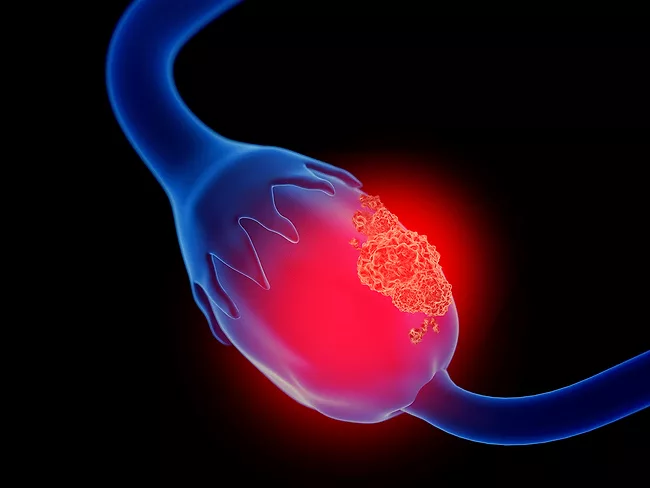
3d illustration of ovarian cancer
Immuno-oncology

ERNA-101 extends survival in mice with ovarian cancer

Jan. 15, 2025
Eterna Therapeutics Inc. has released promising results from a preclinical study of its lead cell therapy product, ERNA-101, showing it reduced tumor burden and extended survival in mice with ovarian cancer.
Read More
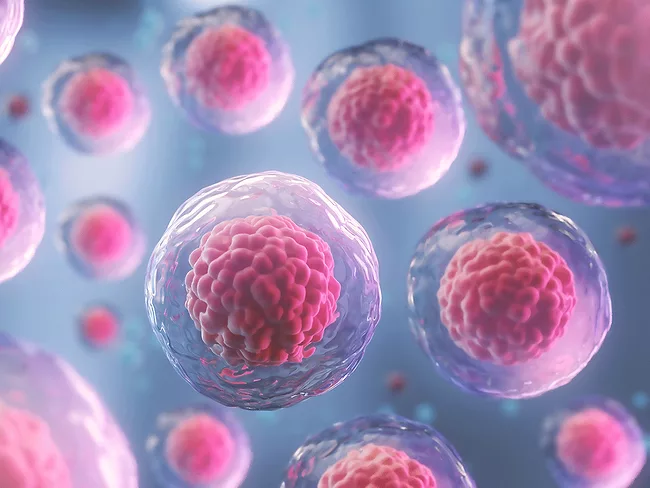
Cell research illustration
Musculoskeletal

ISSCR 2024: iPS cell line panels can be isogenic and diverse

July 15, 2024
By Anette Breindl
The big advantage of cell culture to model diseases is its throughput. “You can play the disease over and over again in the dish,” Clive Svendsen told the audience at the International Society of Stem Cell Research (ISSCR) Annual Meeting held in Hamburg last week. That high throughput, however, is not particularly useful if the cell lines themselves do not accurately model the disease. Cancer cell lines are used in many cell culture experiments far beyond cancer for their ability to grow. But they are “highly abnormal,” Bill Skarnes told the audience at an innovation showcase, as well as quite unstable. “I don’t think the [HEK-293] cell line is the same in your lab as it is in the lab next door,” Skarnes said.
Read More
Colorful illustration of the heart
Cardiovascular

Human iPSCs restore muscle, function in monkeys with heart failure

May 7, 2024
By Tamra Sami
Japanese researchers have transplanted human induced pluripotent stem cells (iPSCs) in a primate model of myocardial infarction and were able to restore heart muscle and function in monkeys. Developed by Tokyo-based Heartseed Inc., the grafted iPSCs consist of clusters of purified heart muscle cells (cardiomyocyte spheroids) that are injected into the myocardial layer of the heart. Published in Circulation on April 26, 2024, the study showed that the cardiomyocyte spheroids survived long term and showed improved contractile function with low occurrence of post-transplant arrhythmias.
Read More
More Articles Tagged with 'iPSCs'

Popular Stories

  • Today's news in brief

    BioWorld
    BioWorld briefs for May 22, 2026.
  • Brain and DNA

    Sangamo presents primate data for prion suppressor ST-506

    BioWorld Science
    Sangamo Therapeutics Inc. discussed gene regulation approaches for neurodegenerative diseases when presenting findings on their clinical candidate ST-506 for the...
  • TREM2 agonists detailed in Pfizer patent

    BioWorld Science
    Pfizer Inc. has reported new triggering receptor expressed on myeloid cells 2 (TREM2) agonists potentially useful for the treatment of neurodegeneration.
  • Red dart and target against blue sky

    Unmasking the X: EPAC2 shifts the fragile X landscape

    BioWorld
    Researchers at UCLA have shown that divergent neuronal signaling in fragile X mice converges on EPAC2, a druggable target whose inhibition restores circuit...
  • Skin irritation on hands

    Recludix presents STAT1/3 inhibitors for dermatological diseases

    BioWorld Science
    Recludix Pharma Inc. recently presented data on their new STAT1/3 inhibitors REX-6553 and REX-6547 for treating dermatological inflammatory skin diseases.
  • BioWorld
    • Today's news
    • Analysis and data insight
    • Clinical
    • Data Snapshots
    • Deals and M&A
    • Financings
    • Medical technology
    • Newco news
    • Opinion
    • Regulatory
  • BioWorld Science
    • Today's news
    • Biomarkers
    • Cancer
    • Conferences
    • Endocrine/metabolic
    • Immune
    • Infection
    • Neurology/psychiatric
    • NME Digest
    • Patents
  • BioWorld Asia
    • Today's news
    • Analysis and data insight
    • Australia
    • China
    • Clinical
    • Deals and M&A
    • Financings
    • Newco news
    • Regulatory
    • Science
  • More
    • About
    • Advertise with BioWorld
    • Archives
    • Article reprints and permissions
    • Contact us
    • Cookie policy
    • Copyright notice
    • Data methodology
    • Infographics: Dynamic digital data analysis
    • Index insights
    • Podcasts
    • Privacy policy
    • Share your news with BioWorld
    • Staff
    • Terms of use
    • Topic alerts
Follow Us

Copyright ©2026. All Rights Reserved. Design, CMS, Hosting & Web Development :: ePublishing