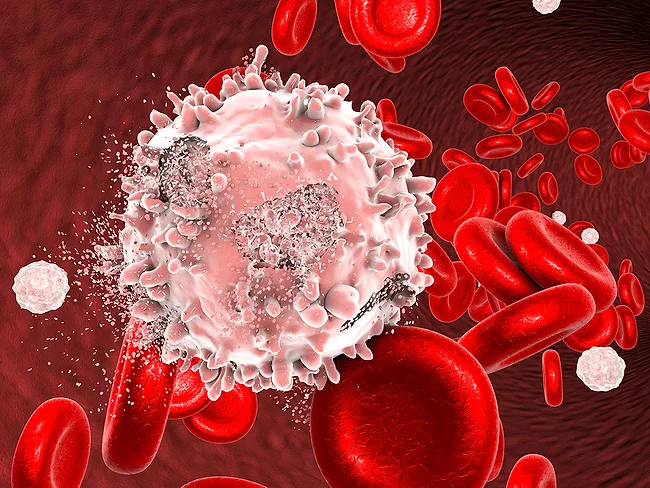
Payoff for the November 2023 buyout of Immunogen Inc. came for Abbvie Inc. in the form of U.S. FDA clearance for the CD123-targeting antibody-drug conjugate Decnupaz (pivekimab sunirine) to treat adults with blastic plasmacytoid dendritic cell neoplasm (BPDCN), an ultra-rare, aggressive and quick-killing hematologic malignancy.
More than two years after signing a $1.7 billion deal with Takeda Pharmaceutical Co. Ltd., Protagonist Therapeutics Inc. has opted out of a 50-50 U.S. profit-and-loss sharing arrangement for its hepcidin mimetic peptide, rusfertide, a priority review drug developed to treat adults with polycythemia vera.
Hematopoietic stem cell research over the past century has shown that leukemia may be driven by an invisible hand of inflammation. The bone marrow and inflammation, then, may hold the keys to preventing blood cancers, according to John E. Dick’s plenary session at the 2026 Korean Society of Hematology International Conference, held March 26, 2026.
Hematopoietic stem cell research over the past century has shown that leukemia may be driven by an invisible hand of inflammation. The bone marrow and inflammation, then, may hold the keys to preventing blood cancers, according to John E. Dick’s plenary session at the 2026 Korean Society of Hematology International Conference, held March 26, 2026.
Hematopoietic stem cell (HSC) research over the past century has shown that leukemia may be driven by an invisible hand of inflammation. The bone marrow and inflammation, then, may hold the keys to preventing blood cancers, according to John E. Dick’s plenary session at the 2026 Korean Society of Hematology International Conference (ICKSH 2026), held March 26, 2026. Work in Dick’s lab has found acute myeloid leukemia (AML) HSCs that harbor preleukemic mutations long before any disease diagnosis. These insights have enabled predictive models that could identify individuals at elevated AML risk years before the onset of outright disease, opening the door to new prevention strategies.
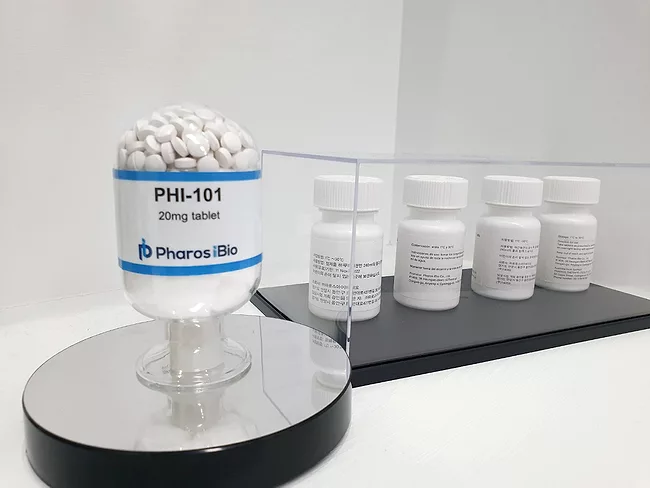
South Korean artificial intelligence-based drug developer Pharos Ibio Co. Ltd. said that the Ministry of Food and Drug Safety (MFDS) granted an orphan drug designation for PHI-101, a second-line therapy for acute myeloid leukemia (AML).
South Korean artificial intelligence-based drug developer Pharos Ibio Co. Ltd. said that the Ministry of Food and Drug Safety (MFDS) granted an orphan drug designation for PHI-101, a second-line therapy for acute myeloid leukemia (AML).
A group of scientists from Basel University Hospital have designed an antibody-drug conjugate (ADC) that eliminated blood cancer cells without attacking healthy hematopoietic stem cells (HSCs), which they modified by base editing and transplanted to renew an altered blood system. They achieved this by focusing on the panhematopoietic marker CD45.
Hitching onto the emerging drug class of degrader-antibody conjugates (DAC), U.S. pharma giant Bristol Myers Squibb Co. (BMS) is picking up rights to the U.S. and Korean biotech Orum Therapeutics Inc.’s blood cancer candidate, ORM-6151, in a potential $180 million deal.
Mission Bio Inc. released its Tapestri single-cell minimal residual disease (MRD) assay for acute myeloid leukemia (AML) on September 26, with the goal of enabling greater personalization of care for patients with blood cancers. The test can provide insights into the progression of AML and help identify targets for treatment in addition to identifying patients truly experiencing relapse as distinct from having pre-leukemic or precursor clones.