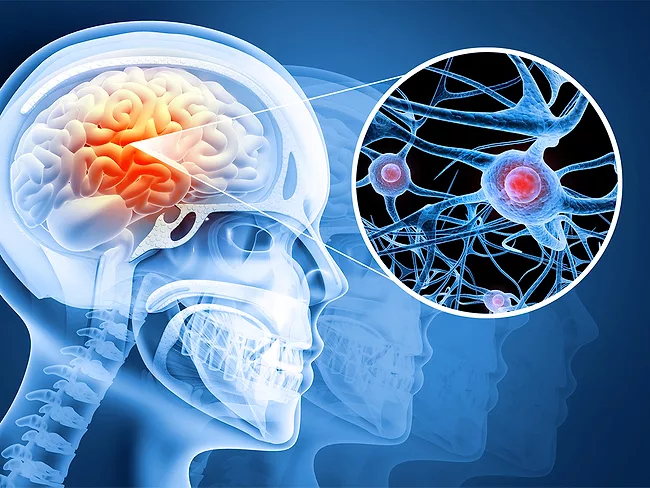
Investigators have shown that REED1 expression was elevated during stress, which in turn suppressed hippocampal synaptogenesis and induced major depressive disorder (MDD)-like behavior through mTORC1 signaling. The impact of REDD1 modulation was investigated in the preclinical setting for MDD.
About one-third of patients with major depressive disorder (MDD) are treatment resistant. Ketamine is very effective in treatment-resistant depression, but it is associated with psychotomimetic effects. Metabotropic glutamate mGlu2 and mGlu3 receptors negatively regulate the release of glutamate and are involved in the pathogenesis of depression.
For individuals with major depressive disorder (MDD) that does not respond to pharmacotherapy, recent decisions by the U.S. FDA enabling at-home use of neuromodulation devices may provide a bright spot in dark days. Neurolief Ltd. received FDA premarket approval for Proliv Rx, a physician-directed, brain neuromodulation therapy indicated for use as an at-home adjunctive treatment for adults with MDD who failed to respond adequately to at least one previous antidepressant on Jan. 7. That decision follows the December 510(k) clearance for at-home use of the Flow brain-stimulation device by Flow Neuroscience AB as either a monotherapy or as an adjunctive treatment.
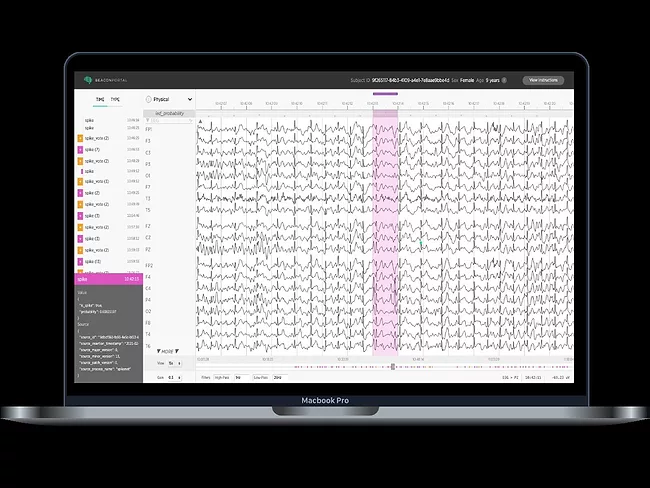
Beacon Biosignals Inc. can rest easy now that it has received U.S. FDA authorization of its predetermined change control plan for the Dreem 3s, a wearable sleep monitor that conducts electroencephalograms as users sleep. The authorization allows Beacon to incorporate updates to the Dreem 3S sleep-staging algorithm acquired through machine learning without submitting a new 510(k) application.
Otsuka Precision Health Inc. and Click Therapeutics Inc. pondered the signature question of cognitive behavioral therapy when setting the market approach for their jointly developed prescription digital therapeutic for major depressive disorder, Rejoyn.
A schizophrenia drug in Cerevel Therapeutics Inc.’s lineup understandably stole much of the thunder during coverage of Abbvie Inc.’s takeover late last year to the tune of $8.7 billion, but much further back in the pipeline awaits another potentially lucrative prospect: a kappa opioid receptor antagonist (KORA) for major depressive disorder (MDD).
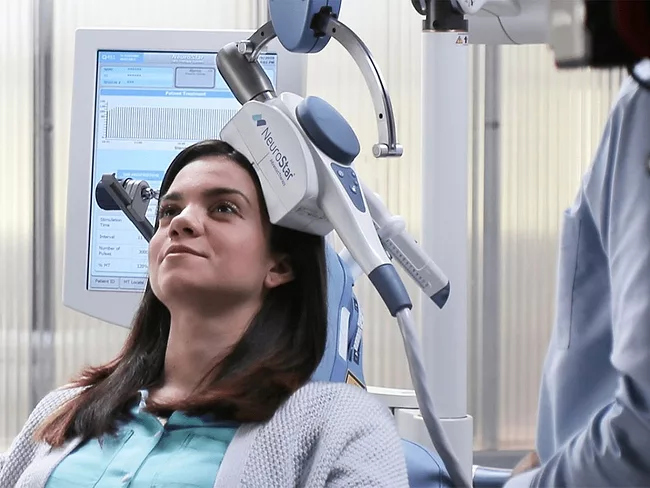
The U.S. FDA granted Neuronetics Inc. clearance for use of its Neurostar advanced therapy as an adjunctive treatment of major depressive disorder in patients aged 15 to 21, making it the first transcranial magnetic stimulation treatment (TMS) cleared for this age group, the company said.
A partnership between Gate Neurosciences Inc. and Beacon Biosignals Inc. promises to advance the field of precision psychiatry by using electroencephalogram (EEG) biomarkers to diagnose depression and rapidly assess response to medications. The collaboration will first use Beacon’s U.S. FDA-cleared Dreem 3S headband device and neurobiomarker platform to conduct EEGs in participants in Gate’s phase II trial of zelquistinel, a small-molecule NMDA receptor modulator under development as an antidepressant.
ABVC Biopharma Inc. entered a multiyear, global licensing agreement for its CNS drugs to treat major depressive disorder and attention deficit hyperactivity disorder. The license deal with Aibtl Biopharma Inc. would cover clinical trial, registration, manufacturing, supply and distribution rights. The products were valued at $667 million by a third party, according to ABVC.
The first participants are being treated in a clinical trial assessing a neuromodulation system developed by Magnus Medical Inc. to treat depression. The system employs the recently FDA-cleared Saint neuromodulation technology that saw remarkable results in a clinical trial for treating major depressive disorder (MDD). The new Open Label Optimization (OLO) clinical trial is evaluating the effectiveness of this platform in conjunction with the medtech’s Magnus Neuromodulation System.