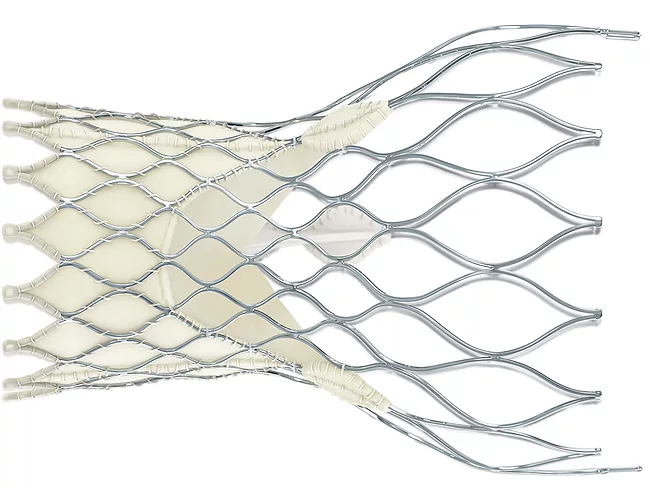
Edwards Lifesciences Corp., of Irvine, Calif., petitioned the Centers for Medicare & Medicaid Services to revise the Medicare coverage policy for transcatheter aortic valve replacement (TAVR) devices on two points, the combination of which would make a big difference for TAVR devices across manufacturers. Edwards requested that CMS explicitly cover TAVR for asymptomatic aortic stenosis patients, a notion well supported by recent data, and bring an end to the coverage with evidence development mandate.
The prevalence of valvular heart disease in the U.S. is tough to peg with any great precision, but an extrapolation of data from a new study would put the number at roughly 10.6 million people, a staggering number when the clinical and fiscal implications are considered.
In a real-world study, Eko Health Inc.’s AI-enabled digital stethoscope dramatically increased detection rates for atrial fibrillation, heart failure and valvular heart disease in primary care settings. Researchers from Imperial College London presented results from the study at the European Society of Cardiology in Madrid.
Although congenital aortic valve disease (AVD) is one of the most prevalent types of congenital heart disease, affecting 1% to 2% of the population, the understanding of the molecular genetics and mechanisms underlying the disease remains limited.
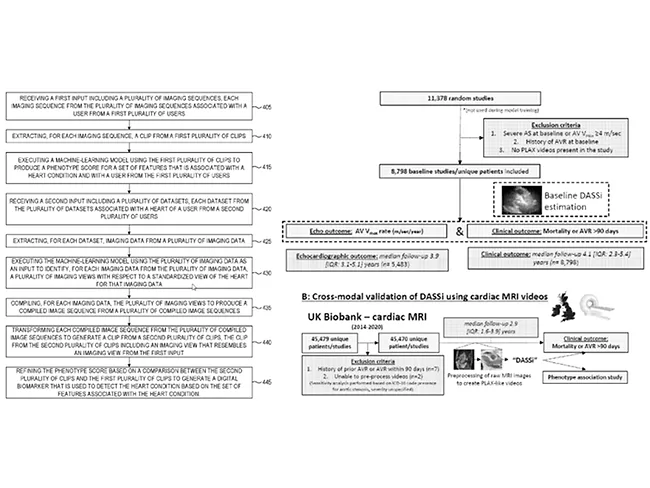
Researchers from the Yale University filed for protection of a multi-modal approach to predict the progression risk of a heart condition using artificial intelligence algorithms applied to cardiovascular videos.
All kinds of substances circulate through the bloodstream. Some are beneficial, like oxygen or nutrients, and others less so, like waste products, toxins, pathogens and certain trafficking cells. Among these harmful substances are deleterious factors associated with aging, which can prematurely damage different tissues. The big question is what are those factors that mediate such effects, and what can be done to prevent them. The 11th Cardiac Regeneration and Vascular Biology Conference, held on the Island of San Servolo, Venice, from June 30 to July 2, 2025, included presentations, oral sessions and posters addressing the impact of aging on the cardiovascular system.
Edwards Lifesciences Corp. released new economic and clinical data on severe aortic stenosis (AS) demonstrating intervening in a patient with the disease before symptoms develop can reduce costs to the health care system by $36,000. Data also shows earlier intervention can also lead to fewer follow-ups and hospitalizations for heart failure, after treatment.
In a significant boost to the Edwards Lifesciences Corp. Sapien 3 platform’s market opportunity, the U.S. FDA approved use of the transcatheter aortic valve replacement in patients with asymptomatic aortic stenosis.
Medtronic plc and Tempus AI Inc. launched the ALERT study to better understand and address the racial, ethnic, gender and geographic disparities associated with guideline-recommended treatments for aortic stenosis and mitral valve regurgitation. Currently, white patients represent 91% of people who receive TAVR procedures, a minimally invasive procedure that sharply reduces complications and improves quality of life in patients with narrowed heart valves.