To overcome the limitations regarding conventional immunotherapy for treating tauopathies, researchers from Sanofi SA aimed to improve brain exposure and targeting pathological tau species by optimizing antibody design.
Several neurodegenerative diseases, including Alzheimer’s disease, frontotemporal dementia and progressive supranuclear palsy, are classified as tauopathies due to the pathological accumulation of tau protein in specific brain nuclei. Researchers in Argentina have proposed the use of RNA interference (RNAi)-mediated therapies using viral vectors to target tau.
Arrowhead Pharmaceuticals Inc. has filed a request for regulatory clearance in New Zealand to initiate a phase I/IIa trial of ARO-MAPT, the company’s investigational RNA interference (RNAi) therapeutic being developed as a potential treatment for tauopathies, including Alzheimer’s disease.
The specific tau isoforms, such as 3-repeat (3R) and 4-repeat (4R) isoforms, and the distinct conformational strains that misfolded tau can adopt are determinants of the molecular and clinical heterogeneity observed across tauopathies.
Researchers from Voyager Therapeutics Inc. presented preclinical activity data of VY-1706, a blood-brain barrier (BBB)-penetrant gene therapy comprising an adeno-associated virus serotype 9 capsid (AAV9-C9P39) vector encoding primary artificial microRNA (pri-amiRNA) consisting of short-interfering RNA (siRNA) targeting human microtubule-associated protein tau (MAPT) protein.
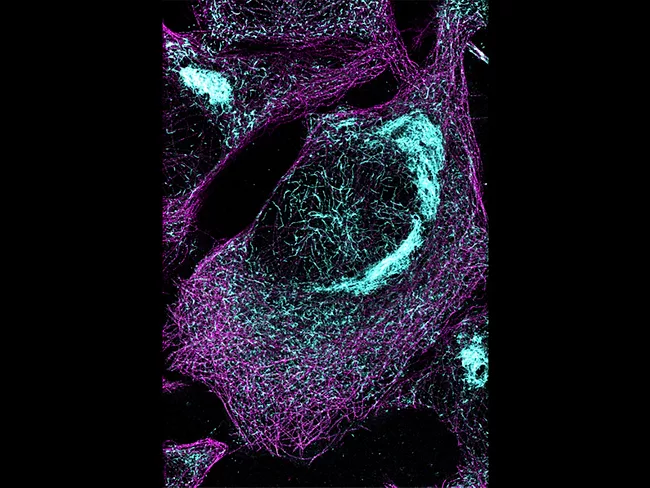
The increasing knowledge on how protein tau is organized in live cells has shown that the protein forms nanometer-sized hotspots which are different from tau microtubules. These hotspots, essential for aggregation, include (306)VQIVYK(311) and (275)VQIINK(280) aggregation-promoting hotspots, the first found in all tau isoforms and the latter included mainly in 4R isoforms.
The E4 variant of the APO gene, the R47H variant of the TREM2 gene, and female sex are three of the strongest risk factors for the development of Alzheimer’s disease (AD). By combining all three of them in a mouse model of tauopathy, researchers at Weill Cornell Medical School have identified microglial inflammation and senescence as processes that occurred more strongly in female mice as tauopathy developed.
Researchers from the UK Dementia Research Institute at the University of Cambridge have found how to prevent and reverse tau aggregation using target-specific nanobodies. The team holds great expertise in the role of TRIM21 in the tau environment since William McEwan, senior author of the study, first discovered TRIM21 and, a bit later, defined its contribution to tau immunotherapy efficacy.
Sangamo Therapeutics Inc. put pen to paper on a would-be $1.9 billion-plus deal with Genentech, a unit of Roche AG, to develop intravenously administered genomic drugs for neurodegenerative conditions.
Asceneuron SA has raised $100 million in an oversubscribed series C to take its lead small molecule, ASN-51, into phase II, with aim of demonstrating it prevents the formation of tau tangles and slows the progression of Alzheimer’s disease.