Microbiome specialist Enterobiotix Ltd. has raised £19 million (US$25.7 million) to fund phase IIb development of its lead program EBX-102-02 in the treatment of irritable bowel syndrome with constipation (IBS-C).
Microbiome specialist Enterobiotix Ltd. is in the throes of raising a new round of funding for a phase IIb trial after reporting positive results from the phase IIa study of EBX-102-02, an oral therapy for irritable bowel syndrome (IBS).
After reporting in April that its gastrointestinal reprogramming product (Garp) failed to meet the primary efficacy endpoint in a phase II trial in irritable bowel syndrome (IBS), Anatara Lifesciences Ltd. conducted a further analysis that shows a positive trend toward efficacy.
After reporting in April that its gastrointestinal reprogramming product (Garp) failed to meet the primary efficacy endpoint in a phase II trial in irritable bowel syndrome (IBS), Anatara Lifesciences Ltd. conducted a further analysis that shows a positive trend toward efficacy.
In what represents the first PCT filing emerging in the name of Ayble Health Inc., protection is sought for a system for adaptive, multi-level processing of health data to be used in the individualized management of immune-mediated inflammatory diseases such as inflammatory bowel disease and irritable bowel syndrome.
Microbiome specialist Enterobiotix Ltd. has raised £27 million (US$34.2 million) in a series B round as it starts a phase II trial of EBX-102-02 in the treatment of irritable bowel syndrome.
Irritable bowel syndrome (IBS) is a functional gastrointestinal disorder where visceral hypersensitivity (VH), which causes discomfort and negatively impacts the quality of life, is influenced by stressful events. In recent years, the use of bifidobacteria and lactic acid bacteria has shown anti-VH efficacy.
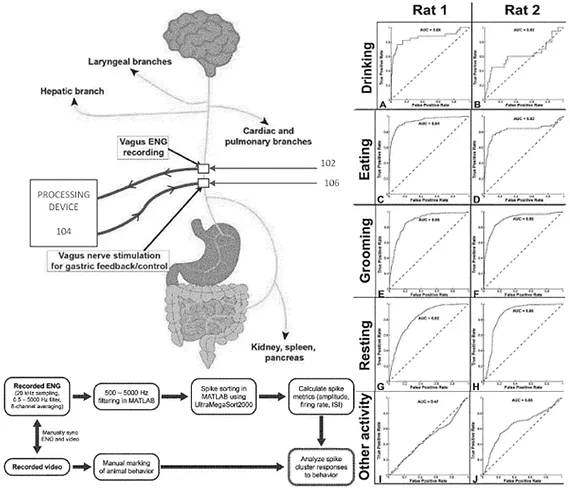
Researchers from Case Western Reserve University have filed for patent protection for a system and method for treating obesity or other gastric and/or metabolic disorders via closed-loop vagus nerve stimulation.
Researchers from Johns Hopkins University and Lieber Institute Inc. have synthesized peripherally and luminally restricted inhibitors of the serotonin transporter (SERT) reported to be useful for disorders of gastrointestinal motility, including the treatment of irritable bowel syndrome (IBS).
Patients with irritable bowel syndrome (IBS) have chronic abdominal pain as a result of visceral hypersensitivity. Voltage-gated sodium channels control cellular excitability and are involved in the pathophysiology of several functional gastrointestinal disorders. Researchers from Nocion Therapeutics Inc. and the University of Oklahoma recently reported on the preclinical testing of NTX-1175, a sodium-channel blocker, in rat models of acute colonic hypersensitivity to distension.