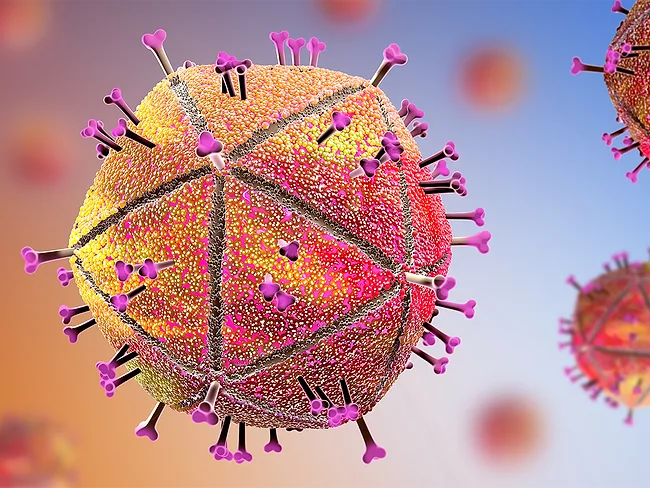
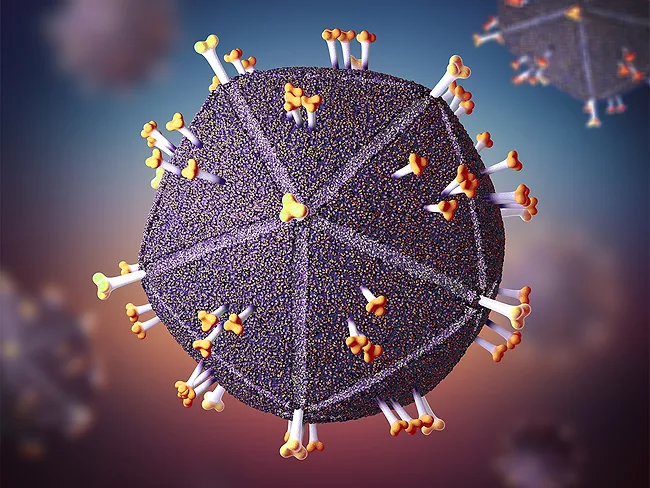
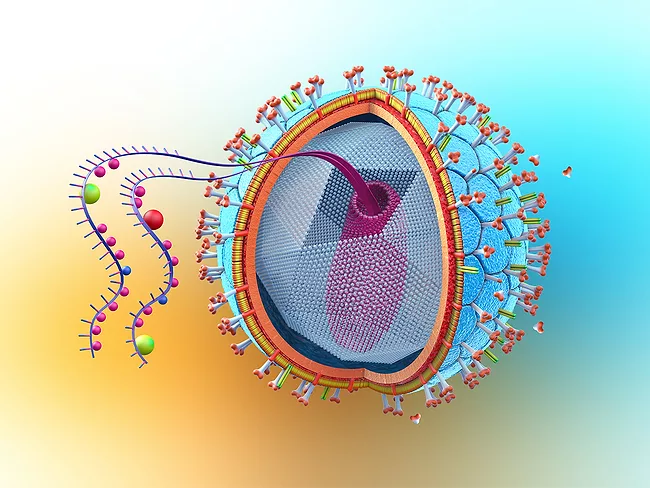
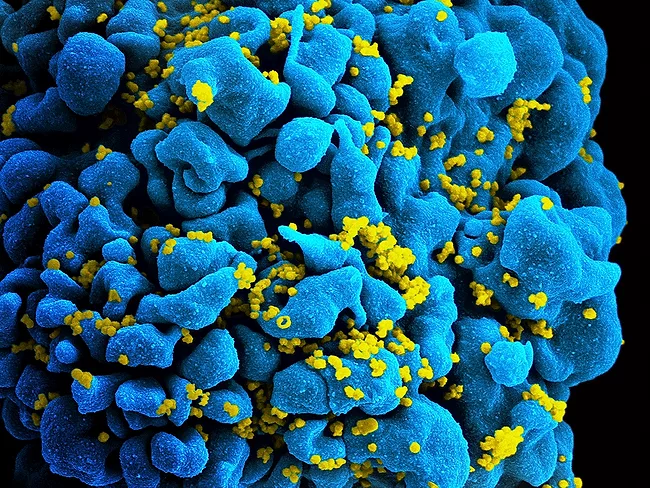
A designed chimeric virus induced broadly neutralizing antibodies against the macaque equivalent of HIV. The strategy works in two steps: first it uses an envelope protein with a mutation that reduces the glycan shield that makes it invisible to the immune system, and then it exposes the part of the protein most likely to generate these antibodies capable of blocking many variants of the virus. The macaques developed potent and diverse antibodies with this approach, which pave the way for the development of an HIV-1 vaccine.
A designed chimeric virus induced broadly neutralizing antibodies (bNAbs) against the macaque equivalent of HIV. The strategy works in two steps: first it uses an envelope protein (Env) with a mutation that reduces the glycan shield that makes it invisible to the immune system, and then it exposes the part of the protein most likely to generate these antibodies capable of blocking many variants of the virus. The macaques developed potent and diverse antibodies with this approach, which pave the way for the development of an HIV-1 vaccine.
A new vaccination strategy designed to induce antibodies that recognize the apex of the HIV Env protein uses Env trimers displayed on liposomes to increase their density and orient them correctly. This presentation enhanced apex-focused antibody responses in macaques, and the monoclonal antibodies isolated after immunization showed binding modes and structural features resembling human broadly neutralizing antibodies (bNAbs), indicating that the vaccine can steer the antibody response toward this vulnerable site.
Broadly neutralizing antibodies (bNAbs) target conserved HIV envelope regions to neutralize diverse strains, eliminate infected cells and reduce viral reservoirs, complementing antiretroviral therapy and supporting prevention and functional cure strategies.
The use of DNA scaffolds could mark a turning point in HIV vaccine design. Scientists at Scripps Research and the Massachusetts Institute of Technology (MIT) have created a new vaccine platform based on DNA origami, a material that the immune system does not recognize as a threat, avoiding unwanted responses.
In vaccine development, one might think that targeting multiple epitopes increases the likelihood of improving outcomes. However, when several immunogens are administered together, the immune system does not always generate antibodies against all of them. Two parallel studies have overcome this challenge by using multiple simultaneous immunogens against HIV, effectively triggering various types of broadly neutralizing antibody (bnAb) precursors in two different preclinical animal models.
Taimed Biologics Inc.’s TMB-365/TMB-380 long-acting combination of broadly neutralizing antibodies regimen for HIV maintenance could reshape HIV treatment management, offering a viable alternative to daily combination antiretroviral therapy (cART), the Taipei-based company said after reporting on phase IIa results.
Taimed Biologics Inc.’s TMB-365/TMB-380 long-acting combination of broadly neutralizing antibodies regimen for HIV maintenance could reshape HIV treatment management, offering a viable alternative to daily combination antiretroviral therapy (cART), the Taipei-based company said after reporting on phase IIa results.
At the 2025 meeting of the Conference on Retroviruses and Opportunistic Infections (CROI) it was the best of times, it was the worst of times. On the first full day of the conference, reports from the first HIV cure trial conducted in Africa, the RIO trial and others showed that perhaps, a broadly useful cure is on the horizon.
At the 2025 meeting of the Conference on Retroviruses and Opportunistic Infections (CROI) it was the best of times, it was the worst of times. On the first full day of the conference, reports from the first HIV cure trial conducted in Africa, the RIO trial and others showed that perhaps, a broadly useful cure is on the horizon.