Landing on the right COVID-19 vaccine formulation for the coming season is becoming more complicated against a backdrop of low vaccination rates, young children with little to no immunization, declining surveillance data and a new SARS-COV-2 lineage slowly emerging.
What would normally be a routine meeting of the FDA’s Vaccines and Related Biological Products Advisory Committee May 28 may be more carefully watched given the overall turmoil surrounding vaccines in the U.S. The only task before the adcom is to recommend the COVID-19 vaccine formula for the upcoming season. That conversation will include looking at the effectiveness of the four FDA-approved vaccines currently in use in the U.S.
The cardiomyositis that is a rare adverse effect of mRNA-based COVID vaccines is due to immune cell activity as a result of increased levels of the chemokines CXCL10 and interferon-γ (IFN-γ). Blocking CXCL10 and IFN-γ could prevent muscle cell damage in cell culture, and cardiomyositis in animal models. The findings, reported in the Dec. 10, 2025, issue of Science Translational Medicine, suggest a way of mitigating the risk of cardiomyositis.
Restricting the recommended use of COVID-19 vaccines in the U.S. wasn’t enough. Now the Children’s Health Defense (CHD) is trying to get the FDA to revoke the BLAs for all versions of the Moderna Inc. and Pfizer Inc.-Biontech SE COVID-19 vaccines.
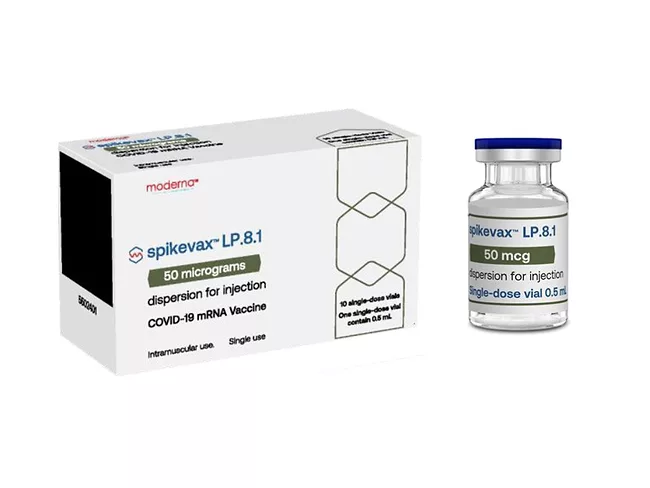
South Korea’s Ministry of Food and Drug Safety approved Moderna Inc.’s Spikevax LP.8.1 vaccine as an updated shot for COVID-19 targeting the LP.8.1 variant, according to Moderna Korea’s announcement Sept. 1. The regulatory clearance comes days after the U.S. FDA accepted, on Aug. 27, Moderna’s supplemental BLAs for two of its COVID-19 vaccines, Spikevax and Mnexspike.
For more than 30 years, the U.S. CDC’s Advisory Committee for Immunization Practices (ACIP) and the American Academy of Pediatrics (AAP) worked together to harmonize their evidence-based vaccine schedules. Not anymore.
The U.S. FDA said June 25 it has required updates to the prescribing labels of COVID-19 mRNA vaccines Comirnaty and Spikevax to include new safety information on the risks of myocarditis and pericarditis.
Post pandemic, Moderna Inc. is broadening the applications of mRNA technology to cancer, rare diseases, latent viruses and respiratory viruses, “taking advantage” of the revenue generated by Spikevax (elasomeran), its mRNA-based vaccine for COVID-19.
Moderna Inc. once again emerged the winner in a court skirmish over claims that its COVID-19 vaccine infringed two Alnylam Pharmaceuticals Inc. patents. The U.S. Court of Appeals for the Federal Circuit issued a precedential opinion May 4, agreeing with a federal district court in Delaware that Moderna didn’t infringe the patents. For both courts, the decision was based on a single issue of claim construction.
The vagaries of the COVID-19 market and the uncertainties of pandemic fatigue are hitting some biopharma companies in the pocketbook, at least for now. Due to lower-than-expected revenues from its COVID-19 Comirnaty vaccine and antiviral Paxlovid (nirmatrelvir/ritonavir), Pfizer Inc. reduced its 2023 revenue guidance by $9 billion after hours Oct. 13, saying it now anticipates full-year 2023 revenues to range from $58 billion to $61 billion – down from its previous guidance range of $67 billion to $70 billion.