Gwangju Institute of Science & Technology, National Cancer Center of Korea and Seoul National University have jointly divulged new PreS1 (hepatitis B virus, HBV) derivatives for the treatment of HBV infection.
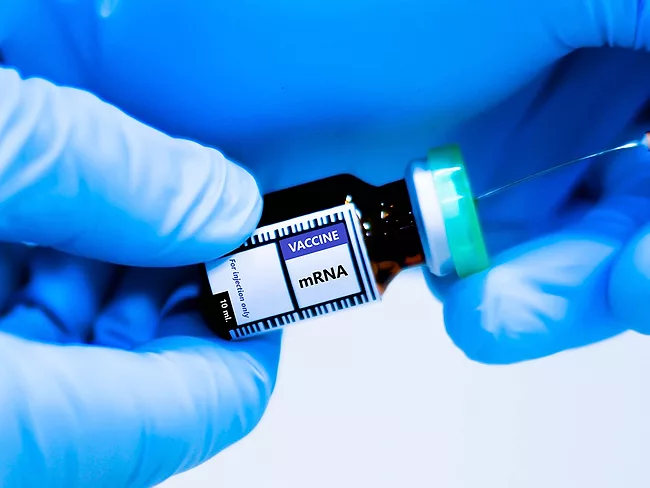
A consortium including Korea Disease Control and Prevention Agency (KDCA), International Vaccine Institute (IVI), ST Pharm Co. Ltd. and Seoul National University (SNU) is joining forces with CEPI to advance a new AI-designed mRNA vaccine to protect against tick-borne severe fever with thrombocytopenia syndrome (SFTS) virus, or Dabie bandavirus. CEPI is providing up to US$16 million to the project, led by IVI, to test the vaccine’s safety and ability to generate a suitable immune response in healthy adults in preclinical and phase I/II trials in Korea.
Researchers at Seoul National University and the National Cancer Center examined public datasets from patients as well as the whole-exome sequence from one of their own patients, who developed radiation-induced sarcoma after treatment.
Lung cancer is globally the second most frequent cancer and the cause of approximately 2 of every 10 cancer-related deaths. Immune checkpoint inhibitor therapy can be effective for some patients, but many patients prove resistant to it.
Nibec Co. Ltd. announced May 28 the signing of a potential $435 million license deal for NP-201, its phase II-ready peptide-based pulmonary fibrosis therapy candidate, with an undisclosed U.S.-based biotech company.
Nibec Co. Ltd. announced May 28 the signing of a potential $435 million license deal for NP-201, its phase II-ready peptide-based pulmonary fibrosis therapy candidate, with an undisclosed U.S.-based biotech company.
Researchers from Seoul National University presented results of preclinical evaluation of a new TNF-α/OX40L bispecific antibody, IMB-101, being developed for the treatment of rheumatoid arthritis (RA).
Researchers working at with Seoul National University together with GPCR Therapeutics Inc. have focused on targeting pairs of G protein-coupled receptors (GPCRs) starting with the CXC chemokine receptor 4 (CXCR4), which is well known to serve hematopoietic and early developmental functions, while also being required for cancer metastasis.
Targeting rearranged during transfection (RET) proto-oncogene may be an effective therapeutic strategy for acute myeloid leukemia (AML) patients with mutations in FLT3 and activated RET. However, few RET-targeting agents have been approved for clinical use, and no FLT3/RET dual-targeting drugs have been identified.