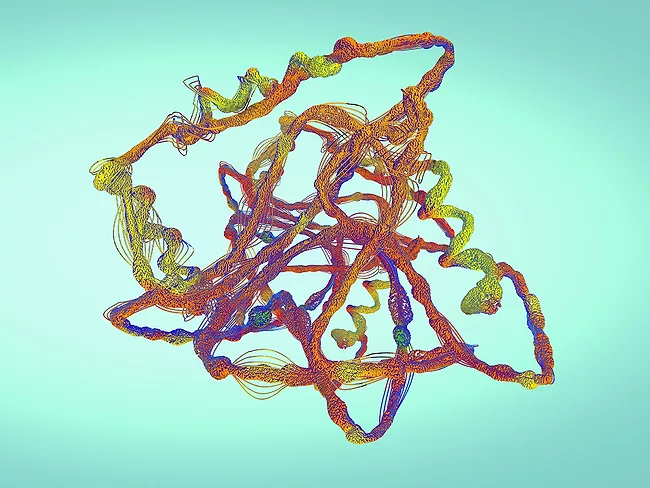
Scientists from Adlai Nortye Biopharma Co. Ltd. and Adlai Nortye Pte Ltd. have prepared and tested proteolysis targeting chimera (PROTAC) compounds comprising an E3 ubiquitin ligase-binding moiety coupled to a signal transducer and activator of transcription 6 (STAT6)- or STAT3-targeting moiety.
Simcere Pharmaceutical Co. Ltd. has synthesized proteolysis targeting chimeras (PROTACs) comprising E3 ubiquitin-protein ligands coupled to a signal transducer and activator of transcription 6 (STAT6)-targeting moiety via a linker reported to be useful for the treatment of cancer and inflammatory disorders.
Sanofi SA has exercised its option to exclusively license Nurix Therapeutics Inc.’s STAT6 program, including the drug development candidate NX-3911, an oral, highly selective STAT6 degrader.
STAT6 plays a central role in regulating Th2-driven immune responses. Recent studies have identified gain-of-function mutations in the STAT6 gene that are associated with early-onset, severe allergic diseases. As a result, STAT6 has emerged as a promising therapeutic target in conditions such as asthma, eosinophilic inflammation, food allergies and atopic dermatitis, particularly in cases that are refractory to standard therapies.
Kymera Therapeutics Inc. has described proteolysis targeting chimera (PROTACs) compounds comprising an E3 ubiquitin ligase-binding moiety covalently linked to a signal transducer and activator of transcription 6 (STAT6)-targeting moiety.
In allergic diseases, STAT6 is a critical transcription factor in the IL-4 and IL-13 signaling pathways and the key driver of Th2 inflammation. Because STAT6 functions through protein-protein and protein-DNA interactions, selectively and potently inhibiting STAT6 with traditional small-molecule inhibitors has been a challenge. However, it is well suited for a targeted protein degradation approach, whereby a binding event is adequate to direct degradation.
Kymera Therapeutics Inc. has unveiled two new first-in-class oral degrader programs for immune-mediated diseases: KT-621, a STAT6 degrader, and KT-294, a TYK2 degrader.