Cour Pharmaceuticals Development Co. Inc. has obtained IND clearance from the FDA for CNP-103, a nanoparticle in development to address the underlying autoimmunity of type 1 diabetes. A first-in-human phase Ib/IIa trial will begin later this year and will enroll adults (aged 18-35 years) and pediatric patients (aged 12-17) who have stage III or newly diagnosed (within the last 6 months) type 1 diabetes as well as C-peptide >0.2 ng/mL.
Er Stress Research Institute Inc. has disclosed benzothiazoimidazolyl compounds acting as endoplasmic reticulum (ER) stress inhibitors reported to be useful for the treatment of cancer, diabetes, neurodegenerative, autoimmune and metabolic diseases as well as renal, cardiovascular and renal disorders.
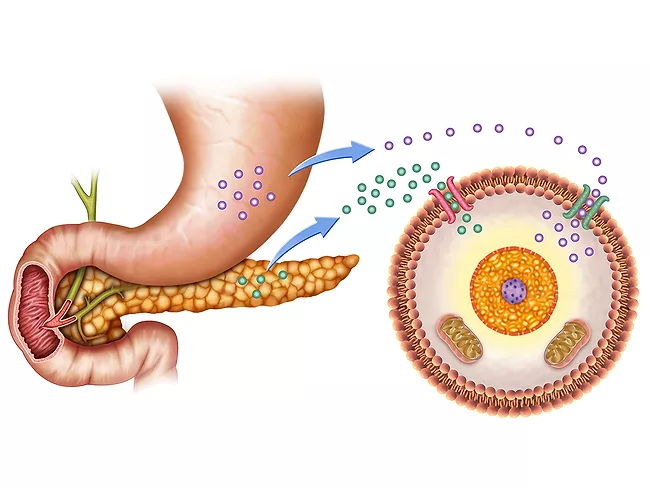
The liver and pancreas are the main actors in glucose metabolism, but not the only ones. Muscles, adipose tissue and the brain play different roles. However, the prize for the best new actor in glucagon production goes to the innate lymphoid cells (ILCs), which, according to a study published in Science, respond to intestine neuron signals traveling to the pancreas to control glucose.
Tyrosine-protein phosphatase non-receptor type 1 (PTP1B) acts as a negative regulator of the insulin signaling pathway by dephosphorylating both the insulin receptor (IR) and the insulin receptor substrate, leading to insulin resistance, the most significant characteristic of type 2 diabetes.
The liver and pancreas are the main actors in glucose metabolism, but not the only ones. Muscles, adipose tissue and the brain play different roles. However, the prize for the best new actor in glucagon production goes to the innate lymphoid cells (ILCs), which, according to a study published in Science, respond to intestine neuron signals traveling to the pancreas to control glucose.
Immunoprecise Antibodies Ltd. (IPA) has developed a new class of GLP-1 therapies entirely through AI, designed to enhance efficacy, safety, therapy longevity and patient satisfaction for the treatment of diabetes.
Investigators at the Helmholtz Institute have shown that inceptor, an inhibitor of the insulin signaling pathway, acted by binding insulin and targeting it for degradation. “Insulin was discovered 100 years ago, and the insulin receptor was discovered 50 years ago,” Heiko Lickert told BioWorld. “Now we have a new insulin receptor, which degrades insulin.” Lickert is the senior author of the paper reporting the new insights into how inceptor works, which were published online in Nature Metabolism.
Investigators at the Helmholtz Institute have shown that inceptor, an inhibitor of the insulin signaling pathway, acted by binding insulin and targeting it for degradation. “Insulin was discovered 100 years ago, and the insulin receptor was discovered 50 years ago,” Heiko Lickert told BioWorld. “Now we have a new insulin receptor, which degrades insulin.” Lickert is the senior author of the paper reporting the new insights into how inceptor works, which were published online in Nature Metabolism.
Researchers at the University of Copenhagen have identified a signaling pathway that simultaneously increased energy expenditure and decreased food intake. In both human and primate studies, agonists of the tachykinin NK2 receptor (NK2R) led to both decreased food intake and increased energy expenditure. And in behavioral tests, they were not aversive, suggesting they do not cause the nausea that is a major side effect of GLP-1 agonists.