The U.S. FDA’s device center launched a new health care program designed to provide patients with a seamless home health care environment that stitches together various health care functions into an integrated system that eases the patient’s use of such technologies. The initiative, part of the agency’s health equity agenda, will rely on augmented and virtual reality and requires the development of a prototype that will be rolled out in underserved areas with several overarching objectives, including the democratization of clinical trial participation.
Telehealth received a much-needed boost from the COVID-19 pandemic, but normal reality has settled in and a number of telehealth bills have surfaced in the U.S. House of Representatives. However, Rep. Brett Guthrie (R-Ky.) advised other members of the House that a recent extension of temporary Medicare telehealth coverage added $2 billion to Medicare spending, a fact which he said forces legislators to ensure that “whatever we move out of committee is paid for.”
The first patenting from 4M Biotech Inc. describes a wound dressing with incorporated color-changing pH sensors that are continuously responsive to the pH of wounds or wound exudate.
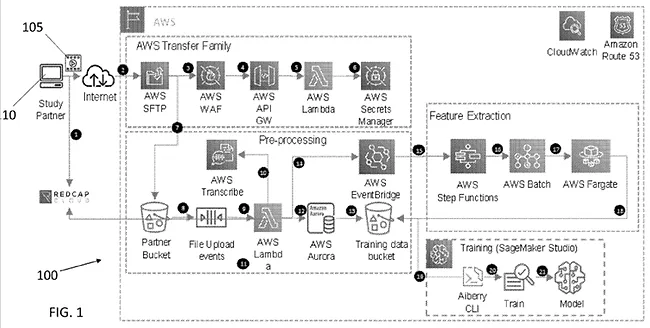
Patent applications from Bellevue, Wash.-based Aiberry Inc. describe further aspects of its artificial intelligence (AI)-powered mental health screening platform that is designed to improve efficiency and save time for healthcare providers.
Advocates of expanded use of telehealth in the U.S. may believe they have an unfairly high evidentiary bar to meet to bring payers on board, but that evidentiary requirement just received support from the National Institutes of Health (NIH).
Zig Therapeutics Inc. reported on new patented systems and methods for the remote diagnosis and treatment of a bacterial infection in individuals with chronic respiratory diseases experiencing acute respiratory exacerbations using automated color vision sputum analysis.
Fractyl Health Inc. reported clinical updates on the Revita real world registry in Germany which has demonstrated clinical remission from type 2 diabetes (T2D) employing a device that resurfaces the duodenal mucosa, the innermost layer of the first portion of the small intestine, and a potential root cause of T2D.
China continues to ramp up efforts to digitize its health care system, as it moves closer toward a 2025 deadline that is part of a nationwide plan. Several of the country’s largest tech conglomerates now have digital health operations that are beginning to show profits and are expected to grow significantly over the next decade.
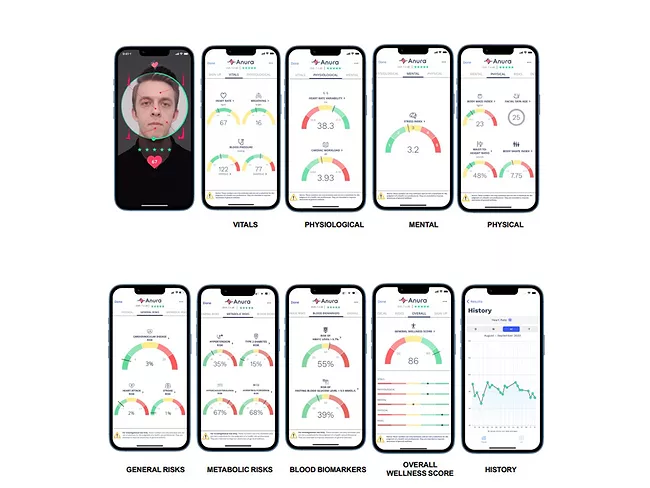
Nuralogix Corp.’s Anura health platform has expanded its capabilities to predict health risks using transdermal optical imaging (TOI) technology to include fatty liver disease (FLD), which affects an estimated quarter of the U.S. population. The platform uses facial blood flow patterns to provide medical-grade assessments of more than 30 health vital signs using any video-enabled device.
At a time when Chat GPT is making waves in the world of artificial intelligence (AI), new legislation is making the rounds in Washington that would allow an AI algorithm to write prescriptions for pharmaceuticals. Rep. David Schweikert (R-Ariz.) introduced H.R. 206 to the House Energy and Commerce (E&C) Committee Jan. 9, although at present the bill enjoys the backing of no other members of the House, suggesting that this legislation has a steep climb in front of it.