Portland, Ore.-based startup Viscardia Inc. has received breakthrough device designation from the FDA for its implantable Visone system to treat moderate to severe heart failure with reduced ejection fraction and preserved ventricular synchrony. The minimally invasive implant works by stimulating a specific portion of the diaphragm.
An artificial intelligence (AI) platform developed by Naperville, Ill.-based Physiq Inc. gave researchers a mean of 10.4 days warning of an impending heart failure exacerbation that would require hospitalization or an emergency department visit, according to a study published in Circulation – Heart Failure.
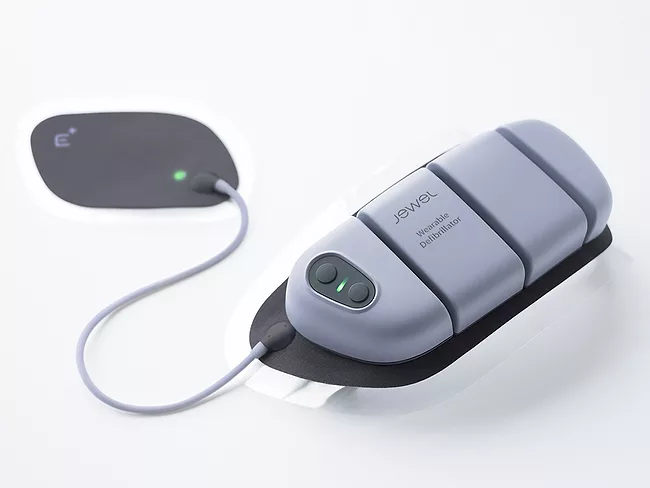
San Francisco-based startup Element Science Inc. has raised a massive financing in support of the first product that is part of its next-generation digital wearable platform. The $145.6 million series C financing is slated to support the company through clinical trial completion and commercial launch of its Jewel Patch Wearable Cardioverter Defibrillator.
DUBLIN – The witty Twitter account @justsaysinmice, run by Northeastern University research scientist Jim Heathers, offers a very useful corrective to the misleading and unwarranted hype that often accompanies preclinical studies in mice. What looks good in murine models is all too often lost in translation, for a whole host of reasons, and never has any useful effect in patients. That’s not a concern for a group led by Thomas Thum, of the Institute of Molecular and Translational Therapeutic Strategies at Hannover Medical School in Germany, who just published in Nature Communications the outcome of what is probably the largest ever pig study in heart failure.
Bayer AG and Merck & Co. Inc. took Wall Street by surprise in November with their phase III success testing vericiguat in heart failure (HF), such that the guanylate cyclase stimulator’s odds not only have improved significantly but also in a different way than imagined before.
LONDON – Sequana Medical NV has raised €19 million (US$21 million) in a private placing to fund continuation of the U.S. pivotal trial of its Alfapump in treating ascites due to cirrhosis of the liver and a European trial of the device in heart failure patients who have stopped responding to diuretics.
In the latest step toward making left ventricular assist devices (LVADs) easier and more accessible, the FDA recently approved a less invasive surgical approach for use with Abbott Laboratories’ latest LVAD, Heartmate 3. Now, rather than requiring risky open-heart surgery, the device can be implanted through an incision in the chest wall. Abbott gained Heartmate 3 in its 2017 acquisition of St. Jude Medical for $25 billion.
BEIJING – Tokyo-based biotech firm Heartseed Inc., which focuses on regenerative medicine, has closed a series B financing round to pocket $26 million that will go to its lead drug candidate, HS-001, for treating heart failure.
BEIJING – Tokyo-based biotech firm Heartseed Inc., which focuses on regenerative medicine, has closed a series B financing round to pocket $26 million that will go to its lead drug candidate, HS-001, for treating heart failure.
Stem cell biotech firm Novoheart Holdings Inc., of Vancouver, British Columbia, is partnering with Astrazeneca plc, of Cambridge, U.K., to co-develop a human-specific in vitro, functional model of heart failure with preserved ejection fraction.