The association of health care professionals in Normandy (APRIC) and the regional support group for the development of e-health in Normandy released new data on the importance of home telemonitoring in heart failure. Patients participating in the Suivi Clinique à Domicile (SCAD) heart failure home telemonitoring program experience less re-hospitalizations and lower death rates than patients with the same pathology but not on the program.
I-Cordis LLC has been awarded a phase II Small Business Innovation Research (SBIR) grant for US$1,548,708 from the National Heart, Lung, and Blood Institute (NHLBI) to further develop a potential immune-modulatory treatment for heart failure with preserved ejection fraction (HFpEF).
There may be those who believe that artificial intelligence (AI) is suffering from overexposure in the media, but these software algorithms are nonetheless challenging medical professionals in their use of medical diagnostics. A new study showed that an AI algorithm not only bested the sonographer in interpretation of whether cardiac ultrasound was indicative of left ventricular ejection fraction (LVEF), but also that the results were sufficiently vigorous that the reviewing cardiologist couldn’t distinguish between the sonographer’s interpretations and those provided by the algorithm.
GSK plc presented data on the discovery of a selective and potent lead series for G protein-coupled receptor kinase 2 (GRK2) inhibition for the potential treatment of heart failure. Heart failure remains a leading cause of morbidity and mortality worldwide.
The U.S. FDA granted digital therapeutics company Bodyport Inc. 510(k) clearance for its heart monitoring weight scale. The digital solution includes sensors and algorithms that measure hemodynamic biomarkers to assess heart function and fluid status when patients take their daily weight. San Francisco-based Bodyport told BioWorld the platform is for heart failure (HF) patients in the U.S.
Stem cell therapy company Mesoblast Ltd. said that for patients with chronic heart failure with reduced ejection fraction, treatment with rexlemestrocel-L, its allogeneic product candidate, resulted in greater improvement in a prespecified analysis of left ventricular ejection fraction at 12 months relative to controls in the phase III DREAM-HF trial.
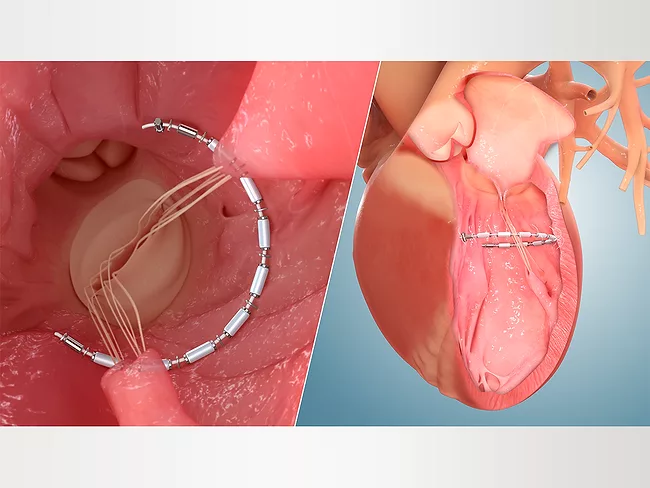
The U.S. FDA has granted a breakthrough device designation to Ancora Heart Inc. for its Accucinch ventricular restoration system. The minimally invasive treatment is intended to treat patients with symptomatic heart failure with reduced ejection fraction (HFrEF).
Several genetic studies in a range of model organisms have pointed to an important role for the B-cell lymphoma 2 (BCL2)-associated athanogene 3 (BAG3) gene in the maintenance of cardiac function.
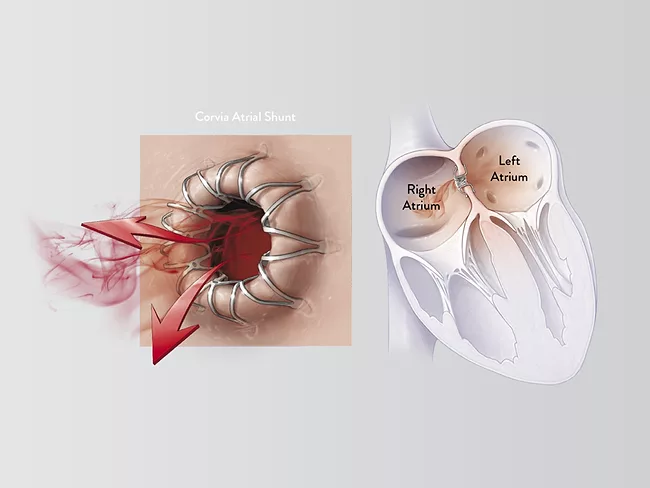
Corvia Medical Inc. has closed $54 million in equity financing to support a confirmatory trial for its Interatrial Shunt Device, designed to reverse diastolic heart failure (HF), otherwise known as “preserved ejection fraction” (HFpEF), and which affects millions of Americans. This follows results of the largest randomized controlled trial of a device-based therapy published in February 2022, with a 45% reduction in HF events and a 55% greater improvement in patient quality of life.
Endotronix Inc. reported positive data from the SIRONA 2 clinical trial evaluating safety and efficacy of its Cordella pulmonary artery pressure sensor system in New York Heart Association (NYHA) class III heart failure (HF) patients.