Heart failure is a common condition: according to a new study in 11 high-income countries, an estimated 1-2% of the population has heart failure. One feature of late-stage heart failure is nicotine adenine dinucleotide (NAD+), which leaves heart muscle cells unable to generate sufficient ATP to meet their energy needs. Now, investigators at The Hospital for Sick Children and the University of Toronto have shown that this metabolic dysfunction is present early in heart failure, and precedes any sign of clinical dysfunction in the heart.
Could long non-coding RNAs be the key to developing organ-specific antifibrotic drugs that only mediate their effects in disease-related contexts? That’s the intriguing hypothesis that Haya Therapeutics SA has set out to explore, and its lead program, in heart failure caused by non-obstructive hypertrophic cardiomyopathy, is now in IND-enabling studies. A first clinical trial is pencilled in for late 2024 or early 2025.
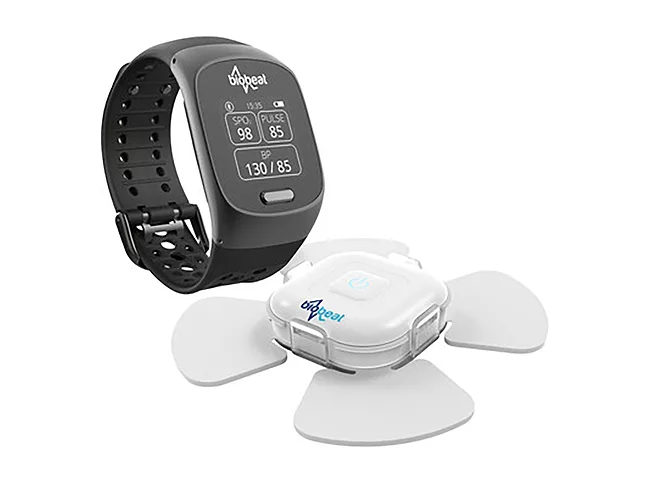
Biobeat Technologies Ltd. expanded its U.S. FDA-cleared remote patient monitoring offerings with a double nod from the agency for its sensors to monitor stroke volume and cardiac output. The two new indications join its capabilities for measuring the five vital signs assessed in any medical visit—blood pressure, blood oxygen saturation, pulse rate, respiratory rate and body temperature—all of which can be done using photoplethysmography (PPG) on sensors embedded on either a short-term chest patch or a more durable wrist monitor.
Shenzhen Core Medical Technology Co. Ltd. completed a series C round to speed up the development of its left ventricular assist devices (LVAD) for heart failure.
Genfleet Therapeutics (Shanghai) Inc. has patented receptor-interacting serine/threonine-protein kinase 1 (RIPK1) inhibitors reported to be useful for the treatment of stroke, rheumatoid arthritis, psoriasis, heart failure, nonalcoholic steatohepatitis and inflammatory bowel disease.
Damage to the left ventricle may be more common than damage to its cousin on the other side, but right heart failure is still a unique syndrome with its own specific needs. Chuck Simonton, the chief medical officer at Abiomed Inc., told BioWorld that both the company and the U.S. FDA are keen to remind cardiologists that early detection and treatment of right heart failure vastly improves outcomes, including a huge reduction in mortality in these desperately ill patients.
As the Feb. 28, 2023 PDUFA date for the compound nears, Cytokinetics Inc. CEO Robert Blum insisted that his firm is not mulling withdrawal of the marketing application for heart failure drug omecamtiv mecarbil, nor is the company now considering another study, after an unfavorable vote on the drug Dec. 13 by the U.S. FDA’s Cardiovascular and Renal Drugs Advisory Committee.
Even though Cytokinetics Inc. received applause for testing its heart failure drug, omecamtiv mecarbil, in the second largest global heart disease clinical trial ever, the drug didn’t get a standing ovation from the U.S. FDA’s Cardiovascular and Renal Drugs Advisory Committee (CRDAC) Dec. 13.