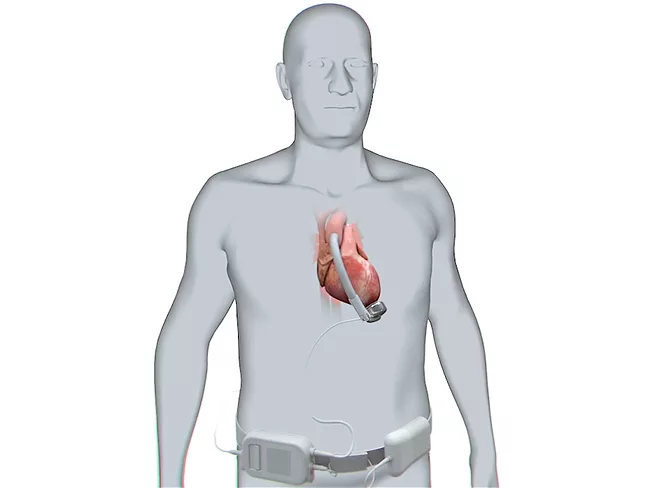
Four months after raising $55 million, Magenta Medical Ltd. reported the completion of enrollment to a U.S. FDA-approved early feasibility study with the Elevate percutaneous left ventricular assist device (pLVAD).
Both oxidative stress and inflammation are the main hallmarks in the development of heart failure. Researchers from the Hefei University of Technology have reported on the discovery and optimization of a series of pterostilbene derivatives intended to be used in heart failure.
Acorai AB received a U.S. FDA breakthrough device designation for its Heart Monitor, a noninvasive intracardiac pressure monitoring device for patients with heart failure. The Acorai Heart Monitor can estimate diastolic pulmonary artery pressure, systolic pulmonary artery pressure and mean pulmonary artery pressure in patients with Stage C heart failure who have been referred for hemodynamic monitoring.
Taking a step forward in an increasingly crowded market that has long been dominated by non-Chinese players, Magassist Co. Ltd. got positive clinical results from its extracorporeal membrane oxygenation (ECMO) system Breathmo to provide support for patients with serious heart failure or lung failure, with a study showing that the system can provide pulmonary and cardiac support effectively and safely.
Corwave SA raised €26 million (US$28 million) in the second close of its series C funding round taking the total amount to €61 million. The funds will go toward the industrial development of the company’s facilities as well as entry into clinical trials for its heart pump, the Corwave LVAD, which is based on its wave membrane biomimetic technology, inspired by the undulating movement of marine animals.
With rising rates of disease and established guidelines for treatment, officials at Lexicon Pharmaceuticals Inc. have “the wind at our backs” as they go about commercializing Inpefa (sotagliflozin) for heart failure (HF), after the drug was cleared late May 26 by the U.S. FDA, said CEO Lonnel Coats. Shares of The Woodlands, Texas-based Lexicon (NASDAQ:LXRX), which had risen significantly after hours on word of the Inpefa go-ahead, closed May 30 at $2.90, down 28 cents. Regulators gave their nod to the inhibitor of renal sodium-glucose co-transporter 2 (SGLT2) and intestinal SGLT1 with a broad label across the full range of left ventricular ejection fraction, including HFpEF and HFrEF, and for patients with or without diabetes.
Heartseed Inc. raised ¥2 billion (US$14.3 million) in a series D round to continue the phase I/II Lapis trial of its allogeneic induced pluripotent stem cell (iPSC)-derived cardiomyocytes for heart failure. The lead asset, HS-001, is an investigational cell therapy consisting of clusters of purified heart muscle cells (cardiomyocyte spheroids) derived from iPSCs that are designed to restore heart muscle and function in patients with advanced heart failure.
Heartseed Inc. raised ¥2 billion (US$14.3 million) in a series D round to continue the phase I/II Lapis trial of its allogeneic induced pluripotent stem cell (iPSC)-derived cardiomyocytes for heart failure. The lead asset, HS-001, is an investigational cell therapy consisting of clusters of purified heart muscle cells (cardiomyocyte spheroids) derived from iPSCs that are designed to restore heart muscle and function in patients with advanced heart failure.