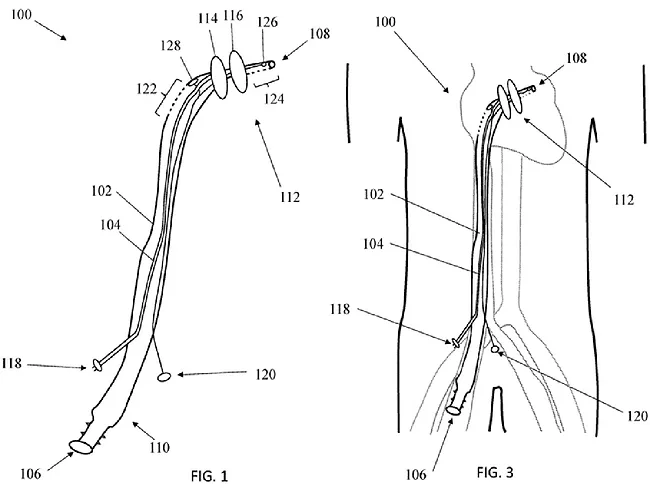
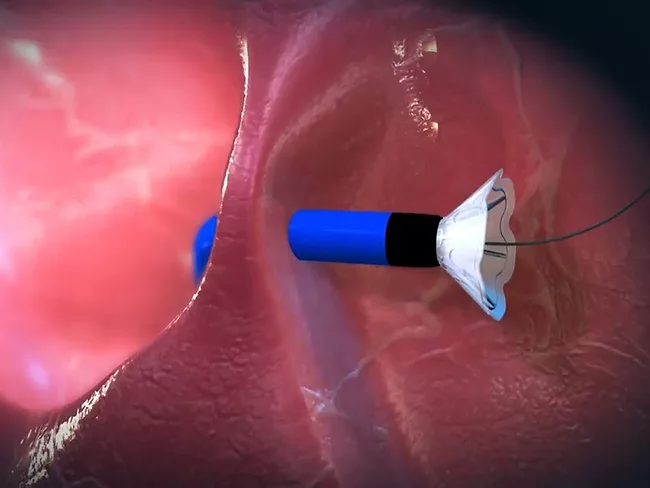
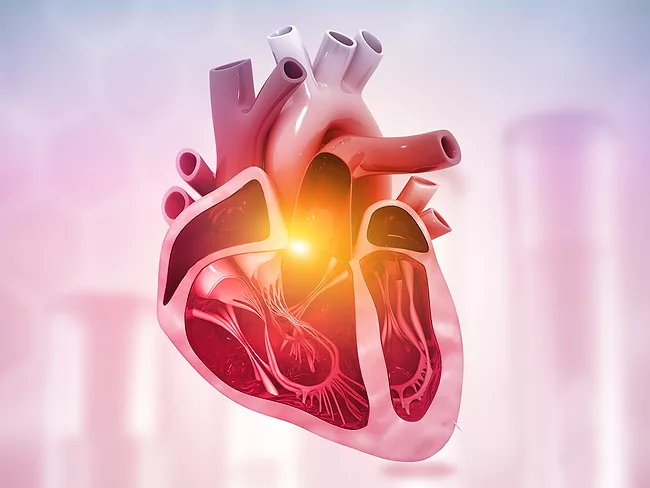
Researchers from UCLA’s Department of Cardiac Surgery filed for protection of a smart multistage peripherally inserted cannula with active fixation for temporary cardiopulmonary support which simultaneously drains both sides of the heart.
Researchers from Corteria Pharmaceuticals SAS and Université Paris-Saclay recently presented the preclinical results on a long-acting corticotropin-releasing factor CRF2 receptor agonist, COR-1389.
Essential branched-chain amino acids (BCAA) such as leucine, isoleucine or valine, cannot be synthesized by mammals, making them an obligate part of the diet.
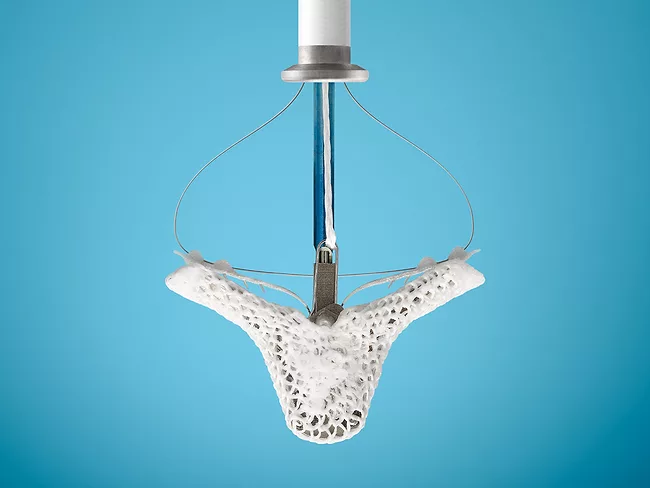
Hope for definitive resolution of the controversy about the superiority of transcatheter edge-to-edge repair of mitral valves over medical therapy in individuals with symptomatic heart failure and functional mitral regurgitation were dashed at the European Society of Cardiology meeting this weekend.
At the recent European Society of Cardiology meeting, Anacardio AB and Helsinn Healthcare SA presented data on their oral small-molecule ghrelin receptor agonist and first-in-class calcium sensitizing inotrope, AC-01, in preclinical models of heart failure.
Heart failure with preserved ejection fraction (HFpEF) is associated with hypertension and metabolic disorders and remains one of the main challenges for cardiovascular risk management. Researchers from the University of Cincinnati, Duke University School of Medicine, Remd Biotherapeutics Inc. and collaborators described the use of targeted inhibition of glucagon signaling as a potential strategy to rescue the pathological features of HFpEF.
Johnson & Johnson aims to add a fourth cardiac business to its portfolio in less than two years with the acquisition of V-W aveLtd., which makes the Ventura interatrial shunt system for the treatment of heart failure. J&J will pay $600 million up front and an additional $1.1 billion contingent on meeting specified regulatory and commercial milestones. The deal is slated to close before the end of the year.
Johnson & Johnson (J&J) aims to add a fourth cardiac business to its portfolio in less than two years with the acquisition of V-Wave Ltd., which makes the Ventura interatrial shunt system for the treatment of heart failure. J&J will pay $600 million up front and an additional $1.1 billion contingent on meeting specified regulatory and commercial milestones. The deal is slated to close before the end of the year.
Heart failure (HF) accounts for 9.2% of all cardiovascular-related deaths. HF with preserved ejection fraction (HFpEF) occurs when the left ventricular ejection fraction (LVEF) is ≥50%.
Researchers from the University of South Florida developed a novel ventricular assist device that is placed directly inside a failing ventricular cavity to help it pump blood correctly again. This device consists of a self-expanding stent that contains a sac and inlet/outlet ports that allow compression fluids to generate contractile forces that pump the blood out.