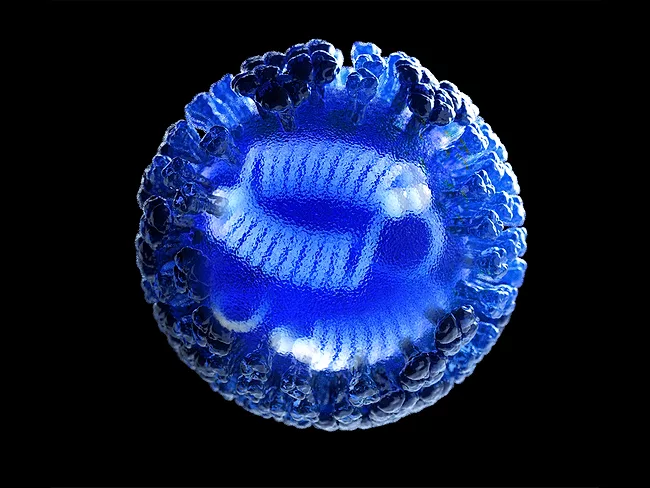
The A’s have it but the B’s don’t in Moderna Inc.’s pivotal phase III study of mRNA-1010, a seasonal flu vaccine for adults living in the southern hemisphere. Interim results showed the vaccine achieved superiority on seroconversion rates for influenzas A/H3N2 and A/H1N1, superiority on geometric mean titer ratios for influenza A/H3N2 and noninferiority on geometric mean titer ratios for influenza A/H1N1. However, noninferiority was not met for the endpoints against the influenza B/Victoria- and B/Yamagata-lineage strains.
Raynovent Biotech Co. Ltd. has raised ¥370 million (US$54 million) in a series C round to further develop candidates in the field of respiratory and metabolic diseases.
Raynovent Biotech Co. Ltd. has raised ¥370 million (US$54 million) in a series C round to further develop candidates in the field of respiratory and metabolic diseases. Funds will be used to accelerate clinical trials of lead candidates in its pipeline, as well as to prepare for the commercialization of oral pills to treat COVID-19 and influenza A virus.
Ice, juice, the exact measure of liquor, a few drops of Angostura... What goes into a good New Year’s Eve cocktail? According to researchers working on vaccines for the most elusive viruses, it will be time soon to toast next-generation vaccines. If 2020 was the year of the COVID-19 pandemic, and in 2021 the year of mRNA vaccinations, 2022 brought polyvalent designs of antigens, evaluated highly neutralizing antibodies, and fine-tuned mRNA technology against SARS-CoV-2, HIV and the flu.
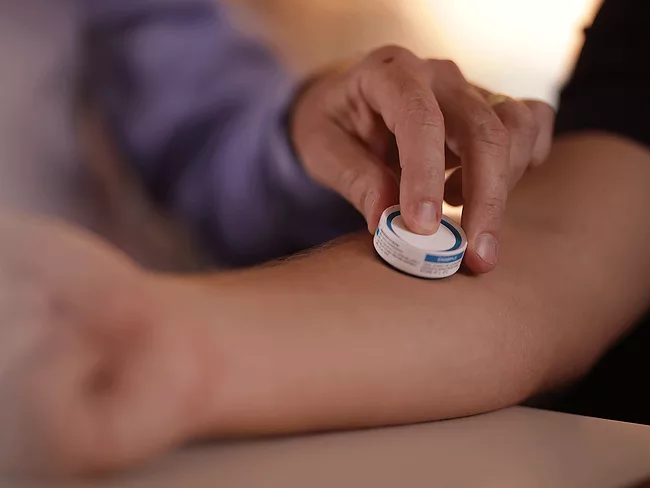
Vaxxas Pty. Ltd. raised AU$34 million (US$23 million) to advance its needle-free COVID-19 vaccine program, which began in early November, and readouts from the study are expected in late February or early March, Vaxxas CEO David Hoey told BioWorld. The COVID-19 vaccine patch is based on the company’s high-density microarray patch technology that delivers Hexapro, a second-generation version of the spike protein used in all major U.S.-approved COVID-19 vaccines.
Vaxxas Pty. Ltd. raised AU$34 million (US$23 million) to advance its needle-free COVID-19 vaccine program, which began in early November, and readouts from the study are expected in late February or early March, Vaxxas CEO David Hoey told BioWorld. The COVID-19 vaccine patch is based on the company’s high-density microarray patch technology that delivers Hexapro, a second-generation version of the spike protein used in all major U.S.-approved COVID-19 vaccines.
Atriva Therapeutics GmbH, a small firm founded in 2015 to develop a host-targeted antiviral approach for treating respiratory viral infections, seems to have found itself in thick of it. As the U.S. CDC and other health agencies warn of an uptick in respiratory viral infections – the so-called “tripledemic” of influenza, respiratory syncytial virus and COVID-19 – the German company is gearing up to launch a basket trial testing lead candidate zapnometinib in all three indications.
At the Saturday, Oct. 22 session, ‘Basic Science: Correlates of protection, immune response and the host-microbe interaction,’ of the IDWeek 2022 infectious disease conference, moderator Luiz Bermudez, professor at Oregon State University, introduced the latest advances to prevent infections with Treponema pallidum during neurosyphilis (NS), Staphylococcus aureus and osteomyelitis, and Mycobacterium tuberculosis during influenza.
At the Saturday, Oct. 22 session, ‘Basic Science: Correlates of protection, immune response and the host-microbe interaction,’ of the IDWeek 2022 infectious disease conference, moderator Luiz Bermudez, professor at Oregon State University, introduced the latest advances to prevent infections with Treponema pallidum during neurosyphilis (NS), Staphylococcus aureus and osteomyelitis, and Mycobacterium tuberculosis during influenza.
Finding a vaccine that provides universal protection against seasonal influenza remains a public health priority. Although influenza neuraminidase (NA) undergoes slower antigenic changes than hemagglutinin (HA) and therefore constitutes a desirable vaccine target, NA standalone vaccination strategies present a limited breadth of NA immunity.