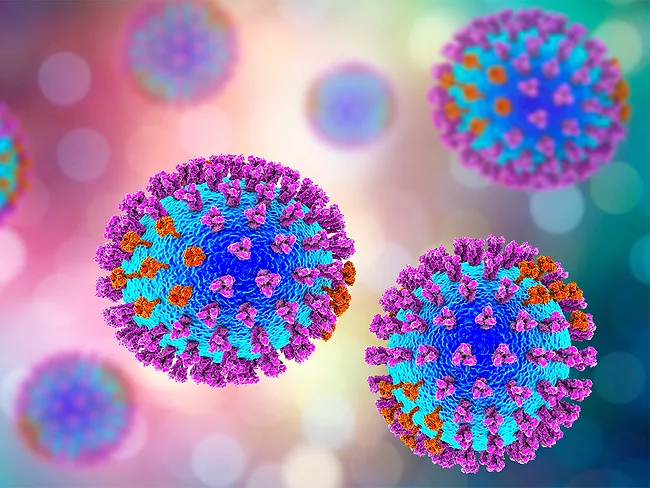
Merck & Co. Inc. is buying Cidara Therapeutics Inc. for $9.2 billion to acquire a late-stage flu candidate and also to outrace blockbuster Keytruda’s looming patent expiration. CD-388, Cidara’s lead candidate, is in a phase III study of adolescents and adults for preventing influenza A and B in those who are at a high risk of developing complications.
Ena Respiratory Pty Ltd. raised an AU$34 million (US$22.4 million) series B round to advance INNA-051, its nasal spray for symptomatic viral respiratory infections, to phase II trials. New investors in the Melbourne-headquartered company include the Gates Foundation and Flu Lab. Existing investors Brandon Capital, Uniseed and Stoic Venture Capital also participated in the round.
Ena Respiratory Pty Ltd. raised an AU$34 million (US$22.4 million) series B round to advance INNA-051, its nasal spray for symptomatic viral respiratory infections, to phase II trials. New investors in the Melbourne-headquartered company include the Gates Foundation and Flu Lab. Existing investors Brandon Capital, Uniseed and Stoic Venture Capital also participated in the round.
CSPC Zhongqi Pharmaceutical Technology (Shijiazhuang) Co. Ltd. has synthesized prodrugs of deuterated baloxavir marboxil derivatives acting as cap-dependent endonuclease (CEN) (influenza virus) inhibitors reported to be useful for the treatment of influenza viral infections.
Auravax Therapeutics Inc. has received funding from the Gates Foundation to evaluate the efficacy of Nanosting-001 in validated swine models of influenza infection at Kansas State University College of Veterinary Medicine and The Pirbright Institute.
Deficiencies in interferon-stimulated gene 15 (ISG15), a protein that normally regulates the immune response, causes mild but persistent inflammation. However, its absence also provides an unexpected advantage by increasing resistance to viral infections. Inspired by this condition and using mRNA technology, scientists at Columbia University and the Icahn School of Medicine at Mount Sinai have developed a broad-spectrum antiviral platform.
Deficiencies in interferon-stimulated gene 15 (ISG15), a protein that normally regulates the immune response, causes mild but persistent inflammation. However, its absence also provides an unexpected advantage by increasing resistance to viral infections. Inspired by this condition and using mRNA technology, scientists at Columbia University and the Icahn School of Medicine at Mount Sinai have developed a broad-spectrum antiviral platform.
Innovstone Therapeutics Ltd. has divulged prodrugs of deuterated baloxavir marboxil derivatives acting as polymerase basic protein 2 (PB2) (influenza virus) inhibitors reported to be useful for the treatment of influenza A, influenza B and influenza C viral infections.
The threat of another influenza pandemic arising from bird-to-human and then human-to-human transmission drives continuing efforts to develop effective vaccines against avian influenza. In the latest advance in this area, researchers at Novavax Inc. have reported a new vaccine against avian influenza strain A(H5N1) clade 2.3.4.4b.
It’s not surprising that, of all the recommendations the U.S. CDC’s vaccine advisory board made at its June meeting, the first one Health and Human Services Secretary Robert Kennedy signed off on would essentially remove thimerosal from influenza vaccines in the U.S. What is surprising is the time it took for him to do so, given his long-held position on the preservative used in multidose vials and his insistence that a thimerosal presentation and vote be added to the agenda.