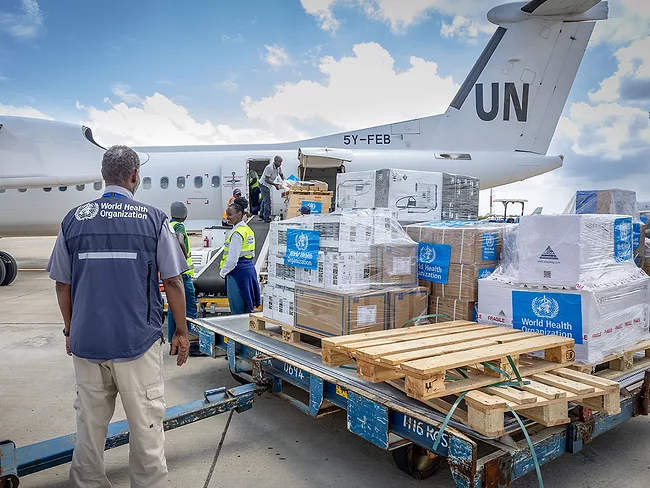
It is not surprising that a large Ebola outbreak would be considered a public health emergency of international concern. But the current PHEIC is notable for the speed with which it was declared, speaking to the urgency of the situation. World Health Organization Director-General Tedros Adhanom Ghebreyesus declared the outbreak a PHEIC on Sunday, May 17, without first convening an emergency committee. That step is unprecedented.
The threat posed by the Ebola outbreak in the Democratic Republic of Congo has intensified, with the confirmation that it is caused by the Bundibugyo species of the virus, for which there are no approved vaccines or antiviral therapies. At the same time, the high positivity rate, with eight laboratory confirmed cases out of 13 samples collected in various areas, and more reports of suspected cases and clusters of deaths, all point to a potentially much larger outbreak than currently is being detected and reported.
On Sunday, May 17th, 2026, the World Health Organization classified the ongoing Bundibugyo ebolavirus outbreak in the Democratic Republic of Congo (DRC) as a public health emergency of international concern (PHEIC). The rapid escalation to PHEIC is due to several factors. Given the high number of cases, the outbreak has likely been going undetected for some time, and may be a “much larger outbreak than what is currently being detected and reported, with significant local and regional risk of spread,” according to the WHO statement. The outbreak appears to already have crossed the border from the DRC into Uganda at least twice. And all this is happening with a virus for which there are no approved treatments or vaccines.
On Sunday, May 17th, 2026, the World Health Organization classified the ongoing Bundibugyo ebolavirus outbreak in the Democratic Republic of Congo (DRC) as a public health emergency of international concern (PHEIC). The rapid escalation to PHEIC is due to several factors. Given the high number of cases, the outbreak has likely been going undetected for some time, and may be a “much larger outbreak than what is currently being detected and reported, with significant local and regional risk of spread,” according to the WHO statement. The outbreak appears to already have crossed the border from the DRC into Uganda at least twice. And all this is happening with a virus for which there are no approved treatments or vaccines.
The threat posed by the Ebola outbreak in the Democratic Republic of Congo has intensified, with the confirmation that it is caused by the Bundibugyo species of the virus, for which there are no approved vaccines or antiviral therapies. At the same time, the high positivity rate, with eight laboratory confirmed cases out of 13 samples collected in various areas, and more reports of suspected cases and clusters of deaths, all point to a potentially much larger outbreak than currently is being detected and reported.
If the recent hantavirus outbreak wasn’t enough to keep public health officials busy, a new Ebola virus disease outbreak has been confirmed by authorities in the Democratic Republic of the Congo. While sequencing is ongoing to identify the Ebola species, experts have noted early results suggesting it appears to be different from the Zaire species that has caused previous outbreaks, including the deadliest outbreak in West Africa a decade ago, meaning existing vaccines and antibody treatments likely will not be effective.
Ebola virus (EBOV) causes severe febrile illness that frequently leads to death within 10 days of infection due to multiorgan failure. Different therapeutic strategies have been developed against EBOV infection, including small-molecule drugs, monoclonal antibodies and viral vaccine vectors. Despite their promise, all these strategies have significant limitations that limit their clinical application. Researchers from Mayo Clinic recently presented a novel molecular therapy, which they called “therapeutic minigenome,” using EBOV’s own proteins to combat itself.
A global consortium led by Adaptvac ApS aims to design and test a new vaccine that could offer broad protection against several filoviruses, including Zaire ebolavirus, Sudan ebolavirus and Marburg virus.
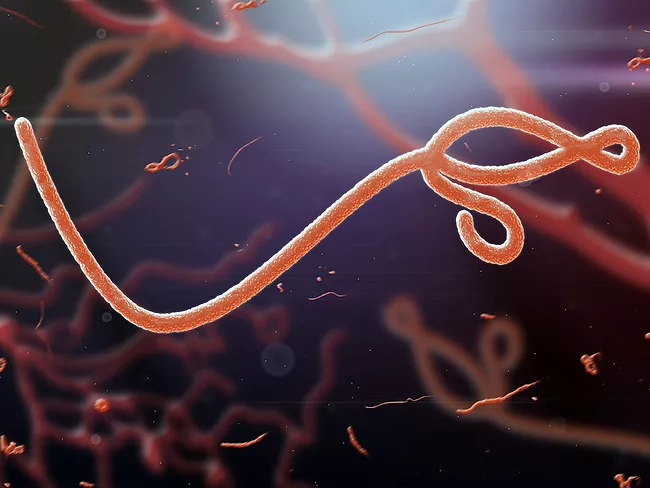
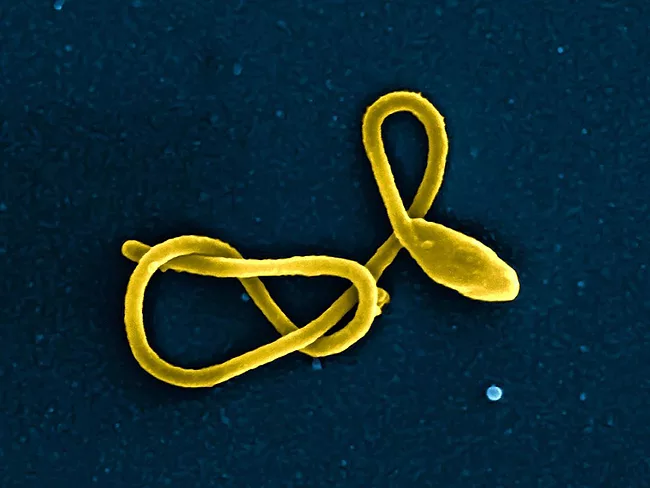
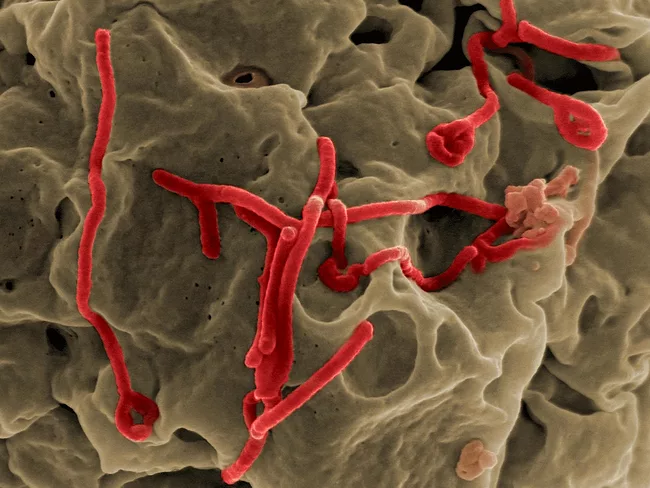
Ebola virus and Marburg virus are single-stranded, enveloped and negative sense-RNA viruses belonging to the Filoviridae family, and they both cause deadly hemorrhagic fevers in humans and mammals.
The FDA has granted orphan drug designation to the active ingredient in Soligenix Inc.’s Suvax, a subunit protein vaccine of recombinantly expressed Sudan ebolavirus (SUDV) glycoprotein, for the prevention and post-exposure prophylaxis against SUDV infection. SUDV is a type of ebolavirus for which there is no current treatment or vaccine.