Advances in understanding the processes underlying brain neurodegeneration have allowed lots of new treatment and prevention strategies to begin to flourish. Several presentations at the 2024 Alzheimer’s & Parkinson’s Diseases Conference recently held in Lisbon reflect that eyes are now on some individuals who, despite showing pathological signs in their brains, stay cognitively healthy across several endogenous mechanisms of resilience.
If we unraveled the DNA of the 46 chromosomes of a single human cell, it would barely measure 2 meters. If we did the same with the rest of the body, if we aligned the 3 billion base pairs of its 5 trillion cells, we could travel the distance from the Earth to the Sun more than 100 times. It seems unreachable. However, that is the unit of knowledge of the large sequencing projects achieved in 2023.
If we unraveled the DNA of the 46 chromosomes of a single human cell, it would barely measure 2 meters. If we did the same with the rest of the body, if we aligned the 3 billion base pairs of its 5 trillion cells, we could travel the distance from the Earth to the Sun more than 100 times. It seems unreachable. However, that is the unit of knowledge of the large sequencing projects achieved in 2023. From the generation of the human pangenome to cell-by-cell maps of the brain and kidneys, scientists this year have completed several omics collaborative projects stored in large international databases. Now, what’s the plan?
If we unraveled the DNA of the 46 chromosomes of a single human cell, it would barely measure 2 meters. If we did the same with the rest of the body, if we aligned the 3 billion base pairs of its 5 trillion cells, we could travel the distance from the Earth to the Sun more than 100 times. It seems unreachable. However, that is the unit of knowledge of the large sequencing projects achieved in 2023. From the generation of the human pangenome to cell-by-cell maps of the brain and kidneys, scientists this year have completed several omics collaborative projects stored in large international databases. Now, what’s the plan?
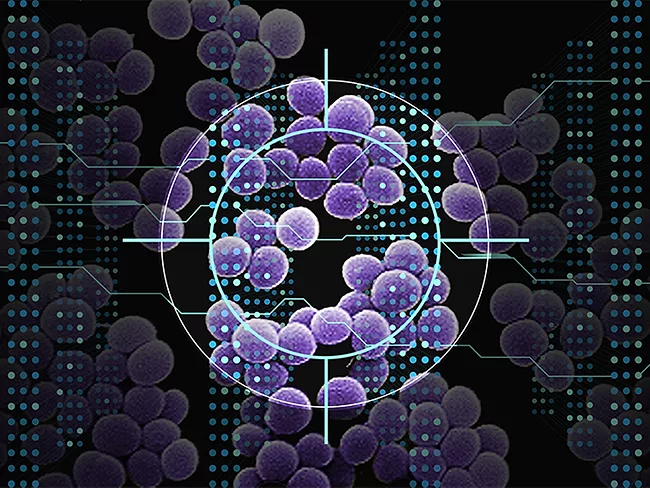
Researchers have used explainable artificial intelligence (explainable AI) to find structurally new antibiotics with minimal toxicity. They reported their findings online in Nature on Dec. 20, 2023. In animal testing, compounds identified via the method showed that they had activity against drug-resistant gram-positive bacteria including methicillin-resistant Staphylococcus aureus (MRSA), one of the most serious bacterial public health threats.
Why cancer? The mechanisms that drive and maintain tumorigenesis are still a mystery. This is a play with different actors who have different roles in several contexts. One of these scenarios is represented by genetic and epigenetic conditions that determine the early trajectories of cancer cells. In addition, different mechanisms will control phenotypes and states that can take one or another direction toward cancer.
Current therapies based on immune checkpoint blockade are effective and offer a valid option for treatment, but many patients develop either primary or acquired resistance to treatment. Previous research has shown that the deletion of protein tyrosine phosphatases PTPN2 and PTPN1 results in an increase in the sensitization of tumor cells and the promotion of antitumor immunity.
The broadest view of post-mortem brains in Alzheimer’s disease (AD) has unveiled the genome, transcriptome and epigenome alterations of this neurodegenerative condition. The coordinated research, directed by scientists at the Massachusetts Institute of Technology (MIT), also described new cellular pathways that could help the scientific community design new therapies. Four simultaneous studies published on Sept. 28, 2023, in Cell, presented a brain single-cell atlas of AD, exposed the damage that affects DNA, and described the processes that alter the microglia and dysregulate the epigenome.
The broadest view of post-mortem brains in Alzheimer’s disease (AD) has unveiled the genome, transcriptome and epigenome alterations of this neurodegenerative condition. The coordinated research, directed by scientists at the Massachusetts Institute of Technology (MIT), also described new cellular pathways that could help the scientific community design new therapies. Four simultaneous studies published on Sept. 28, 2023, in Cell, presented a brain single-cell atlas of AD, exposed the damage that affects DNA, and described the processes that alter the microglia and dysregulate the epigenome.