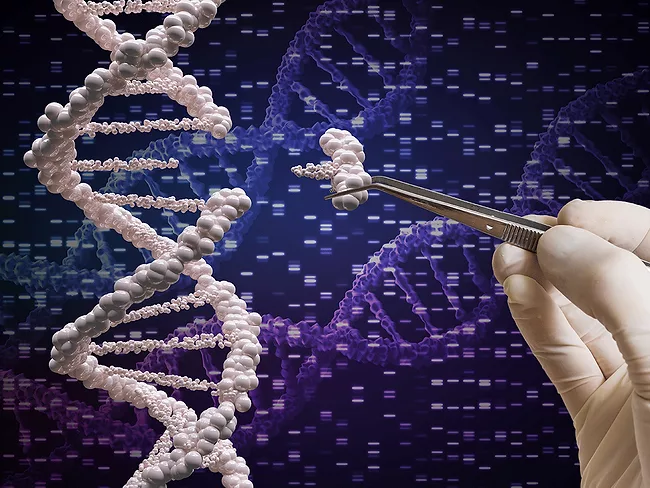
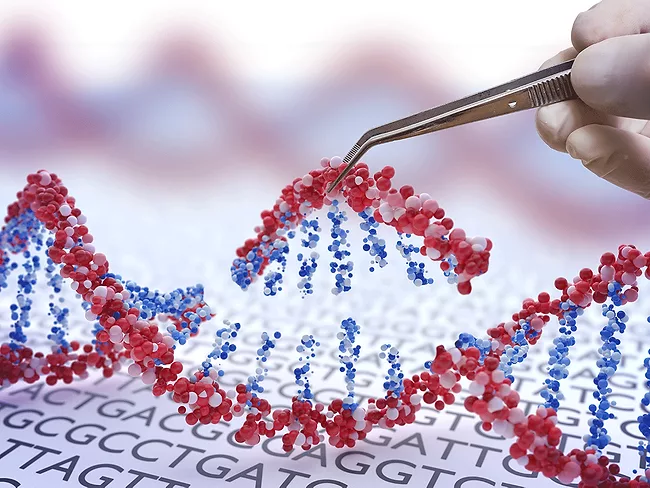
The editing in human cells and in mice of the survival motor neuron 1 gene (SMN1) restored the levels of SMN protein that the mutation of the SMN2 gene produces in spinal muscular atrophy. Scientists from the Broad Institute in Boston and The Ohio State University reversed the mutation using the base editing technique.
The editing in human cells and in mice of the survival motor neuron 1 gene (SMN1) restored the levels of SMN protein that the mutation of the SMN2 gene produces in spinal muscular atrophy (SMA). Scientists from the Broad Institute in Boston and The Ohio State University reversed the mutation using the base editing technique. “This base editing approach to treating SMA should be applicable to all SMA patients, regardless of the specific mutation that caused their SMN1 loss,” the lead author David Liu, a professor and director of the Merkin Institute of Transformative Technologies in Healthcare at the Broad Institute of Harvard and MIT, told BioWorld.
Programmable genome insertion of long DNA sequences, useful for both gene therapy and basic research, commonly relies on cellular responses to double-strand breaks (DSBs) using programmable nucleases, such as CRISPR-Cas9, for induction of repair pathways such as non-homologous end joining (NHEJ). To overcome the current limitations of gene integration approaches, scientists from the Massachusetts Institute of Technology and colleagues developed a new strategy based on advances in programmable CRISPR-based gene editing, such as prime editing, together with the application of precise site-specific integrases.
Massachusetts Institute of Technology (MIT) engineers in collaboration with South Korean cosmetic giant Amorepacific Corp. have created a chip-free, wireless electronic “skin” for sensing and transmitting vital medical signs minus larger, clunkier chips or batteries in most smartphones. MIT postdoc Jun Min Suh explained any change to the skin’s conditions, such as an accelerated heart rate, affect the sensor’s mechanical vibrations, generating an electrical signal that automatically transmits medial data to the consumer.
Researchers at Massachusetts General Hospital (MGH) and the Massachusetts Institute of Technology (MIT) have developed a deep learning computer model that expands on the ability to identify discrete data contained in breast imaging to better predict a woman’s chances of developing breast cancer.
As cases skyrocket and more questions arise about the high rate of false negatives returned by rapid testing in COVID-19 cases, a simple, new diagnostic test offers far greater accuracy. Researchers around the globe have found that artificial intelligence can detect coronavirus infections in recorded forced coughs, with nearly 100% accuracy in asymptomatic or presymptomatic cases, making it an ideal quick screening test. Forced cough or voice analysis shows strong results in other conditions, too, including pulmonary hypertension and, surprisingly, Alzheimer's disease.
HONG KONG – Researchers from the Massachusetts Institute of Technology’s (MIT) research enterprise in Singapore have found a way to not just reverse antibiotic resistance but also increase sensitivity in some bacteria, using hydrogen sulfide.
HONG KONG Researchers from the Massachusetts Institute of Technology’s (MIT) research enterprise in Singapore, known as Singapore-MIT Alliance for Research and Technology (SMART), have found a way to not just reverse antibiotic resistance but also increase sensitivity in some bacteria, using hydrogen sulfide.
A team at the Broad Institute of Harvard and MIT has developed a genome editing method that could, in principle, correct 90% of the roughly 75,000 currently known genomic changes that are associated with genetic diseases.