Sosei Group Corp. is getting €25 million (US$27.3 million) up front in a global collaboration and option-to-license deal with Boehringer Ingelheim GmbH aimed at developing GPR52 agonists, a new target for schizophrenia designed to potentially address positive, negative and cognitive symptoms at the same time.
Boehringer Ingelheim Pharma GmbH & Co KG and Sosei Group Corp. have entered a global collaboration and exclusive option-to-license agreement in schizophrenia.
In the end, Minerva Neurosciences Inc. NDA submission wasn’t able to overcome the U.S. FDA’s concerns regarding data for dual 5-HT2A/sigma 2 antagonist roluperidone. The agency issued a complete response letter (CRL) for the application, which had been seeking approval as the first treatment specifically targeting negative symptoms of schizophrenia.
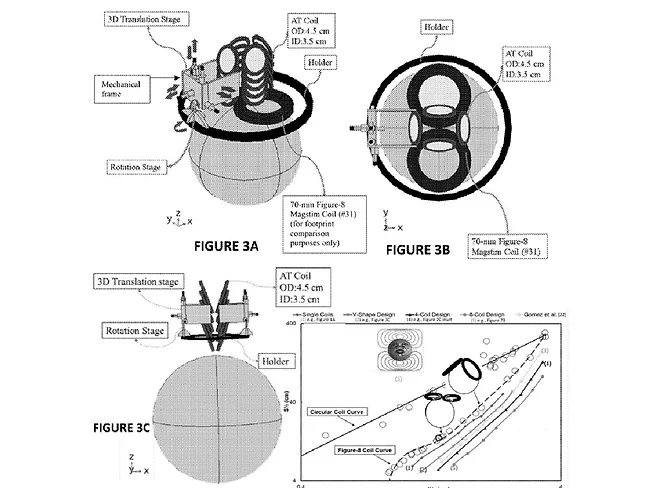
Researchers from the University of Maryland Baltimore and University of Maryland Baltimore County are seeking patent protection for an angle-tuned (AT) ring coil for improving the depth-spread performance of transcranial magnetic stimulation (TMS) coils as well as high-performance composite coils and multisite TMS systems.
Kynexis BV recently launched with a series A of €57 million (US$62 million) and a lead asset, Kyn-5356, that targets the kynurenine pathway. The company is preparing for clinical trials that will test the compound for the treatment of cognitive impairment associated with schizophrenia.
Newron Pharmaceuticals SpA has reported what it claims are “exceptional” results in the 12-month analysis of a phase II open-label trial of evenamide in treatment-resistant schizophrenia. The glutamate modulator produced benefits “of a kind that have never been reported before,” the company said.
The U.S. FDA granted breakthrough device designation for CT-155, a prescription digital therapeutic co-developed by Boehringer Ingelheim GmbH and Click Therapeutics Inc. to treat the negative symptoms of schizophrenia. Designed as an adjunctive to pharmaceutical therapy for schizophrenia, among the most challenging mental health conditions to treat, the PDT is one of several products in the collaboration’s pipeline.
After flying high in 2022, digital therapeutics (DTx) companies crashed to Earth in 2023 and scrambled to identify a path to profitability, or at least continued viability.
Adam Lenkowsky, chief commercial officer for Bristol Myers Squibb Co. (BMS), said his firm plans to launch Karxt (xanomeline-trospium) in the U.S. as soon as it’s approved by the U.S. FDA, and “expect[s] to accumulate sales in early 2025.” BMS tied a bow on the year by disclosing its plan to pay $330 per share to take over Karuna Therapeutics Inc. in a deal valued at $14 billion to bring aboard Karxt, which acts as a dual M1/M4 muscarinic acetylcholine receptor agonist. The FDA has assigned Sept. 26, 2024, as the PDUFA date for Karxt as a new treatment for schizophrenia in adults.