Programmed death-ligand 1 (PD-L1) is a crucial immune checkpoint ligand that inhibits antitumor immunity by engaging PD-1 on T cells, and checkpoint blockade has become a pillar of anticancer therapy. However, many patients show limited treatment responses.
Crescent Biopharma Inc. teamed with Sichuan Kelun-Biotech Biopharmaceutical Co. Ltd. to generate “parallel” data of its PD-1/VEGF bispecific antibody, CR-001. The goal is to get 2027 readouts of the bispecific as a monotherapy and as a combination therapy with antibody-drug conjugates in both the U.S. and China.
Crescent Biopharma Inc. teamed with Sichuan Kelun-Biotech Biopharmaceutical Co. Ltd. to generate “parallel” data of its PD-1/VEGF bispecific antibody, CR-001. The goal is to get 2027 readouts of the bispecific as a monotherapy and as a combination therapy with antibody-drug conjugates in both the U.S. and China.
Big pharma is increasingly shopping in China to fill its pipelines as it faces looming patent cliffs on major blockbusters coupled with growing pricing pressures on drugs. China’s out-licensing deals grew to represent 32% of global deals in the first half of 2025, according to a Jefferies report on China dealmaking.
Big pharma is increasingly shopping in China to fill its pipelines as it faces looming patent cliffs on major blockbusters coupled with growing pricing pressures on drugs. China’s out-licensing deals grew to represent 32% of global deals in the first half of 2025, according to a Jefferies report on China dealmaking.
Exelixis Inc.’s positive phase III top-line data June 22 with zanzalintinib (zanza) in colorectal cancer had Wall Street speculating anew about the odds with the tyrosine kinase inhibitor in an important indication.
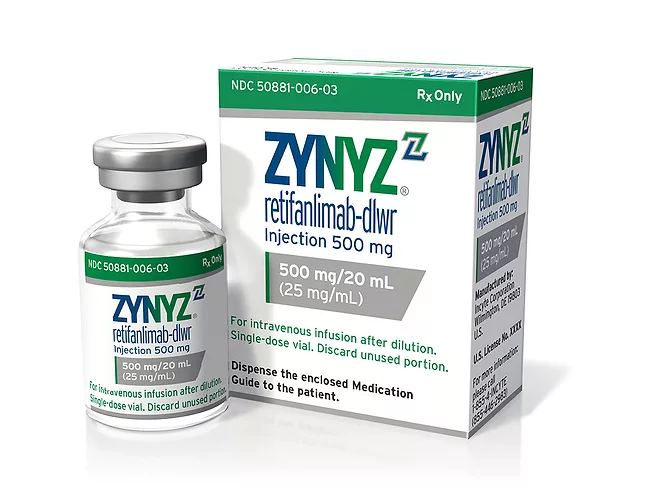
Incyte Corp.’s Zynyz (retifanlimab-dlwr) has received another U.S. FDA approval and put some distance between it and a 2021 complete response letter. The FDA gave the humanized monoclonal antibody targeting PD-1 the nod for first-line treatment of adults with inoperable locally recurrent or metastatic squamous cell carcinoma of the anal canal. That makes it the only approved first-line treatment for this cancer.
Immutep Ltd. announced strong median overall survival of 17.6 months in cohort B of the TACTI-003 (Keynote-PNC-34) phase IIb trial that evaluated eftilagimod alfa in combination with Merck & Co.’s Keytruda (pembrolizumab) as first-line therapy in recurrent/metastatic head and neck squamous cell carcinoma in patients with PD-L1 expression below 1.
Immutep Ltd. announced strong median overall survival of 17.6 months in cohort B of the TACTI-003 (Keynote-PNC-34) phase IIb trial that evaluated eftilagimod alfa in combination with Merck & Co.’s Keytruda (pembrolizumab) as first-line therapy in recurrent/metastatic head and neck squamous cell carcinoma in patients with PD-L1 expression below 1.
The intriguing VEGFxPD-1 bispecific antibody space gained oomph with phase III results disclosed April 23 by Akeso Pharmaceuticals Inc. related to Harmoni-6, testing ivonescimab in combination with platinum-based chemotherapy compared with Tevimbra (tislelizumab, Beigene Ltd.), a PD-1 inhibitor also paired with platinum-based chemo in patients with locally advanced or metastatic squamous non-small-cell lung cancer irrespective of PD-L1 expression. Those data were followed by a green light from the U.S. FDA April 24 for marketing the PD-1 monoclonal antibody penpulimab in combination with cisplatin or carboplatin and gemcitabine for the first-line treatment of adult recurrent or metastatic non-keratinizing nasopharyngeal carcinoma.