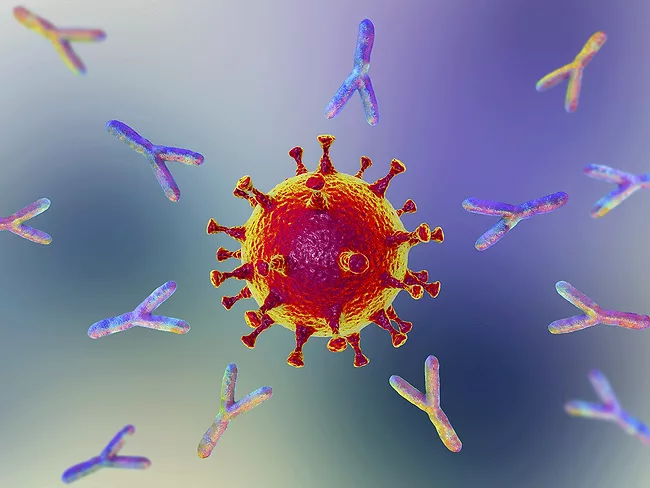
Another monoclonal antibody therapy has entered the pandemic fray with the FDA granting emergency use authorization (EUA) for bamlanivimab (LY-CoV555) 700 mg and etesevimab (JS016 or LY-CoV016) 1,400 mg as a cocktail for treating mild to moderate COVID-19 in patients aged 12 and up at high risk for progressing to severe COVID-19 and/or hospitalization.
Pfizer Inc. reported solid earnings for 2020 and said it expects even bigger things this year as the company projects approximately $15 billion in earnings from the COVID-19 vaccine it co-developed with Biontech SE.
Marking the first time monoclonal antibodies developed by separate companies will be tested in combination against COVID-19, Vir Biotechnology Inc.’s VIR-7831 will be added to Eli Lilly and Co.’s bamlanivimab in the ongoing phase II BLAZE-4 study in low-risk patients with mild to moderate disease. The collaboration comes as early research indicates some antibodies in development appear to lose activity when pitted against emerging SARS-CoV-2 variants. VIR-7831 (also known as GSK-4182136), partnered with Glaxosmithkline plc, is designed to bind to a different epitope of the SARS-CoV-2 spike protein than bamlanivimab. A dual-action antibody, VIR-7831 is designed to both block viral entry into healthy cells and clear infected cells.
Regeneron Pharmaceuticals Inc. posted positive initial results from its ongoing phase III study of its monoclonal antibody cocktail, REGEN-COV (casirivimab and imdevimab), used as a passive vaccine, designed to provide immediate short-term passive immunity to prevent COVID-19 in people at high risk of infection due to household exposure to a COVID-19 patient. Eli Lilly and Co. reported upbeat news the same day, as the phase III Blaze-1 trial testing its antibody cocktail met its primary and key secondary endpoints.
Antibody development for treating COVID-19 continues producing positive results, the latest being from Eli Lilly and Co.’s bamlanivimab (LY-CoV-555), which reduced nursing home residents’ risk of contracting symptomatic COVID-19 by 80%, according to new data from its phase III Blaze-2 study.
DUBLIN – Merus NV is banking $40 million up front, plus an equity investment of $20 million, under a research collaboration and license agreement with Eli Lilly and Co.’s Loxo Oncology arm to develop up to three CD3-directed bispecific T-cell engager antibodies. Each program also has up to $540 million attached in development and commercialization milestones, taking the total potential value of the deal to $1.68 billion. Merus would also receive tiered royalties on any product sales, ranging, in percentage terms, from mid-single-digits to low-double-digits.
The latest global regulatory news, changes and updates affecting biopharma, including: HHS posts rule for agency enforcement action; Guidance to help with COVID-19 Mabs; Chinese pharma exec sentenced on U.S. drug charges.
As expected, pharmacy benefit managers are challenging a final rule that would end Medicare’s antitrust safe harbor for the rebates drug companies pay to the PBMs for formulary placement.
Shares of Eli Lilly and Co. (NYSE:LLY) leapt 11.7% to $185.94, their second biggest gain since 2010, after a phase II trial showed its beta-amyloid-targeting monoclonal antibody, donanemab, appeared to slow by 32% decline in a composite measure of cognition and daily function in patients with early symptomatic Alzheimer’s disease vs. placebo.
Forge Therapeutics Inc. spinout Blacksmith Medicines Inc. said Eli Lilly and Co. has committed up to $300 million in milestone payments to back its creation of five new immuno-oncology and inflammation-focused medicines targeting human metalloenzymes.