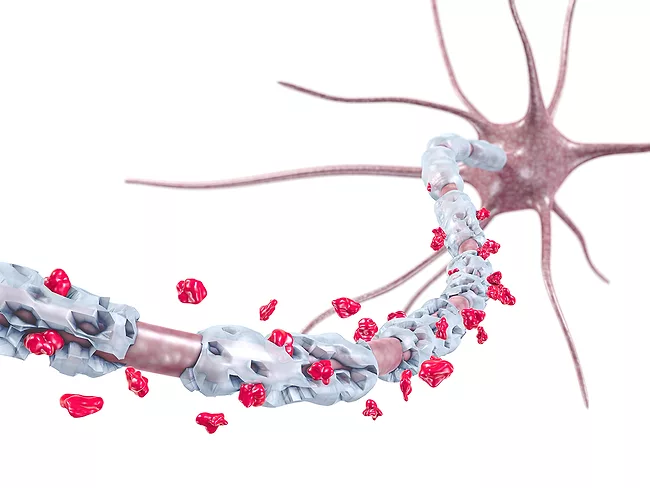
Chineses researchers investigated the relationship between formyl peptide receptor 1 (FPR1) expression and neurodegeneration in multiple sclerosis (MS), specifically evaluating the therapeutic potential of the FPR1 antagonist T-0080.
Is there a link between cellular senescence and multiple sclerosis (MS) progression? Several presentations at this year’s European Committee for Treatment and Research in Multiple Sclerosis 2025 (ECTRIMS 2025) conference, in Barcelona, which ended Sept. 26, addressed this question
Antibody-based therapy against CD20 has had successful results in the treatment of multiple sclerosis (MS), but some patients still have incomplete response to therapy and clinical relapse. The early identification of predictors of response is key to optimize treatment strategies. Proteomic profiling in serum of patients may confer the identification of candidate markers for patient stratification and support personalized treatment approaches.
Is there a link between cellular senescence and multiple sclerosis (MS) progression? Several presentations at this year’s European Committee for Treatment and Research in Multiple Sclerosis 2025 (ECTRIMS 2025) conference, which ends today in Barcelona, addressed this question.
The regulation of type I interferon (IFN-1) signaling is crucial for fine-tuning the innate immune response to combat pathogens, fight cancer and prevent autoimmune diseases. Disrupted IFN-1 signaling plays a key role in autoimmune and inflammatory diseases. Therefore, understanding how IFN-1 production and signaling are regulated could reveal new approaches for treating conditions driven by this pathway.
Inhibiting emopamil binding protein (EBP), an enzyme involved in cholesterol biosynthesis, promotes the formation of oligodendrocytes, a potential approach for the management of multiple sclerosis (MS); Genentech Inc. has presented data regarding their oral and brain-penetrant EBP inhibitor GNE-3406.
Sareum Holdings plc has entered into a strategic collaboration with Receptor.AI Ltd. to accelerate the discovery and optimization of blood-brain barrier (BBB)-permeable, isoform-selective TYK2/JAK1 inhibitors. The aim is to generate candidates suitable for preclinical development in neuroinflammatory indications, such as multiple sclerosis and Parkinson’s disease.
The first filing in the name of Grand Rapids, Mich.-headquartered Corium Innovations Inc. confirms the company formerly known as Corium Pharma Solutions Inc. is developing treatments for multiple sclerosis and ulcerative colitis that employ its proprietary Corplex transdermal patch technology.
Multiple sclerosis (MS) is a degenerative and inflammatory condition of the central nervous system (CNS) that impacts more than 2.5 million individuals globally. Interleukin-33 (IL-33) is an immunoregulatory cytokine that has shown a mild inhibitory effect on experimental autoimmune encephalomyelitis (EAE), which serves as a mouse model for MS. However, its clinical application is limited by unfavorable pharmacokinetics and associated toxicity.