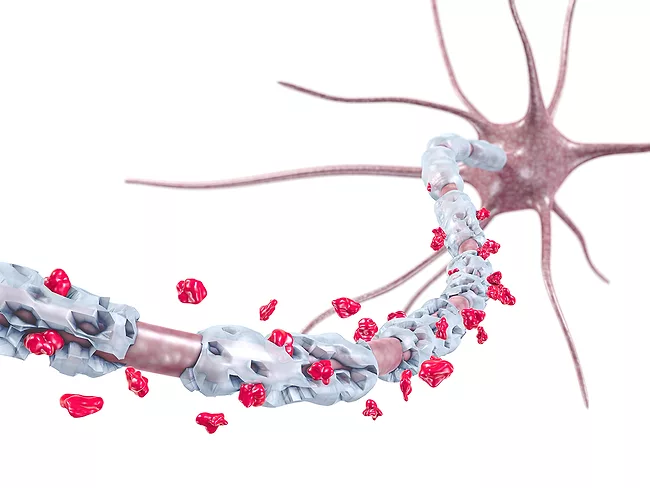
In multiple sclerosis (MS), an alteration of neuronal metabolism caused by dysfunction of its proteasome, the cellular machinery responsible for recycling proteins, contributes to neurodegeneration in this inflammatory disease. This finding could be explored for the development of drugs that protect neurons from damage in MS and other neurodegenerative disorders.
In recognition of the fact that diversity, equity and inclusion (DEI) are necessary prerequisites for precision medicine, the European Academy of Neurology (EAN) announced the launch of a DEI Hub at its 11th Congress, which is being held in Helsinki through June 24. “We know now that when we talk about personalized medicine, we have to understand that talking about stroke, for example, in a woman is different than talking about stroke in a man,” EAN president Elena Moro told the audience at the opening session of the conference.
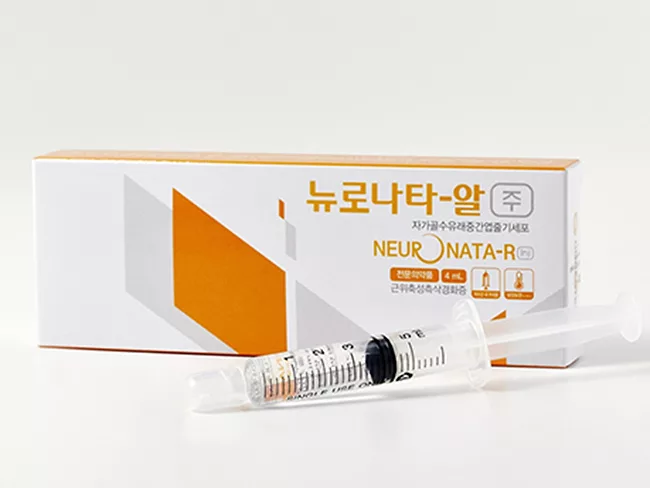
Corestemchemon Inc. is planning to file a BLA for Neuronata-R (lenzumestrocel) by the end of 2025 to gain accelerated approval from the U.S. FDA, company officials confirmed to BioWorld during a June 2 interview. Neuronata-R is an autologous bone marrow-derived mesenchymal stem cell therapy that first gained approval in South Korea in 2014 to delay the progression of amyotrophic lateral sclerosis (ALS), a progressive neurodegenerative disorder also known as Lou Gehrig’s disease.
Corestemchemon Inc. is planning to file a BLA for Neuronata-R (lenzumestrocel) by the end of 2025 to gain accelerated approval from the U.S. FDA, company officials confirmed to BioWorld during a June 2 interview. Neuronata-R is an autologous bone marrow-derived mesenchymal stem cell therapy that first gained approval in South Korea in 2014 to delay the progression of amyotrophic lateral sclerosis (ALS), a progressive neurodegenerative disorder also known as Lou Gehrig’s disease.
Apimeds Pharmaceuticals US Inc. (APUS), a subsidiary of Kospi-listed Inscobee Inc., said May 12 that it raised $13.5 million from its stock sale on the NYSE American exchange May 9 through an offering of 3.375 million shares at $4 per share. Hopewell, N.J.-based APUS is the second pharmaceutical company with Asian ties to float shares on the U.S. market this year.
Apimeds Pharmaceuticals US Inc. (APUS), a subsidiary of Kospi-listed Inscobee Inc., said May 12 that it raised $13.5 million from its stock sale on the NYSE American exchange May 9 through an offering of 3.375 million shares at $4 per share. Hopewell, N.J.-based APUS is the second pharmaceutical company with Asian ties to float shares on the U.S. market this year.
Multiple sclerosis (MS) is characterized by persistent inflammation, primarily driven by CNS-resident immune cells like microglia, particularly in the progressive stages. The purinergic P2X7 receptor (P2X7R) is widely expressed on immune cells and is elevated on reactive astrocytes and microglia of MS lesions.
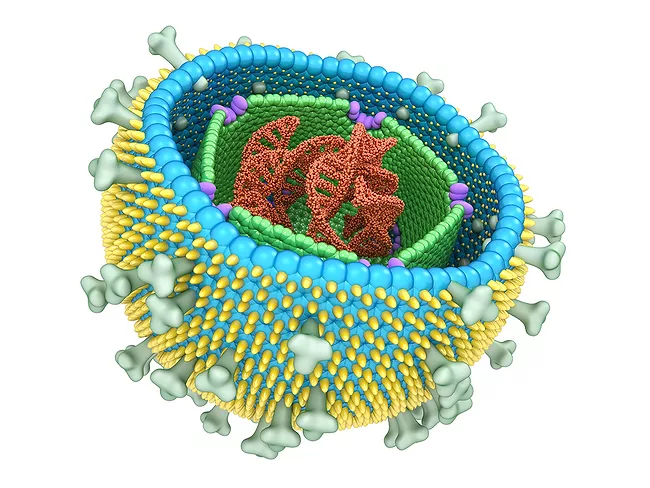
A combination of Epstein-Barr virus (EBV) antibodies and genetic factors may be linked to an increased risk of multiple sclerosis (MS), according to a study led by scientists at Karolinska Institutet and Stanford University. “The Epstein-Barr virus has been a suspect for many years for having a role in causing MS. The evidence for it has increased though one has not really reached complete proof of its role,” Tomas Olsson told BioWorld.
Biogen Inc. has divulged 3-β-hydroxysteroid-δ(8),δ(7)-isomerase (EBP) inhibitors reported to be useful for the treatment of autoimmune disease and multiple sclerosis.
Myrobalan Therapeutics Inc. has been awarded a grant of over $850,000 from the National Multiple Sclerosis Society to support the preclinical and translational development of MRO-002, a G-protein-coupled receptor 17 (GPR17) antagonist, for the treatment of progressive multiple sclerosis (MS).