Having already notched approvals in the EU and U.K., Astrazeneca plc hopes to prime the pump for a U.S. approval of nirsevimab as a respiratory syncytial virus (RSV) prophylactic for infants when it makes its case June 8 before the FDA’s Antimicrobial Drugs Advisory Committee.
Becoming the second approved respiratory syncytial virus (RSV) vaccine for the 60 and older crowd, Pfizer Inc.’s Abrysvo (RSVpreF; PF-06928316) received a U.S. FDA nod on May 31 for RSV lower respiratory tract disease. In February, the agency’s Vaccines and Related Biological Products Advisory Committee voted 7-4 that data support both the safety and efficacy of the vaccine. Behind this approval for the senior population is another potential approval, expected in August, for infants via maternal inoculation.
While pricing a $67.8 million registered direct offering, Icosavax Inc. also released positive top-line interim data from a phase I study of IVX-A12 against respiratory syncytial virus (RSV) and human metapneumovirus in older adults.
Efficacy data for Pfizer Inc.’s respiratory syncytial virus (RSV) vaccine proved convincing for members of the U.S. FDA’s Vaccines and Related Biological Products Advisory Committee, which voted 14-0 May 18 in favor of Abrysvo’s effectiveness when administered during the second or third trimester of pregnancy to protect infants from birth to 6 months, with the adcom endorsing safety data in a 10-4 vote.
Dihydroorotate dehydrogenase (DHODH) is an enzyme ubiquitously expressed in all tissues whose inhibition has proven effective in preventing viral replication. Previous knowledge on DHODH inhibitor vidofludimus calcium demonstrated that this compound inhibits viral replication of DNA, RNA and retroviruses and induces innate immune responses that lead to an antiviral state thus inhibiting virus reactivation.
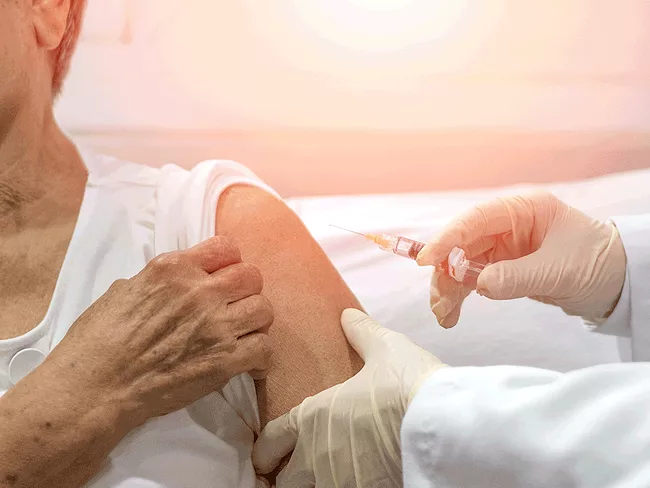
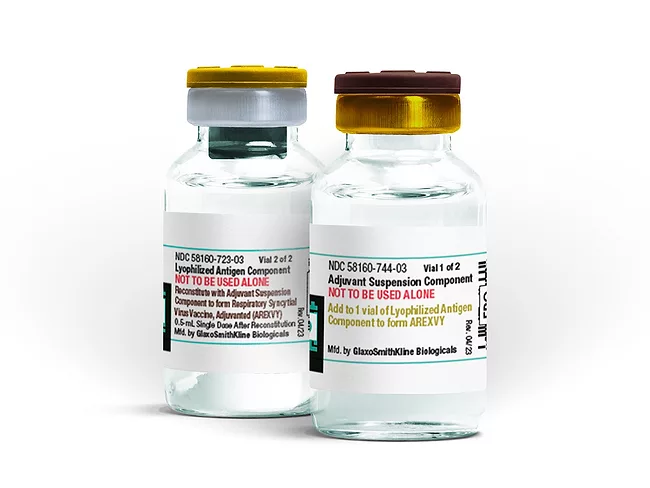
The U.S. FDA has approved the country’s first-ever respiratory syncytial virus (RSV) vaccine, Arexvy, from GSK plc. The adjuvanted vaccine is also the first for older adults anywhere on the planet. GSK now has a head start to vaccinate the U.S. market, but other big companies, such as Sanofi SA and especially Pfizer Inc., are in late-stage development and will pose strong challenges in the coming year. Pfizer’s PF-0692831/RSVpreF, an RSV vaccine for treating lower respiratory tract disease caused by RSV, has a priority BLA with a May 31 PDUFA date.
Janssen R&D (Ireland) has described respiratory syncytial virus (RSV) inhibiting spiro-bearing derivatives reported to be potentially useful for the treatment of RSV infections.
Although the U.S. FDA’s Vaccines and Related Biological Products Advisory Committee (VRBPAC) voted unanimously, 12-0, March 1 that the data GSK plc presented was adequate to support the safety of its respiratory syncytial virus vaccine, several panelists cautioned the FDA against viewing the vote as a recommendation to license the vaccine before more data are available.
Now there are three. Moderna Inc. has posted strong phase III study data on its mRNA respiratory syncytial virus (RSV) vaccine, keeping pace with Pfizer Inc. and GSK plc’s candidates, which have May PDUFA dates. Moderna’s top-line results of the ConquerRSV pivotal efficacy study of mRNA-1345 show the vaccine hit its primary efficacy endpoints of 83.7% against RSV-associated lower respiratory tract disease in older adults.
After comparing the response to the two types of vaccines for the respiratory syncytial virus (RSV) based on its fusion protein (F), prefusion (pre-F) versus postfusion (post-F) vaccines, scientists at the National Institutes of Health (NIH) and Astrazeneca plc have demonstrated that targeting the pre-F protein led to better protection. No more bets on RSV immunization based on the post-F protein of the virus. Laboratories can now bet all on red for the pre-F technology.