Bivictrix Therapeutics plc’s BVX-001, a first-in-class Bi-Cygni bispecific antibody-drug conjugate (ADC) for the treatment of acute myeloid leukemia (AML), has demonstrated a favorable toxicity profile in an industry standard toxicology model.
Even though the treatment options that exist for acute myeloid leukemia (AML) are growing, the clinical outcome of patients is still unfavorable. In AML dysregulation of the tyrosine kinase receptors, including RAS, RAF, MEK and ERK, and of the Aurora kinase family (AURK) exists, are both tied to AML development and progression.
Bluesphere Bio Inc. has received FDA clearance of its IND application for BSB-1001 for patients with relapsed or refractory acute myeloid leukemia (AML), acute lymphocytic leukemia and myelodysplastic syndromes, in conjunction with allogeneic hematopoietic stem cell transplantation (alloHSCT).
Researchers from Deutsches Krebsforschungszentrum DKFZ and affiliated organizations presented data for the novel inhibitor of DNA methyltransferase (DNMT) and histone methyltransferase G9a (HMT-G9a), CM-272, being developed for the treatment of acute myeloid leukemia (AML).
Researchers at Washington University School of Medicine in St. Louis have received a $5 million grant from the Leukemia & Lymphoma Society (LLS) to support research aimed at developing new immunotherapies for different types of blood-based cancers.
Researchers from Sichuan Baili Pharmaceutical Co. Ltd. and Systimmune Inc. presented preclinical data for the novel CD33-targeting antibody-drug conjugate (ADC) being evaluated for the treatment of hematologic malignancies.
Top-line data from Glycomimetics Inc.’s pivotal phase III study of uproleselan in 388 patients with relapsed/refractory acute myeloid leukemia missed its primary endpoint. The data crippled the stock, which closed at the low point of its 10-year existence.
Orum Therapeutics Inc., of Boston and Daejeon, South Korea, is planning for an IPO on the Korea Exchange by the end of 2024, having passed a technology evaluation required for listing on the Kosdaq, a company spokesperson confirmed to BioWorld.
In tumors with amino acid deprivation, eIF-2α kinase GCN2 is activated and triggers a signaling response to promote cell survival and proliferation. This is important in high metabolically active hematological cancers, such as acute myeloid leukemia (AML).
Using its artificial intelligence/machine learning platform, Aurigen, Auron Therapeutics Inc. has identified histone acetyltransferase KAT2A/B as a driver of tumor cell plasticity and designed new small-molecule degraders of KAT2A/B.



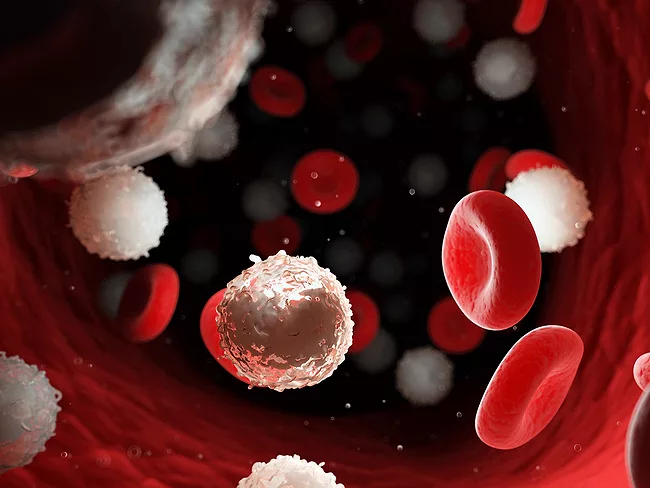

.webp?height=488&t=1670008838&width=650 "Acute myeloid leukemia")