The competitive menin-inhibitor space chalked further data from Syndax Pharmaceuticals Inc., which disclosed positive top-line results from the pivotal phase II portion of the Augment-101 study, designed to test oral small-molecule revumenib for safety and efficacy. But shares of the firm (NASDAQ:SNDX) closed Nov. 12 at $16.21, down $5.57, or 26%, after the Augment-101 numbers were disclosed.
With another failure of E-selectin antagonist uproleselan on the books, Glycomimetics Inc. signed an acquisition agreement with privately held, solid tumor-focused Crescent Biopharma Inc., and a syndicate of investors has put up $200 million to make the merger possible. The combined firm will operate under Crescent’s name after the deal closes in the second quarter of 2025, subject to shareholders’ go-ahead.
FMS‐like tyrosine kinase 3 (FLT3) is a type III receptor tyrosine kinase validated as a therapeutic target for acute myeloid leukemia (AML) and regarded as an indicator of poor prognosis. Unfortunately, current FLT3 inhibitors, such as midostaurin, quizartinib or gilteritinib, often lead to myelosuppression or cardiovascular toxicity.
Shattuck Labs Inc. opted, as one analyst put the matter, to do “the right thing early” by ending the clinical program with phase I-stage SL-172154 and shift resources to SL-325, a death receptor 3 antagonist, initially for inflammatory bowel disease, where TL1A/DR3-blocking antibodies have shown compelling monotherapy efficacy.
Researchers from Johnson & Johnson presented the discovery of a novel inhibitor of cyclin-dependent kinase 7 (CDK7), a co-factor that controls transcription by phosphorylating the C-terminal domain of RNA polymerase II (RNAPII).
Researchers from The University of Tokyo and affiliated organizations sought to identify molecules within AML cells that suppress NK cell activity, and as such, fully harness the antileukemic functions of NK cells.
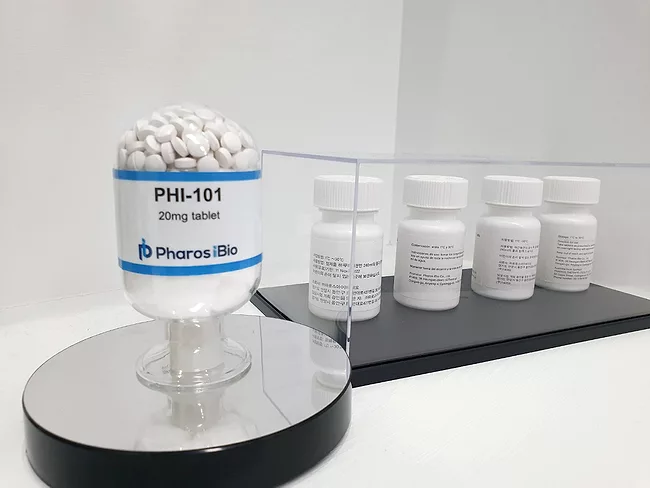
South Korean artificial intelligence-based drug developer Pharos Ibio Co. Ltd. said that the Ministry of Food and Drug Safety (MFDS) granted an orphan drug designation for PHI-101, a second-line therapy for acute myeloid leukemia (AML).
Vor Biopharma Inc.’s trem-cel, a stem cell transplant designed to block the toxicity from cancer treatments, has produced some positive early stage results, including delayed relapse in patients. Phase I/IIa study data showed participants with relapsed/refractory acute myeloid leukemia benefited from trem-cel followed by treatment with Pfizer Inc.’s antibody-drug conjugate cancer fighter Mylotarg (gemtuzumab ozogamicin).
South Korean artificial intelligence-based drug developer Pharos Ibio Co. Ltd. said that the Ministry of Food and Drug Safety (MFDS) granted an orphan drug designation for PHI-101, a second-line therapy for acute myeloid leukemia (AML).
Genetic or pharmacologic inhibition of casein kinase 1α (CK1α) has proven effective in suppressing the proliferation of acute myeloid leukemia (AML) cell lines with wild-type TP53. Researchers from Bristol Myers Squibb Co. recently presented the discovery and preclinical characterization of BMS-986397, a cereblon E3 ligase modulatory drug (CELMoD) designed as a molecular glue degrader of CK1α.