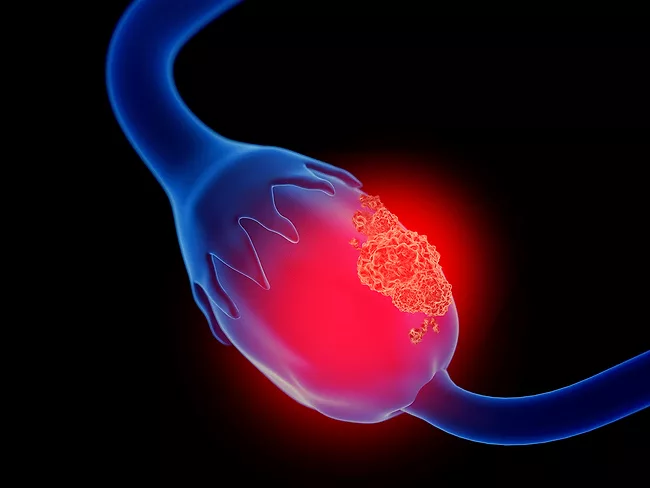
Tilt Biotherapeutics Ltd. has raised $25.6 million in a series B round that will fund phase II development of the lead oncolytic virus in the treatment of platinum-resistant ovarian cancer.
Researchers from Trinity College Dublin, Princeton University and collaborators have discovered that blocking the uptake of lipids by immune cells within the ascites microenvironment could reshape treatment for advanced ovarian cancer.
Neuboron Medtech Research Institute Ltd. has disclosed boron-containing lipoic acid derivatives and vesicle forms acting as boron neutron capture therapy (BNCT) agents reported to be useful for the treatment of cancer.
Folate receptor α (FOLR1) is highly expressed in the surface of tumoral cells in several cancer types, while it shows limited expression in normal tissues. CSPC Pharmaceutical Group Ltd. has developed a next-generation antibody-drug conjugate (ADC) targeting FOLR1 – SYS-6041 – for the treatment of mid-to-low FOLR1-expressing tumors.
Claudin-6 (CLDN6) is a protein found in the tight junctions of epithelial cells to modulate their permeability and barrier function, among other actions.
UTR Therapeutics Inc. has submitted an IND application to the FDA for UTRxM1-18, a novel therapeutic approach for targeting c-MYC-driven cancers. Pending approval, a first-in-human phase I trial is slated to begin next year.
Scientists at Hyperway Pharmaceutical Co. Ltd. and Shenzhen Hyperway Pharmaceuticals Co. Ltd. have divulged GTPase KRAS (mutant) inhibitors reported to be useful for the treatment of cancer, LEOPARD and Noonan syndromes.
The aberrant expression of partner of NOB1 homolog (PNO1) is known to promote oncogenesis in the colorectum and the esophagus, but its involvement in ovarian cancer and the mechanisms behind it are not well known. Chinese researchers investigated the role of PNO1 in ovarian cancer development and progression in the preclinical setting.
French biotech Pep-Therapy SAS is in the midst of raising a €20 million (US$21.62 million) round and, at the same time, prospecting for potential partners after winning FDA orphan drug designation for its bifunctional peptide Pep-010 in the treatment of pancreatic cancer. Pep-010 currently is moving to the conclusion of a phase Ib trial and the new money will fund phase II development.