Anavex Life Sciences Corp.’s stock (NASDAQ:AVXL) sunk 35% on Jan. 2 after a phase II/III study failure in Rett syndrome but posted a next-day rebound of 8% on Jan. 3 with shares closing at $6.53 each. Top-line data from the randomized, double-blind, placebo-controlled study of the company’s lead asset, Anavex 2-73 (blarcamesine), showed improvement but did not reach statistical significance on the co-primary endpoint, the Rett Syndrome Behaviour Questionnaire.
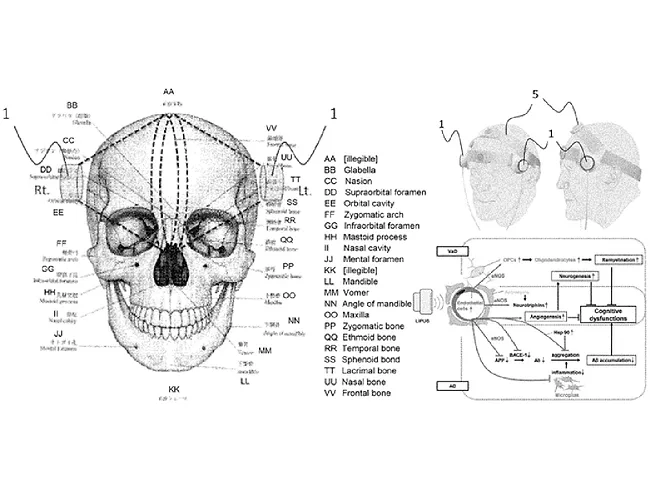
Sound Wave Innovation Co. Ltd. seeks patent protection for a method of using an ultrasonic device which transmits non-converging ultrasonic energy to the brain for the treatment of dementia, including mild Alzheimer’s-type dementia and mild cognitive impairment.
Mira Pharmaceuticals Inc. has reported findings on the cognitive enhancing effects of MIRA-1a, an unscheduled novel synthetic tetrahydrocannabinol (THC) analogue, in normal mice.
The U.S. FDA 510(k) clearance of Airamed GmbH’s Airascore software could see millions of people benefitting from early accurate diagnosis of Alzheimer’s disease and other types of dementia. Airascore is a medical image management and processing system that uses deep learning and artificial intelligence (AI) to assess brain volumetry data on MRI scans in as little as five minutes.
With more drugs for Alzheimer’s disease (AD) gaining FDA approval and an aging population at increased risk of dementia, the need for AD diagnostics is only going to grow. An estimated 6.7 million Americans live with Alzheimer’s today, with that number projected to hit 14 million by 2060, according to the CDC.
The growing number of drugs gaining U.S. FDA approval for Alzheimer’s disease has kept their ability to reduce amyloid beta and tau proteins in the news, but the degenerative disease is not simply a matter of tangles and deposits. A loss of synaptic plasticity and disrupted neural networks underlie the signature impairment of memory and cognition – and those, researchers showed in a recent study in Brain, can be strengthened by non-invasive stimulation that addresses the brain’s electrical dysfunction.
As quicker, more accurate ways to detect dementia becomes ever more urgent, Cumulus Neuroscience Ltd. has teamed up with the Universities of Bath and Bristol in the U.K. to further develop the Fastball electroencephalogram (EEG) test, a diagnostic test for earlier detection of Alzheimer’s dementia. With one in three people born in the U.K. today likely to develop dementia at some point in their lives, early diagnosis and treatment are essential for them to plan for their future.
A group of international partners with expertise in therapeutics, technology, health data management and data science have joined forces to develop a range of digital tools that will predict and monitor dementia. The two-year pilot project launched in the U.K. will see the unique group focus their initial efforts on developing data and digital solutions to complement existing treatments as well as solving issues related to the prediction, prevention, management and treatment of dementia related disorders.
Regenlife SAS raised $3.3 million in series A funding in order to finalize the development of its photomodulation technology to treat neurodegenerative diseases.