At a recent meeting on “Research priorities for preventing and treating Alzheimer’s disease and related dementias” (ADRD), convened by the National Academies, one consensus priority on ADRD research was that there needs to be more of it at every stage. Several speakers presented stark numbers on the relative volume of research in cancer and neurodegeneration. Research output, measured in peer-reviewed papers, for dementia is estimated to be around 10,000 papers annually, compared to 150,000 for cancer, while AD clinical trials are also few and far between compared to cancer trials. This final installment of BioWorld’s series on Alzheimer’s explores some of the reasons for this discrepancy along with the latest advances and ongoing efforts to accelerate research and drug development in the field.
Ironically, the first person to be diagnosed with what is now Alzheimer’s disease was missing its major risk factor. When she first began showing symptoms of dementia in 1901, Auguste Deter was not particularly old. Despite Deter’s case, aging is the largest risk factor for developing Alzheimer’s, by a large margin. But “geroscience has not been translated into drugs for Alzheimer’s disease,” Howard Fillit, Alzheimer’s Drug Discovery Foundation co-founder and chief scientific officer, told BioWorld. “We’re just starting to see that cross-fertilization now.”
After decades of trying and dozens of failed trials, amyloid targeting has paid off with the first disease-modifying agents reaching the market. But success does not mean slam dunk. Aduhelm (aducanumab, Biogen Inc.) was dogged by controversy throughout its brief tenure, and Biogen pulled the plug on it in early 2024. Leqembi (lecanemab, Biogen Inc.) has received full approval. In this second installment of a three-part series on Alzheimer’s, BioWorld looks at the nuanced view of amyloid’s role in the disease.
Ironically, the first person to be diagnosed with what is now Alzheimer’s disease was missing its major risk factor. When she first began showing symptoms of dementia in 1901, Auguste Deter was not particularly old. Despite Deter’s case, aging is the largest risk factor for developing Alzheimer’s, by a large margin. But “geroscience has not been translated into drugs for Alzheimer’s disease,” Howard Fillit, Alzheimer’s Drug Discovery Foundation co-founder and chief scientific officer, told BioWorld. “We’re just starting to see that cross-fertilization now.” This first article of a three-part BioWorld series on Alzheimer’s disease looks at how a group of researchers, as well as some startups, are trying to approach Alzheimer’s via an aging lens.
With early phase II trial data from Cognition Therapeutics Inc.’s lead candidate, CT-1812, for Alzheimer’s disease expected in mid-2024, the firm is hoping to raise $11.5 million from an underwritten public offering of about 6.6 million shares, priced at $1.75 each.
Neurocode USA Inc. added Alzpath Dx, a blood test for Alzheimer’s disease screening, to its lab developed tests, making it the first available for commercial use in the U.S. The move stands to make screening for the neurodegenerative disease much more accessible, as recent study results indicate Alzpath’s accuracy rivals PET scans and cerebrospinal fluid tests, the current gold standards, in detecting the signature biomarkers of the disease.
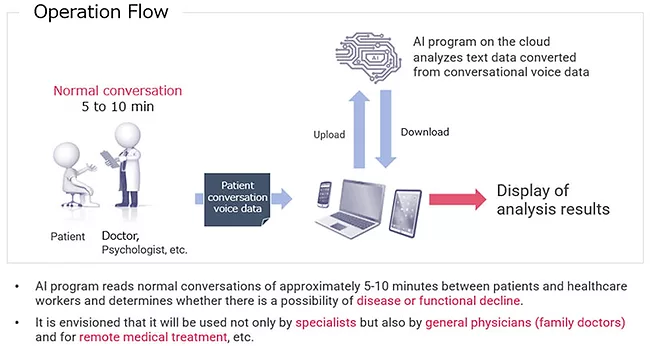
Shionogi & Co. Ltd. is partnering with Fronteo Inc. to develop artificial intelligence (AI)-based diagnostic tools to diagnose mental and neurological disorders more accurately.
Vandria SA has been awarded two grants totaling €3.8M (US$4.1M) from Innosuisse and Eurostars to support its two lead drug candidates addressing CNS and muscle diseases, respectively.
Quibim SL recently launched its artificial intelligence (AI)-based software QP-Brain, which is designed to detect early-stage neurodegenerative diseases, after it received U.S. FDA 510(k) clearance, as well as CE and UKCA marks from the EU and U.K. regulators, respectively. QP-Brain quantifies and presents data from patients’ brain images to help clinicians with early diagnosis and treatment strategies for diseases such as Alzheimer’s, multiple sclerosis and dementia.
Anavex Life Sciences Corp.’s stock (NASDAQ:AVXL) sunk 35% on Jan. 2 after a phase II/III study failure in Rett syndrome but posted a next-day rebound of 8% on Jan. 3 with shares closing at $6.53 each. Top-line data from the randomized, double-blind, placebo-controlled study of the company’s lead asset, Anavex 2-73 (blarcamesine), showed improvement but did not reach statistical significance on the co-primary endpoint, the Rett Syndrome Behaviour Questionnaire.